There’s plenty to admire in Africa Remix. But Jonathan Jones wonders if a whole continent can really be captured in a single exhibition
Wednesday February 9, 2005
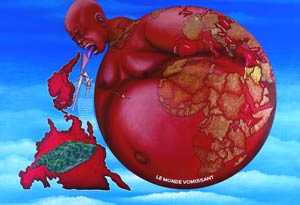
Africa is a scandal,” writes curator Simon Njami in the catalogue for Africa Remix: Contemporary Art of a Continent. Not many people would disagree. Africa, the poorest continent, with the most terrible problems of war and disease… But Njami doesn’t mean that. His catalogue essay is written in another language, that of curators: he means “scandal” in a theoretical way. Africa is a scandal because it is “hybrid”, because it is inherently transgressive, because… no, let us leave it there. Suffice it to say that Africa Remix flails around to find an Africa that can claim its place in the world of biennales, glossy art magazines and proliferating theory. That it ends up discovering the same old realities of injustice and poverty probably says more for the honesty of African artists than for the thinking behind the show.
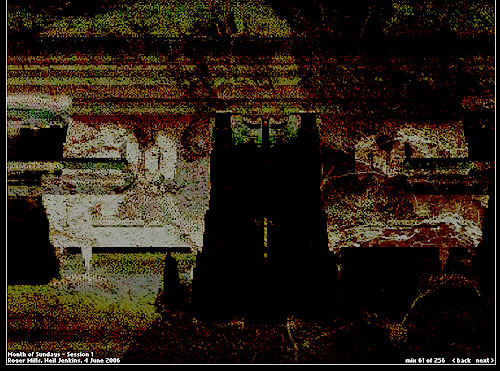
VisitorsStudio is a Media Art project, in that it is “art through and with electronic digital media… a hybrid of electronically generated images, sounds, machine processes and possibilities for interactionâ€[1]. In addition to this definition by media, and equally important to an understanding of the VisitorsStudio project, is how it corresponds with processes, and practices developed by an earlier generation of artists associated with the Fluxus movement who worked with mail art, happenings, performance, art-activism and live art. This text describes some of these connections with past works and then positions VisitorsStudio within the thriving territory of real-time art, software art, net art and participative and collaborative expression in contemporary ‘remix culture’.
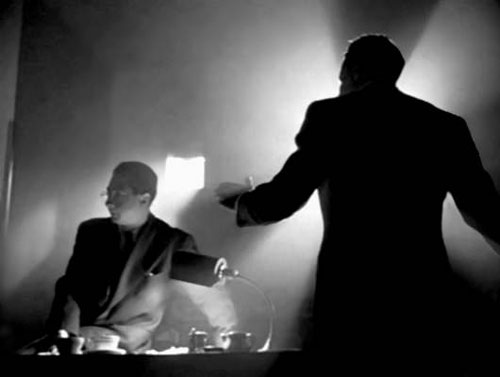
When the great film critic Pauline Kael died last month at 82, obituaries as well as tributes from her friends and acolytes poured into print. The remembrances tended to mention only in passing what was perhaps the most important, and easily the most exhaustive, piece of criticism Kael ever wrote. “Raising Kane†appeared in The New Yorker 30 years ago, sprawling across a total of 68 pages in consecutive issues of the magazine. The essay celebrated and dissected Orson Welles’ film debut Citizen Kane, which was itself 30 years old in 1971.
As it happens, Kael’s death and that double anniversary coincide with the release of a commemorative edition of the film on DVD. Citizen Kane will be the first building block in the collection of any self-respecting film buff, of course. But watching it on DVD re-raises a lingering if heretical question: Why does the film so often ranked as the greatest ever made strike so many viewers as cold, as oddly soulless? It’s easy to appreciate or admire Citizen Kane but hard to revel in it. Put another way: It’s just about the last movie you’d want to watch on a rainy night.
The commons movement may be groundbreaking and innovative but as it hurtles towards a global model, it risks the privatisation of culture and a disregard for national boundaries, says David M Berry. Read the rest of this entry »
Lulu.tv made recent news with their new video sharing service which has a unique business model. Bob Young the head of Lulu.tv and founder of the self publishing service Lulu.com also founded Red Hat, which commercially sells open source software. He has been doing interesting experiments in creating business that harness the creative efforts of people.
The new revenue sharing strategy behind Lulu.tv is fairly simple. Anyone can post or view content for free, as with Google Video or YouTube. However, it offers a “pro” version, which charges users to post video. 80% of the fees paid by goes to an account and the money is distributed each month based on the number of unique downloads to subscribing members.
“Douglas Gordon’s The Vanity of Allegory,” July 16-Sept. 10, 2005, at the Deutsche Guggenheim, Unter den Linden 13/15, 10117 Berlin, Germany.
Berlin’s creative world is so compartmentalized that you can be pretty sure you won’t bump into any of your fellow ravers at a museum opening, particularly at the Deutsche Guggenheim. Part of the global expansionist vision of the New York-based Guggenheim Museum, the single-room exhibition space, given a sanitary design by modernist architect Richard Glucksman and located unambiguously in the Deutsche Bank building on Unter der Linden, seems like a commercial box in the heart of a metropolis celebrated rather more for its underground art scene than for its institutional achievement in contemporary culture.
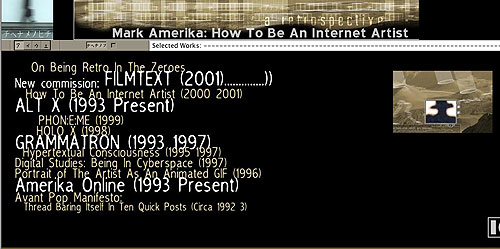
What does it mean to be a net artist? Is it a life? A style? A practice? One way to think about the growing con/fusion of net art and net lit is as a continually emergent dialogue. You see someone’s web site in Brazil and send them an email from a vacation spot in Hawaii telling them how much you admire their work — and a dialogue is born. This dialogue branches into more emails, web sites, symposiums and exhibitions. Soon, you have an instantaneously delivered multi-linear thread of narrative-potential being practiced as a form of social networking. Is this the story? Is it conceptual? Literary? Performative? What happens when the conversants agree to let the dialogues go public? Is this an activist recording or archiving of an ultra-contemporary art scene that defies categorization? Who owns it? Who buys it? Perhaps it’s a kind of creative mindshare.
I email Eugene Thacker because I am interested in what he is doing. I ask him if would like to engage in a net.dialogue, somewhere between net.lit and net.art but without all of the didactic propaganda associated with both of those terms. He writes back from New York saying he’s game and so we start sending emails back and forth and soon I put the data into an automated editing environment I call “Mark Amerika’s Brain While It Listens to MP3 Jukebox Recordings and Interacts With Whatever Software He Happens To Have Opened Up On His Screen.”
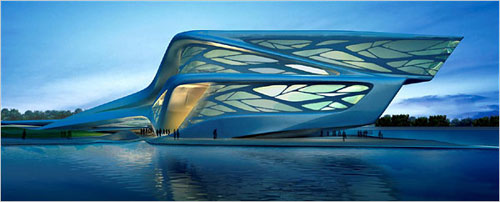
ABU DHABI, United Arab Emirates, Jan. 31 — In this land of big ambition and deep pockets, planners on Wednesday unveiled designs for an audacious multibillion-dollar cultural district whose like has never been seen in the Arab world.
The designs presented here in Abu Dhabi, the capital of the United Arab Emirates and one of the world’s top oil producers, are to be built on an island just off the coast and include three museums designed by the celebrity architects Frank Gehry, Jean Nouvel and Tadao Ando, as well as a sprawling, spaceshiplike performing arts center designed by Zaha Hadid.
Mr. Gehry’s building is intended for an Adu Dhabi branch of the Guggenheim Museum featuring contemporary art and Mr. Nouvel’s for a classical museum, possibly an outpost of the Louvre Museum in Paris. Mr. Ando’s is to house a maritime museum reflecting the history of the Arabian gulf.
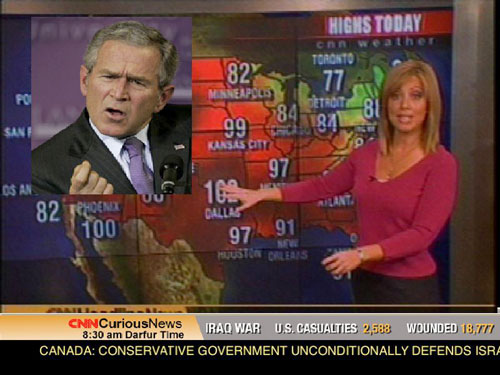
CNNplusplus presents a technologically sabotaged newscast through subtle, automated media juxtaposition and replacement. The newscaster (video and audio) stays positioned solidly in the right corner of the screen as always, while our News Enhancement Program selectively replaces the other 2 regions of the screen. Independent news headlines replace weather, sports, stocks, and mainstream headlines on the bottom of the screen, while the upper left image is replaced with the results of a keyword-triggered Google Image Search. With the appearance and sound of a “normal†broadcast, CNNplusplus can entertain and educate the ordinary viewer.
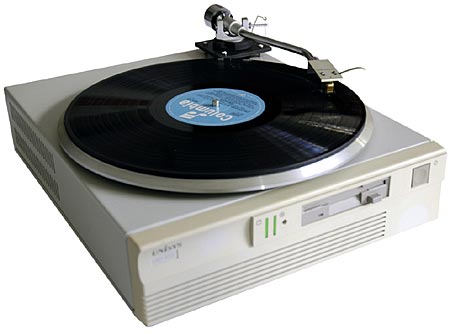
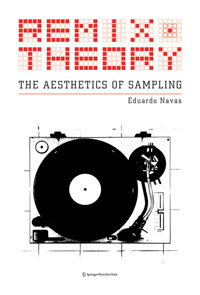
TurntablistPC is a telematic hybrid of a turntable (gramophone) and an old personal computer.
TurntablistPC is a server which third-party websites can access. A small file is hosted on the TurntablistPC. Subscribing websites place a short piece of code on their pages. This code sends information to the TurntablistPC. When somebody visits one of the subscribing websites, the TurntablistPC spins the record.
Control is remote and hidden. But output – audio – is local only (through speakers in the TurntablistPC).