About | Remix Defined | The Book | Texts | Projects | Travels/Exhibits | Remixes/Lists| Twitter
Loading...

Digital Diving: A “cut and Paste” Update—A Panel Discussion

The School of Visual Arts (SVA) presents Digital Diving: A “Cut and Paste” Update. Moderated by Suzanne Anker, chair of the BFA Fine Arts Department at SVA, the symposium will explore the uses and abuses of digital technologies as they effect knowledge acquisition and its manipulation. “New media” models of the visual and alterations in community configurations will be the focus of the discussion . The panelists are Lauren Cornell, Joseph Nechvatal, Judith Solodkin, Bruce Wands and McKenzie Wark. The event takes place Tuesday, February 27, 7pm at School of Visual Arts, 209 East 23rd Street, New York City. Admission is free.
Read the rest of this entry »
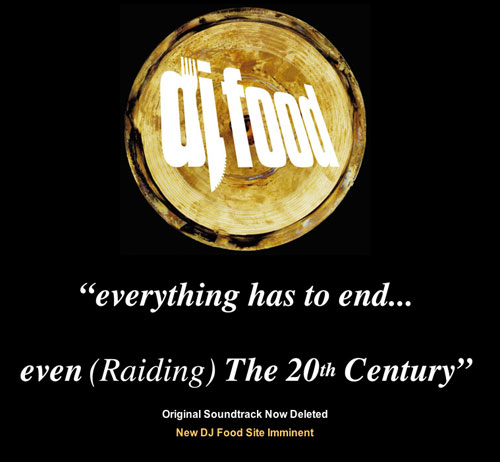

40-min MP3 of the history of bastard pop, remix and mashup


Image source: DJ Food

Text source Boing Boing

October 5, 2005

This is a 40-minute MP3 of a British radio broadcast called “DJ Food – Raiding the 20th Century” that attempted to sum up the entire cut-up/remix/mash up music movement. It’s lots of crazy, whacky, jarring, harmonious, tricksy, and serendipitous sound, and it made me laugh and think. The landing page for the MP3 has an exhaustive list of the samples employed.

Read the rest of this entry »

The mash-up future of the web Pipes, by Bill Thompson


Image source: Pipes.yahoo.com

Text source: BBC

January 19, 2007

Pipes allows a mash-up of web 2.0 sites

The way we use the web is changing and the future lies in mixing, mash-ups and pipes, says columnist Bill Thompson.

When the web was young we were happy just to see words and pictures on the screen in front of us.

All backgrounds were grey, all fonts were Times and anything other than a static image required a “helper application” to be loaded and run, so that video clips and sounds played in separate windows on screen.

Read the rest of this entry »
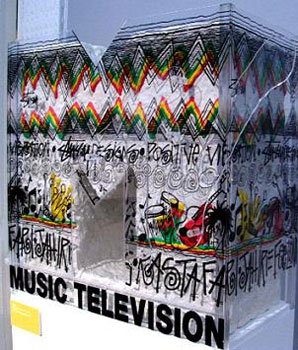
Do they still want their MTV? A changing format, by David Carr


Image source: http://www.hypebeast.com/
Text source: International Herald Tribune

February 19, 2007

NEW YORK: MTV prospered for decades because it looked like what a network might look like if a 16- year-old were doing the programming.

But now the music channel is trying to make its way in a multidevice, multiplatform, multichannel world, most of which is being programmed by a 16- year-old.

The velocity of change has left MTV occasionally looking as if were being programmed by an 83-year-old — namely Sumner Redstone, the chairman of Viacom, which owns MTV. The network, itself a stately 25 years old, has suffered a decline in ratings and cultural cachet.

Read the rest of this entry »
EMI in Talks to Dump Copy Protection, by Jefferson Graham


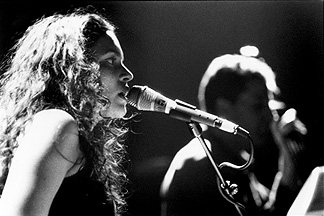
Blue Note’s recording artist Norah Jones with Lee Alexander on bass and Adam Levy on guitars performing at House of Blues in Los Angeles.
Image source: skipbolenstudio.com/

Text source: USA Today

2/12/2007

LOS ANGELES — The music industry is looking ahead to life without copy protection.

Major label EMI — home of Coldplay and Norah Jones — is in discussions with online music stores about selling its music without copy protection, or digital rights management (DRM), according to two sources with direct knowledge of the talks who would not speak for attribution because discussions are ongoing.

Read the rest of this entry »

All the World’s a Stage (That Includes the Internet), by Scott Kirsner


Roy Raphaeli, who is known professionally as Magic Roy, has video clips of magic tricks on Metacafe, a Web site that pays him if he attracts a lot of viewers.
Photo: Chester Higgins Jr./The New York Times

Image and text source: NY Times.

Published: February 15, 2007

AT lunchtime, or when he is walking the halls of his workplace, Roy Raphaeli’s colleagues often beseech him to do a magic trick. Usually, he obliges. “I take the opportunity to show people my new stuff and see how they react,” said Mr. Raphaeli, 23, a Brooklynite who works for a mail-order camera retailer.
Skip to next paragraph
Related
10 Sites That Pay for Your Video (February 15, 2007)

While Mr. Raphaeli, known professionally as Magic Roy, has been entertaining people with card tricks and sleight-of-hand since he was 5, he does not perform at birthday parties or casino showrooms.

Instead, Mr. Raphaeli’s stage of choice is the Internet, where he has posted 30 short video clips to Metacafe, a Web site that pays video creators based on how many viewers their work attracts. So far, Mr. Raphaeli has earned more than $13,000 from the site, where his most popular card trick has been seen 1.4 million times.

As video sites look for ways to attract higher-quality content, they are dangling cash, usually offering to cut creators in on the advertising revenue their work generates.

Read article

Remix Mies, an entry on Eikongraphia


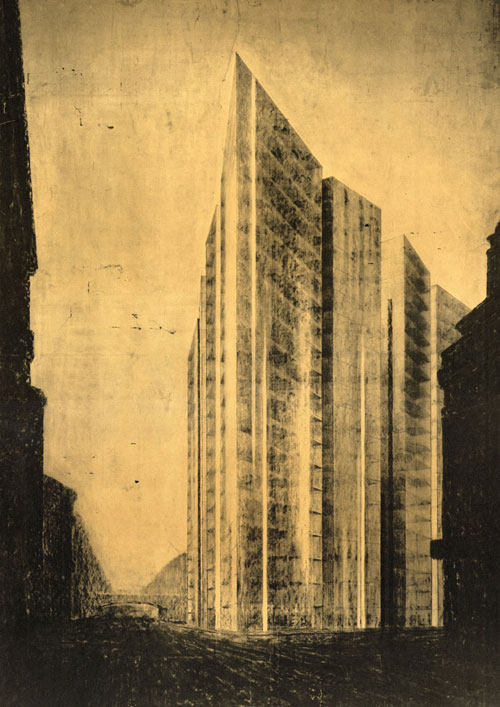
Mies van der Rohe – Design Friedrichstrasse 1919

Text and image source: eikongraphia.com

03.16.06
The almost unnoticeable iconography of the `critical’ architecture of Mies van der Rohe has a long ignored overlap with the `projective’ architecture of Rem Koolhaas (OMA) and Alejandro Zaero-Polo (FOA).

In recent years the work of seemingly very different architects such as Asymptote, MVRDV, Claus en Kaan, UN Studio, Wiel Arets, Neutelings Riedijk, OMA and FOA shows striking similarities as a result of a common interest in using iconography in the design-process. This is an effect of the shift from a critical towards a projective practice. At this moment there is an international debate going on between architects that hold on to the critical theory, and architects that think that the critical project is exhausted and has to be replaced by a projective practice. Opposed to a critical architecture that resists consumer society, Robert Somol and Sarah Whiting position a projective architecture that looks for opportunities within the capitalist society and exploits these. 1 To clarify this difference I will confront the critical architecture of Mies van der Rohe with the projective architecture of Rem Koolhaas (OMA) and Alejandro Zaero-Polo (FOA). We might find a partial answer to the question – what does a projective building look like?

Read the rest of this entry »

TV Remix – Media criticism in real time


TV Remix by Philipp Rahlenbeck

Note: This announcement is archived for historical purposes.

Image source: http://fluctuating-images.de

Text source: http://www.netcells.net

Red Light Concert #10
TV Remix – Media criticism in real time
Philipp Rahlenbeck is jumping channels for us
Saturday, November 12, 2005, 8pm
fluctuating images, Jakobstr.3, 70182 Stuttgart

Recently, the BBC opened parts of their programme archive, as an opportunity for VJs to create video mixes out of footage from old documentaries on art, society, and nature. A special licence allowed free treatment of the images.

Read the rest of this entry »

Dance Dance Revolutionary! announces the winner of the Stay Free – Angela Davis re-mix contest: SPINNERTY of San Francisco


The Prison Industrial–Complex (Audio CD Recording)

Image source: http://dancedancerevolutionary.org/free.html
Project URL: http://dancedancerevolutionary.org/

Text source: made available by Fereshteh Toosi for Remix Theory

Dance Dance Revolutionary! is pleased to announce that the winner of the Stay Free – Angela Davis re-mix contest is SPINNERTY of San Francisco

Listen to the MP3 at the project website: http://www.dancedancerevolutionary.org/free.html

Dance Dance Revolutionary! is an arts initiative that aims to share information about radical activism through fun, participatory events. The project includes various platforms inspired by the lives of Angela Davis and Emma Goldman, two important figures in U.S. history.

As part of its ongoing activities, Dance Dance Revolutionary! hosted a re-mix contest. The objective was to creatively re-assemble songs written by the Rolling Stones and John Lennon/Yoko Ono about activist Angela Davis around the time that she was acquitted of federal murder charges in 1972.

Read the rest of this entry »

Can I Get An Amen, by Nate Harrison

Can I Get An Amen?, 2004
recording on acetate, turntable, PA system, paper documents
dimensions variable
total run time 17 minutes, 46 seconds

Image and project source: nkhstudio.com

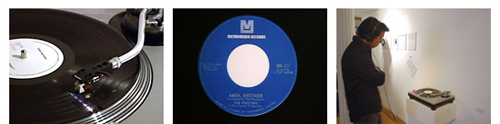
Can I Get An Amen? is an audio installation that unfolds a critical perspective of perhaps the most sampled drum beat in the history of recorded music, the Amen Break. It begins with the pop track Amen Brother by 60’s soul band The Winstons, and traces the transformation of their drum solo from its original context as part of a ‘B’ side vinyl single into its use as a key aural ingredient in contemporary cultural expression. The work attempts to bring into scrutiny the techno-utopian notion that ‘information wants to be free’- it questions its effectiveness as a democratizing agent. This as well as other issues are foregrounded through a history of the Amen Break and its peculiar relationship to current copyright law.

Current Projects


    Books


    Remix Theory | is an online resource by Eduardo Navas. To learn more about it read the about page.

    Logo design by Ludmil Trenkov

    http://www.mentalhealthupdate.com/