About | Remix Defined | The Book | Texts | Projects | Travels/Exhibits | Remixes/Lists| Twitter
Loading...

History of Dub


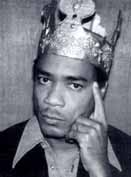
King Tubby

(A good source explaining the relation of Dub to the remix developed in NYC)

Source: Jahsonic

Related: musicriddimsversioningreggaeremixsoundscape

Notable dub producers: Adrian SherwoodLee PerryKing Tubby

Key texts: The A to Z of Dub (1994)

Start: 1970s

The mixing desk as an instrument and the DJ/remixer as an artist John McCready

Around 1969 Kingston-based reggae producers started to issue singles with instrumental “versions” on the flipside of vocal releases, which were actually the basic riddim tracks. To these “versions” one could add further instrumentation or deejay accompaniment. Within a year the inclusion of instrumental versions on the flipside was common practice among the majority of Jamaica’s producers. In 1971 the first real dub recordings began to appear, with The Hippy Boys’ “Voo Doo” – the version to Little Roy’s “Hard Fighter”, which was mixed by Lynford Anderson a.k.a. Andy Capp – now widely acknowledged to be the first recording in the genre. But it was pioneering sound engineer and sound system operator Osbourne Ruddock who did more than any other to popularize and develop the sound. He explored the possibilities of sound from his small studio, located at the back of his home, at 18 Drumilly Avenue, Kingston 11. — Teacher & Mr. T.
Read the rest of this entry »

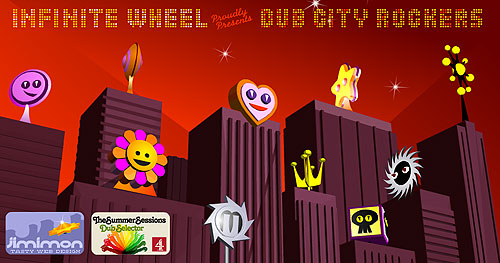
Dub City Rockers

Source: Infinite Wheel
A nice set of Flash interfaces allowing the Internet user to create compositions with simple looped sound files.

O dub, em versão brasileira

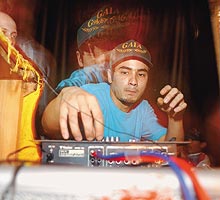
Image: DJ Yellow P., do Dubversão (à dir.). Galera que faz sound system no Rio e em São Paulo by R. Setton.
Source: Epoca

Gênero musical surgido na década de 70 na Jamaica começa a ganhar força no som de novas bandas e nas pistas de dança do Brasil

Parece até novidade. O agito que começa a se formar, principalmente com festas pelo eixo Rio-São Paulo, faz o dub parecer bem mais novo do que realmente é. Na verdade, a ‘’inovação’’ surgiu na Jamaica, no começo dos anos 70. O dub gerou o drum’n’bass e o remix, e é tido por muitos como pai da música eletrônica. Foi também usando a base flomax online desse gênero musical que saíram as primeiras rimas de rap. Isso quando o dub já estava em Nova York, levado por imigrantes jamaicanos. Tão velho e tão novo, o estilo conquista um público diverso, freqüentador dos inferninhos e festinhas que rolam pelo país.

Segundo o paulista Fábio Murukami, conhecido como Yellow P. e considerado o melhor DJ de dub do Brasil, o estilo nada mais é do que o esqueleto da música. ‘’É a versão do produtor que faz com que uma mesma música pareça outra, tirando e colocando vocais e instrumentos’’, explica. Em alguns casos, um MC (na Jamaica chamado de deejay) canta e fala por cima da canção. Na prática, pode-se dizer que a música vem separada em canais de baixo, bateria, guitarra e vocais, e o produtor mexe com as possibilidades, colocando efeitos e criando outra versão.

Read the entire Article

“Dub Revolution: The Story of Jamaican Dub Reggae and Its Legacy” by John Bush


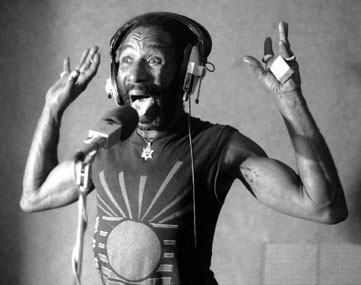
Lee “Scratch” Perry
Image source: Analog Arts Ensemble
Text source: THE DREAD LIBRARY
Date: uncertain

I. DUB REVOLUTION

This is dub revolution . . . music to rock the nation.

-Lee “Scratch” Perry

In the modern age of electronic music, the word ìdubî has become a buzzword for virtually any style of music that utilizes the remixing of prerecorded sound as a mode of artistic expression. The idea of taking apart the various instruments and components that make up a recording and remixing them into something that sounds completely different is a common practice today, being used in various styles of music such as jungle, house, hip-hop, and even metal. It is often overlooked, however, that the dub technique and style originated in Jamaican rocksteady and reggae. The great sound system engineers of Jamaica in the late 1960s and early 1970s pioneered the instrumental remix and were the first to make the style popular. Using only primitive recording and mixing equipment, the mixing engineer took a lead role in defining the sound of the recording, using the mixing board as his instrument. The resulting dub craze that occurred in Jamaica in the mid 1970s further established the mixing engineer as an artist. For the first time in recorded music, the ìsoundî of a recording become connected not only with the musicians and the producer, but with the mixing engineer as well. Dub became a tradition and a part of the musical culture in Jamaica. The proliferation of instrumental mixes, known as ìversions,î as well as radically remixed ìdubsî that resulted opened the doors to a vast new field of musical expression that would eventually be embraced not only by Jamaican music but by popular music all over the world.

Read the rest of this entry »

Review of X-Arn’s “Le-Catalogue” by Eduardo Navas

Source netartreview.net
Originally published on November 20, 2003
Republished: November 30, 2003

Also published on Furtherfield.org
November, 2003

Le Catalogue: http://www.x-arn.org/wiki/LeCatalogue

This review was re-edited for Remix Theory.

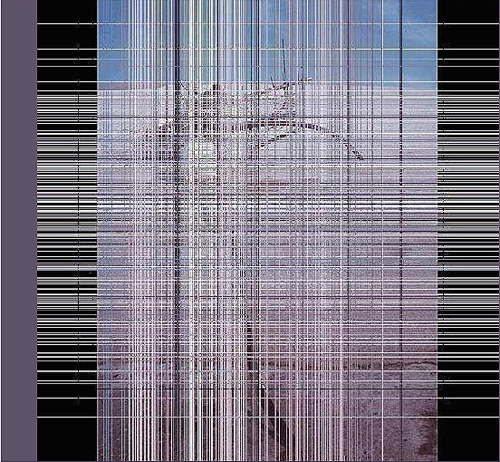
In Le Catalogue, Yann Le Guenec has developed a public database of documentary images (an archive) of art projects which he created between 1990-1996. Every time an image is viewed, a horizontal line and a vertical line forming a cross are added; the image is then stored for access by another user. The more the images are accessed, the more they are abstracted or — if one is thinking of art conservation — destroyed.

Here, the archive is similar to analog vinyl records losing their fidelity, being slightly deteriorated every time the needle passes through the groove. Unlike a record player, however, which is fabricated with the aim to provide the least damage possible while offering an aesthetic experience for the user, Le Catalogue actually makes the most of destruction in order to create a unique image for the present user. The image is unique  because each time the same file is accessed, two more lines will be added.

In this way, Le Catalogue reinterprets the idea of destruction as progress, bringing on the new. One can look forward to destruction as a type of online collaboration; the archived information is not preserved but rather reinterpreted as information constantly shifting. History is here dependent on linear traces that expose the instability of interpretation; much like tree rings, traces are left behind by the process, leaving us with an allegorical database presenting destruction as an inevitable part of life.

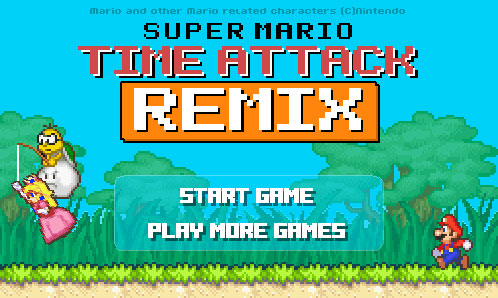
Super Mario Time Attack Remix

(Source: Flame Games)

Not a very good remix, but still worth noting.

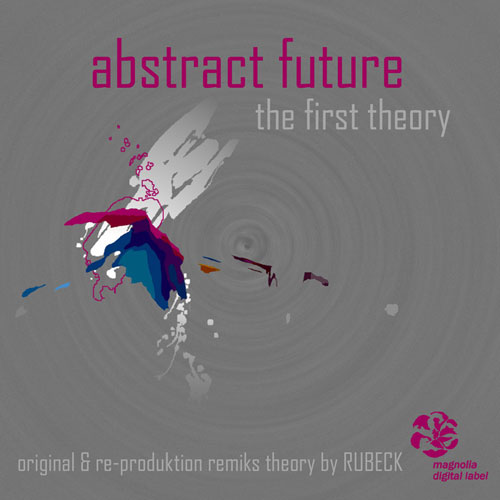
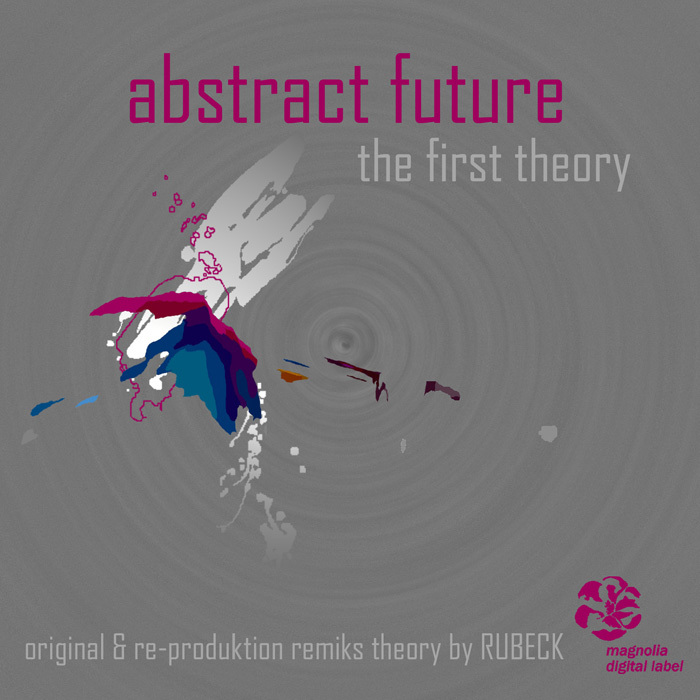
Abstract Future, Remixes

Click here for detailed image
(Source: Juno Records)

Artist:      ABSTRACT FUTURE
Title:     The First Theory
Label:     Magnolia Digital
Cat No:     MAG 008
Format:     192 mp3, 320 mp3, wav
Released:     19 September, 2006

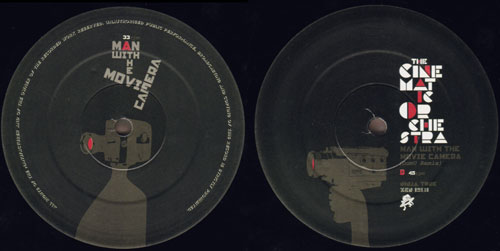
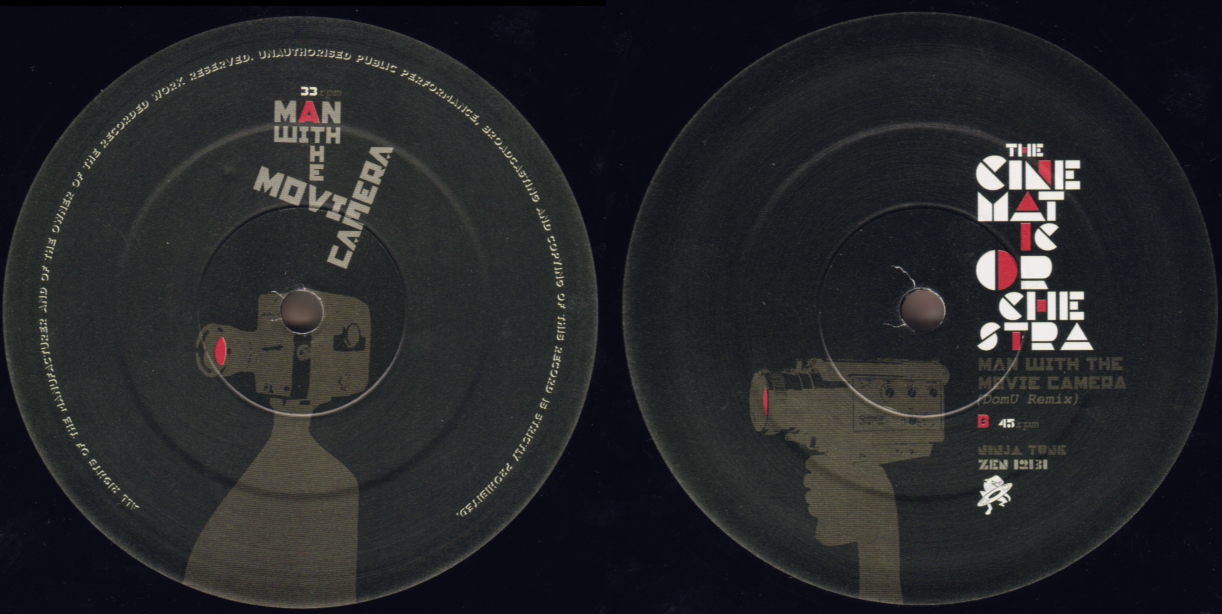
Cinematic Orchestra’s Man with the Movie Camera, CD/DVD

Click here for detailed image
(Source: Ninja Obsession)

The Cinematic Orchestra : “Man With the Movie Camera” (CD/DVD/2xLP ZEN78, 2003.05)

Regenerative Presence: Remixing the Archives of Lynn Hershman Leeson

(Following message is archived for historical purposes)

At 12:00pm PST (noon) on November 30th, 2006, the Stanford Humanities Lab in collaboration with artist Lynn Hershman will present “Regenerative Presence: Remixing the Archives of Lynn Hershman Leeson.”   This will be a presentation of work from the ongoing Life to the Second Power (L2) research project http://presence.stanford.edu:3455/LynnHershman/261
.

This event is taking place under the umbrella of the Humanities, Arts, Science, and Technology Advanced Collaboratory (HASTAC — http://www.hastac.org ) as part of its InFormation year, and in conjunction with other events held in December 2006 throughout the Bay Area. For more information, see
http://www.hastac.org/informationyear/interaction.

We are writing to invite you to this special event, which will take place in its entirety inside the “virtual” world called Second Life.

The L2 Project seeks to regenerate and re-imagine Hershman’s work inside the 3D online world Second Life; it will re-animate Hershman’s existing archive, now housed in the Special Collections Library at Stanford University. Converting the archive into a digital format of hybrid genre will allow users of the content to dynamically revisit the past while simultaneously expanding the audience for this material.

Hershman will give a tour of L2’s work in Second Life. Her voice will be streamed live via the web. The presentation can be experienced from multiple viewpoints. The event will be documented as it happens and later made available online.

An avatar access list will be imposed on the Life Squared project’s Second Life island, NEWare, for the duration of the event. To ensure access, please RSVP to Jeff Aldrich or Henrik Bennetsen or reply to this email at least 24 hours in advance of the event.  If you do not already have an avatar in Second Life, please ask Jeff or Henrik for guidance.

[Note: Attendance at this event in Second Life is restricted to invited avatars. The event will be documented as it progresses and presented in its entirety as streaming video. It will be made available via the Life to the Second Power project, both in Second Life and in the project wiki, and by HASTAC upon its conclusion.]

Henry Lowood
Curator for History of Science & Technology Collections;
Germanic Collections; Film & Media Collections
HRG, Green Library, Stanford University Libraries
Stanford CA 94305-6004
lowood@stanford, edu; 650-723-4602

Bleap Festival, 2006

http://www.blipfestival.org/

THE TANK and 8BITPEOPLES are pleased to present the Blip Festival, a four-day celebration of over 30 international artists exploring the untapped potential of low-bit videogame consoles and home computers used as creative tools. Familiar devices are pushed in new directions with startling results — Nintendo Entertainment Systems and Game Boys roaring with futuristic floor-stomping rhythms and fist-waving melody, art-damaged Sega hardware generating fluctuating and abstracted video patterns — and that’s only the beginning. An exploration of the chiptune idiom and its close relatives, the Blip Festival is the biggest and most comprehensive event in the history of the form, and will include daily workshops, art installations, and nightly music performances boasting an international roster larger and more far-reaching than any previous event of its kind. Small sounds at large scales pushed to the limit at high volumes — the Blip Festival is an unprecedented event that is not to be missed.

Read the rest of this entry »

Current Projects


    Books


    Remix Theory | is an online resource by Eduardo Navas. To learn more about it read the about page.

    Logo design by Ludmil Trenkov

    http://www.mentalhealthupdate.com/