About | Remix Defined | The Book | Texts | Projects | Travels/Exhibits | Remixes/Lists| Twitter

Archive of the category 'History'

Samples from the Heap: Notes on Recycling the Detritus of a Remixed Culture, by Bernard Schütze
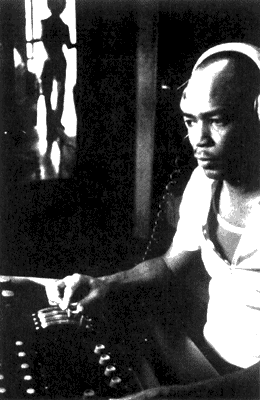
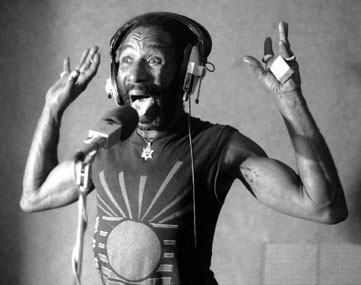
King Tubby

Image source: reggae.com
Text source: Zone 0

Mix, mix again, remix: copyleft, cut ‘n’ paste, digital jumble, cross-fade, dub, tweak the knob, drop the needle, spin, merge, morph, bootleg, pirate, plagiarize, enrich, sample, break down, reassemble, multiply input source, merge output, decompose, recompose, erase borders, remix again. These are among many of the possible actions involved in what can be broadly labeled “remix culture” – an umbrella term which covers a wide array of creative stances and initiatives, such as: plunderphonics, detritus.net, recombinant culture, open source, compostmodernism, mash-ups, cut-ups, bastard pop, covers, mixology, peer to peer, creative commons, “surf, sample, manipulate”, and uploadphonix. (more…)

Loops of Perception: sampling, memory, and the semantic web, by Paul Miller, aka DJ Spooky

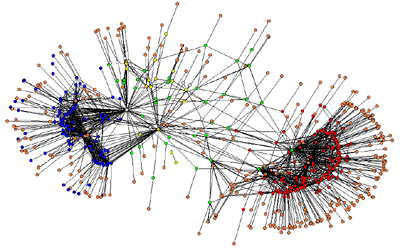
Graph model for IPROnto ontology

Image source: rhizomik.net
Text source: Zone

April/May 2003

“free content fuels innovation”
– Lawrence Lessig, The Future of Ideas

I get asked what I think about sampling a lot, and I’ve always wanted to have a short term to describe the process. Stuff like “collective ownership”, “systems of memory”, and “database logics” never really seem to cut it on the lecture circuit, so I guess you can think of this essay as a soundbite for the sonically-perplexed. This is an essay about memory as a vast playhouse where any sound can be you. Press “play” and this essay says
“here goes”:

(more…)

Quintessence: Art History Shake & Bake, by Sara Diamond

Sherrie Levine, After Edward Weston, 1981

Image source: studiolo.org
Text source: Horizon 8

April/May 2003

Side by side, twining, overlapping, influencing, borrowing from itself and mass culture – so runs the last one hundred years of Western art history. In turn, remix culture borrows from many movements within late and post-modernism: appropriation, collage, dada, graffiti, mail art, manipulated objects, photo montage, pop art, process art, scratch video – the beat goes on. The 20th Century avant garde understood the image as a representation, not a thing in itself. They sought to undermine its aura and authenticity, and open up its meaning, through shifting its context and interpretation.

Dada and Collage
Appropriation practices in 20th Century art start with modernism’s fascination with industrial revolution, with essence and progress. The term “collage” derives from the French coller (to glue), and first appears in the work of Picasso – specifically, Still Life with Chair Caning (1912), wherein he used actual chair cane as well as paint. Collage continued through the Dada movement, spilling into surrealism. Inspired by peeling layers of Parisian street posters, LÈo Malet invented dÈcollage: the removal of images from an existing surface. Collage appears in the work of Braque and Picasso, whose work was in turn iterative of early advertisements. Remix is a form of collage.

(more…)

The Color of Money, by Greg Tate

Image source: Can’t Stop Won’t Stop
Text source: The Nation

February 9, 2006

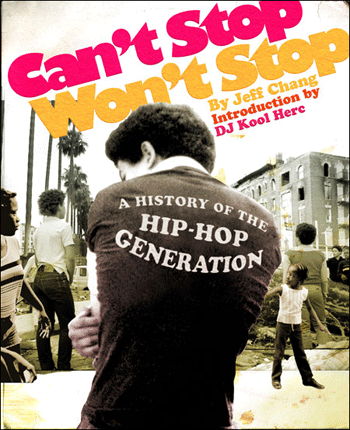
All of these books are as much about politics as popular culture and the art of the MC–not to mention his cousins the break dancer, the turntablist and the spray-can artist. This will surprise no one who knows that black art, black pop and black politics have long been intertwined modes of resistance in the African diaspora, from the coded liberation theology of plantation spirituals to the oppositional wit of Delta blues, New Orleans jazz, swing, bebop, Motown and Stax soul, free jazz, funk, black rock, salsa and reggae. Reading these books about hip-hop can provoke a sense of nostalgia and paradox for someone like this writer, who has watched and occasionally abetted the light-speed journey hip-hop has made in less than twenty years from folk culture to commercial subculture to global youth culture to global capitalist marketing tool. The nostalgia derives from a pronounced sense of loss, the kind former Black Panther Elaine Brown captured in the title of her memoir, A Taste of Power. (more…)

Deep Remixability by Lev Manovich


Non-violent protesters face armoured policemen (Policemen and Flowers)
A moment in the Velvet Revolution Czechoslovakia.
Image source: Wikipedia

Text source: Piet Zwart Institute
[fall 2005- spring 2006]

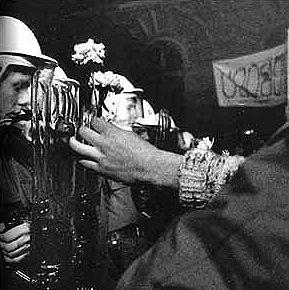
During the heyday of debates on post-modern, at least one critic in America noticed the connection between post-modern pastiche and computerization. In his book After the Great Divide (1986), Andreas Huyssen writes: “All modern and avantgardist techniques, forms and images are now stored for instant recall in the computerized memory banks of our culture. But the same memory also stores all of pre-modernist art as well as the genres, codes, and image worlds of popular cultures and modern mass culture.” [1] His analysis is accurate – except that these “computerized memory banks” did not really became commonplace for another fifteen years. Only when the Web absorbed enough of the media archives it became this universal cultural memory bank accessible to all cultural producers. But even for the professionals, the ability to easily integrate multiple media sources within the same project – multiple layers of video, scanned still images, animation, graphics, and typography – only came towards the end of the 1990s.

(more…)

Summary of Seminar on Remix by Eduardo Navas, Written and Edited by Gabriela Pérez del Pulgar


Photo: Blown Away © Steve Steigman
Source:The Analog Dept.
(Text in Spanish only. To be translated to English.)

The seminar took place at
Cultural Center of Spain in Buenos Aires
Florida 943
Buenos Aires, Argentina
Presented on June 17 – 22, 2006
http://www.cceba.org.ar/tapa/tapa.pl
http://www.cceba.org.ar/evento/evento.pl?evento=363

Text Source: CCEBA

A big thanks to Gabriela Perez del Pulgar for taking, summarizing and revising the notes for publication. A very special thanks to Belen Gache and Gustavo Romano who organized the seminar.
———-

Resumen del taller

“El remix es un segundo mix de algo pre-existente, y el material que es mixeado por segunda vez necesita ser reconocido, de lo contrario, la obra podría ser entendida erróneamente como algo nuevo, se volvería plagio. Sin una historia, el remix no puede ser Remix.”

–EDUARDO NAVAS

Eduardo Navas, artista, historiador y escritor especializado en nuevos medios, compartió en este taller las líneas de investigación que actualmente realiza en torno al fenómeno de Remix Culture o Cultura Remix, presentando tanto sus propios trabajos como los de otros artistas y analizando los de los asistentes con el fin de reflexionar sobre la producción artística ligada a los nuevos medios y las implicaciones del remix en la cultura contemporánea.

(more…)

History of Dub


King Tubby

(A good source explaining the relation of Dub to the remix developed in NYC)

Source: Jahsonic

Related: musicriddimsversioningreggaeremixsoundscape

Notable dub producers: Adrian SherwoodLee PerryKing Tubby

Key texts: The A to Z of Dub (1994)

Start: 1970s

The mixing desk as an instrument and the DJ/remixer as an artist John McCready

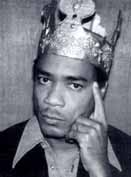
Around 1969 Kingston-based reggae producers started to issue singles with instrumental “versions” on the flipside of vocal releases, which were actually the basic riddim tracks. To these “versions” one could add further instrumentation or deejay accompaniment. Within a year the inclusion of instrumental versions on the flipside was common practice among the majority of Jamaica’s producers. In 1971 the first real dub recordings began to appear, with The Hippy Boys’ “Voo Doo” – the version to Little Roy’s “Hard Fighter”, which was mixed by Lynford Anderson a.k.a. Andy Capp – now widely acknowledged to be the first recording in the genre. But it was pioneering sound engineer and sound system operator Osbourne Ruddock who did more than any other to popularize and develop the sound. He explored the possibilities of sound from his small studio, located at the back of his home, at 18 Drumilly Avenue, Kingston 11. — Teacher & Mr. T.

(more…)

“Dub Revolution: The Story of Jamaican Dub Reggae and Its Legacy” by John Bush


Lee “Scratch” Perry
Image source: Analog Arts Ensemble
Text source: THE DREAD LIBRARY
Date: uncertain

I. DUB REVOLUTION

This is dub revolution . . . music to rock the nation.

-Lee “Scratch” Perry

In the modern age of electronic music, the word ìdubî has become a buzzword for virtually any style of music that utilizes the remixing of prerecorded sound as a mode of artistic expression. The idea of taking apart the various instruments and components that make up a recording and remixing them into something that sounds completely different is a common practice today, being used in various styles of music such as jungle, house, hip-hop, and even metal. It is often overlooked, however, that the dub technique and style originated in Jamaican rocksteady and reggae. The great sound system engineers of Jamaica in the late 1960s and early 1970s pioneered the instrumental remix and were the first to make the style popular. Using only primitive recording and mixing equipment, the mixing engineer took a lead role in defining the sound of the recording, using the mixing board as his instrument. The resulting dub craze that occurred in Jamaica in the mid 1970s further established the mixing engineer as an artist. For the first time in recorded music, the ìsoundî of a recording become connected not only with the musicians and the producer, but with the mixing engineer as well. Dub became a tradition and a part of the musical culture in Jamaica. The proliferation of instrumental mixes, known as ìversions,î as well as radically remixed ìdubsî that resulted opened the doors to a vast new field of musical expression that would eventually be embraced not only by Jamaican music but by popular music all over the world.

(more…)

Current Projects


    Books


    Remix Theory | is an online resource by Eduardo Navas. To learn more about it read the about page.

    Logo design by Ludmil Trenkov

    http://www.mentalhealthupdate.com/