About | Remix Defined | The Book | Texts | Projects | Travels/Exhibits | Remixes/Lists| Twitter

Archive of the category 'Art'

The State of Swift Production: Interactivos?’08 (part 1 of 3), by Eduardo Navas
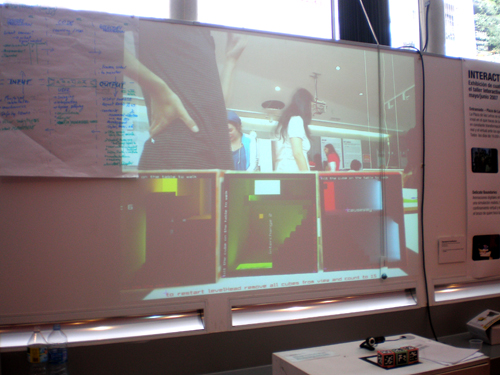
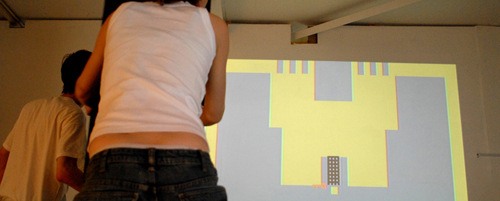
Image: Medialab Prado. Image of Julian Oliver’s “Levelhead,” 2008, projecting part of the Medialab workspace. First version “Unprepared Architecture” of Oliver’s project was developed in Interactivos?07 in collaboration with Simone Jones.

Medialab Prado when described to anyone unfamiliar with the art space appears to be a utopia for collaborative media production that would only function in theory. However, as those who have participated in past events can attest, the lab in practice is quite successful, and has produced some strong projects which have been exhibited in various venues soon after their completion in the two week workshops.

The premise behind the lab is to accept project proposals around a thematic, relevant to contemporary cultural production. Once projects are selected, collaborators are invited to work with the artists. The projects are complemented with a series of talks, which usually take place during the first days. The whole process ends with an exhibition of the finished proposals in the Medialab itself, which changes from a working studio space into an exhibition space. In just two weeks artists and collaborators can produce intricate works ready to be exhibited professionally.

There are five lines of work scheduled year-round: Interactivos?, Visualizar, Inclusiva, Commons Lab and AVLAB. All five with a specialized focus that allows participants to work fast and with precision. The result is an impressive number of projects that explore some of the most pronounced interests in emerging fields currently at play across the global new media community, from experimental sound to interactive video installation.

Interactivos?08 is the current line of work, taking place from May 30 to June 15, 2008. The thematic for this round is Vision-play. Interactivos?08 started with a series of historical and theoretical presentations by writers and artists invested in the concept of play in visual culture. The presentations of the accepted projects were successfully mixed with the theoretical presentations making obvious the necessity to have both theory and practice closely bound as part of the creative process. Interactivos?08 also offers two more important theoretical lectures on Thursdays of both weeks.

The art projects this year explore the ever-evolving definition of interaction in the aesthetics of the work of art in terms of play (hence the theme “vision-play”). The selected projects include simulation of the human face on a hacked mirror in “M.A.S.K. (My Alter Self Konciousness)” – Jordi Puig; an unconventional record of lapse of time with the use of solar energy and sand, reminiscent of sand clocks in “Spiral Drawing Sunrise” – Esther Polak; a series of open source videos designed to evolve online in “Bloop” – Martín Nadal; the exploration of performance for oneself as well as others when a person manipulates random imagery by using a swing in “Stage Fright” – Nova Jiang; the conundrum of music and art known as synesthesia in “360º score” – Philippe Chatelain; culture’s ongoing obsession with accessing a single experience from multiple points of camera views in “Immodesty” – Karolina Sobecka; augmented reality as a space that reconsiders elements of gaming and real life as repetition, following the Droste effect in “Daedalus_ex_Machina [DexM]” – Walter Langelaar; the repetitive reflection of the human condition with the recognition of one’s eye (reminiscent of Tony Ousler) in “Expanded Eye” – Anaísa Franco, reconsideration of the act of seeing with geographical tools used for a critical yet personal global vision in “augment(0)scope” – Eloi Maduell; and the remixing of the Zoetrope as a domesticated mechanical ‘live’ and ‘smart’ pet in “Biophionitos” – Paola Guimerans, Horacio González, Igor González.

At the moment, the projects are in full production. Artists and collaborators are currently testing software and hardware before committing to more elaborate physical construction. The projects’ sophistication is further informed by the expertise of practicing artists Alvaro Casinelli, Daniel Canogar, Simone Jones, Julian Oliver and Pablo Valbuena. In only a week the projects will be finished and a lively audience during an art opening will be able to experience works of art that were developed with great sophistication and unprecedented efficiency. Two qualities of cultural production which in the not so distant past were often considered incompatible in the production of works of art.

Medialab Prado’s Main site: http://medialab-prado.es/
Interactivos? main website: http://www.interactivos.org/
List of projects with proper descriptions: http://medialab-prado.es/article/interactivos08_-_juegos_de_la_vision
_lista_de_comunicaciones_y_proyectos_seleccionados

Medialab Flickr: http://www.flickr.com/photos/medialab-prado/
Medialab Wiki: http://wiki.medialab-prado.es/index.php/Main_Page

Other lines of work, year round:
Visualizar: http://medialab-prado.es/visualizar
Inclusiva: http://medialab-prado.es/inclusiva-net
Commons Lab: http://medialab-prado.es/laboratorio_del_procomun
AVLAB: http://medialab-prado.es/avlab2

The Author Function in Remix, by Eduardo Navas

Image sources
Barthes (left): Project Narrative
Foucault (right): K-punk

The Author Function in Remix

This text is a theoretical excerpt from one of my chapters on the role of Remix in Art. It outlines how the theories of Roland Barthes and Michel Foucault on authorship are relevant to New Media, particularly their link to the interrelation of the user and the maker/developer in terms of sampling (a vital element of Remix as discourse). While the text does place a certain emphasis on art, the propositions extend to various areas of culture. It was previously presented as a lecture for ICAM at UCSD on April 6, 2005:
http://navasse.net/icam/icam110_spring05_schedule.html

Remix is Meta

The act of remixing (which I refer to in terms of discourse as Remix) developed as a meta-action. Its specificity in the second half of the twentieth century can best be understood when realizing that the strategies by artists throughout the first half of the twentieth century had to be assimilated to then be recycled as part of the postmodern condition in the second half—a time when remix proper developed in music. The acts of collage, photomontage and the eventual development of mixed media had to be assimilated, not only by the visual arts, but also mainstream media for the concept of remixing to become viable in culture. Remix’s dependency on sampling questioned the role of the individual as genius and sole creator, who would “express himself.” Sampling, then, allows for the death of the author; therefore, it is no coincidence that around the time when remixes began to be produced, during the sixties and seventies, authorship—as discourse—was entertained by Roland Barthes and Michel Foucault, respectively. For them, “writing” in the sense that Rousseau would promote the expressive power of the individual no longer was possible. Sampling allows for the postmodern condition (which some consider to be part of modernism) to come through. To this aspect of sampling we will turn to in the next section. What follows is an outline of Barthes’s and Foucault’s respective theories which were conversant with contemporary art practice, during the period when both authors developed their theories, as it will become evident throughout my argument, their ideas are quite relevant to media culture.

The Role of Author and the Viewer

In his essay, “The Death of the Author,” Roland Barthes questions the concept of authorship. For him it is the text that speaks to the reader. He writes, “A text is made of multiple writings, drawn from many cultures and entering into relations of dialogue, parody and contestation, but there is one place where this multiplicity is focused and that place is the reader, not, as was hitherto said, the author.”[1] With this statement he summarizes his argument that we should treat the text not as something coming from a specific person, but as something that takes life according to how the reader interprets the writing as a collage of diverse sources. For Barthes, it is the reader who holds the real potential to make discourse productive. He looks at specific authors, like Proust, Mallarme and Valery as authors who “Restore the place of the reader.”[2] The author ceases to matter for Barthes because only in this way can the text be set free, for to have “an Author is to impose a limit on that text, to furnish it with a final signified, to close the writing.”[3] Barthes wants the reader to overthrow the myth of the author as “genius” as it has been promoted since the renaissance. For Barthes, the text’s unity is not in its origin but its destination. And only the reader can define that. It is the reader who completes it.

Michel Foucault also questions the role of the author in contemporary culture, but unlike Barthes, who only pointed out the necessity to shift our cultural attention from the author to the reader, Foucault concludes that even though the death of the author as a great individual has been claimed, the notions supporting such claim actually have only renegotiated the privilege in authorship.[4] To prove this Foucault examines two notions supporting contemporary discourse. The first is the concept of the work, which includes everything an author has written, and the second is the notion of writing, which during Foucault’s time and even in our times pretends to function autonomously. Foucault goes on to claim that this is not so and sets out to prove his point by explaining the definition of his own term “The author function.” Foucault considers the author function to provide a way of controlling discourse. This actually is not too different from how Barthes considers the idea of authorship being a way of limiting the possibilities of the text. The Author Function is a classificatory function.[5] It is not universal, although such discourse could be presented as such. The author function is not created by a single individual but rather it is a complex web of power shifts that leads up to the construct of the author.[6] The author function becomes clear when Foucault explains it in relation to Marx and Freud, two “authors” who created discourses following their names, Marxism and Freudianism (or psychoanalysis). Foucault reasons that these two authors developed concepts that were reevaluated by later generations. Such discourses can be changed which is not necessarily true for the field of the natural sciences, whenever one refers back to the origin of the argument to question it, as he explains, “A study of Galileo’s works could alter our knowledge of the history, but not the science, of mechanics; whereas a re-examination of the books of Freud and Marx can transform our understanding of psychoanalysis or Marxism.[7]

In other words, discourse as developed by an author can be changed. While Foucault went further than Barthes and explained the power dynamics supporting the author, he also agrees with Barthes that one day the author, or the “author function” for him, will disappear: “We can easily imagine a culture where discourse would circulate without any need for an author. Discourses, whatever their status, form, or value, and regardless of our manner of handling them, would unfold in a pervasive anonymity. No longer the tiresome repetitions.”[8] One can notice hope in Foucault’s final statement for a time when a more democratic model would be at play; this has been a pronounced interest of artists and media researchers, and has provided fuel for the historical and neo-avant-garde to stay active since the beginnings of modernism. Barthes and Foucault’s reflections on authorship were already being put into action in their own time with Conceptual and Minimal art practices, which relied largely on appropriation and allegory to derive critical commentary. The notion of authorship which they examined can now be assessed, especially in relation to new media practice, which is largely dependent on the “reader” or user, as the participants are commonly called. This particular dynamic is actually an extension of sampling, which started during the early days of modernism with photography and music.

Sampling allows for the death of the author and the author function to take effect once we enter late capitalism, because “writing” is no longer seen as something truly original, but as a complex act of resampling and reinterpreting material previously introduced, which is obviously not innovative but expected in new media. Acts of appropriation are also acts of sampling: acts of citing pre-existing text or cultural products. (Let us extend the term “text” here to the visual arts and media at large.) This is the reason why citations are so necessary in academic writing, and certainly is something that is closely monitored in other areas of culture, like the music industry, where sampling is carefully controlled by way of copyright law. So, writing in the sense before the enlightenment no longer takes place. Instead, the careful choices of preexisting material made by authors in all fields are revered. Our most obvious example is the work of Duchamp (which I’ve cited in my definition of Remix[9] ), who understood this so well that he decided to simply choose readymades as opposed to trying to create art from scratch; he understood the new level of writing, or creating that was at hand in modernism, which entered a stage of meta—of constant reference, relying on the cultural cache of pre-existing material.

So writing’s and art’s true power is selectivity, and this comes forth today in sampling, a privileged symptom of the postmodern. The selectivity found in the death of the author and the author function as defined above is what makes the notion of interactivity easily assimilated because of sampling. For example, once cut/copy and paste is assimilated not only as a feature for the user to write her own texts, but also to reblog pre-existing material, the user then becomes more of an editor (a remixer) of material, by reblogging under a new context, as a new composition that allegorizes its sources. This possibility of selecting and editing to develop a specific theme according to personal interests plays a key role in how the art viewer, or new media user will relate to the person who produced the object of interaction. This shift, while redefining the concept of creativity and originality also develops new challenges for the media producer.

[1] Roland Barthes, “The Death of the Author,” Image Music Text (New York: Hill and Wang, 1977), 148.
[2] Ibid.
[3] Ibid.
[4] Michel Foucault, “What is an Author,” The History of Art History: A Critical Anthology, ed. Donald Preziosi (New York and Oxford: Oxford University Press, 1998), 299-314.
[5] Ibid, 305-307 .
[6] Ibid, 308-09.
[7] Ibid, 312.
[8] Ibid, 314.
[9] See: “Remix Defined,” Remix Theory < https://remixtheory.net/?page_id=3>.

Reblog: Stereo Effect, by Tyler Coburn


Image: Christian Marclay, Untitled, 1984

Originally posted on May 16th, 2008

Image and text source: Rhizome.org

“Stereo,” Christian Marclay’s first solo exhibition at San Francisco’s Fraenkel Gallery, surveys “concepts of doubling and echoes” across the American artist’s career. Since the mid-1970s, Marclay has uniquely navigated the visual and sonic realms, exploring the materiality of equipment like the gramophone, turntables and record through processes that foreground what the artist calls the “unwanted sounds” of the mediums: the clicks, pops, scratches and deterioration that hold “expressive power” in themselves. In the past decade, Marclay has extended his position as cultural archivist with acclaimed installations like Video Quartet (2001) and Crossfire (2007), respectively comprising sequences of musical performance and gunshots assembled from dozens of feature-films.

Consisting of twenty-five works — the majority of them two-dimensional — “Stereo” offers a timely retrospective of a side of Marclay’s practice not always given due attention relative to his video and audio-based work. For Yin and Yang (1983), from his Recycled Records (1980-1986) series, Marclay cuts and reassembles two records according to the yin-yang design, rendering an unplayable product that also signifies turntable culture’s collage ethos. This approach can also be observed in paper works like Untitled (1984) and Double Tuba (1992), both of which find the artist producing fanciful modifications to instruments and equipment through paper collage. Seen within the broader scope of Marclay’s body of work, these objects offer examples of how visual art can provide conceptual space to reimagine sound and sound technology. — Tyler Coburn

Marie Sester Interview: Access, Transparency and Visibility in “Exposure”, by Eduardo Navas

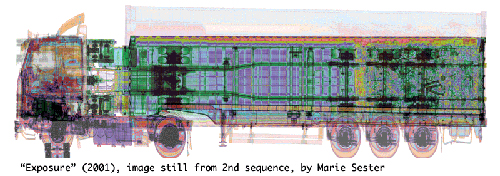
Still from second video sequence.

Image and text source: gallery.calit2.net

The following is an interview published for the exhibition “Exposure” A Video Installation, Pre-9/11, at gallery@calit2.net, on view from April 10 to June 6, 2008. In this interview Sester’s views on Surveillance expose how elements of appropriation vital to Remix are at play in culture publicly, and which since 2001, have redefined privacy for the average person. This interview was originally published in conjunction with the text “Exposure” Pre-9/11.

Marie Sester is an artist born in France, currently living in Los Angeles. She was trained as an architect, but soon after receiving her degree realized that her real interest was in understanding the role of architecture as discourse in culture and politics. She found art an ideal space to develop her interdisciplinary projects. Sester sees her art practice as an ongoing process partly defined by a person’s desire to visualize certain things, while making others invisible. Throughout the 1990s, Sester explored how surveillance redefined our understanding of reality. In the following interview Marie Sester generously shares the story behind her three-channel installation, “Exposure,” explaining how her role as an artist allowed her access to information which she could not obtain today due to the security measures put in place after 9/11.

[Eduardo Navas]: You explain that you are interested in the concepts of transparency, visibility and access. Can you explain how these came to shape your project “Exposure” and your interest in surveillance?

[Marie Sester]: The situation that became a reality in the U.S. after 9/11 had been developing in Europe for some time. Bombing attacks were part of my reality in France, hijacking planes and taking passengers as hostages was something we lived with day to day. This was often done to ask for money, or demand for political prisoners to be released. Such unfortunate events were not part of U.S. reality.

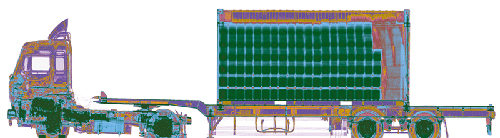
Terrorism was already present in Europe. There were many individuals from small groups using what today we call terrorist strategies; it was at this time that surveillance devices were introduced. I was intrigued by this shift, which was a bit disturbing. As surveillance technology started to be introduced at the airport, it became normal to have one’s luggage X-ray scanned. It became common to find scanners at the airport, as well as government buildings like City Hall. The unexpected beauty of surveillance technology fascinated me.

Suddenly, there was a new form of presence and reality defined by these new devices. And I wanted to work with the images they produced. I had already been working with pre-made objects and images for some time. At that time I forged and assembled the notions of transparency, visibility and access and they are still the basis of my work.
(more…)

“Exposure” A Video Installation, by Marie Sester, Text by Eduardo Navas

Text: “Exposure” Pre-9/11

Text source: gallery@calit2.net

This text was written for the exhibition “Exposure” A Video installation About Surveillance Pre-9/11 by Marie Sester. Sester’s work exposes how elements of appropriation vital to Remix are at play in surveillance, an area of culture which since 2001 has played a pivotal role in redefining privacy for the average person.

The awareness of a work of art’s historical context is closely linked to aesthetics. While viewers could, first and foremost, approach a work with the sole aim of exploring its formal qualities, at some point they must acknowledge when, how and why the work was produced, which means that the work’s history becomes an inherent part of its meaning. “Exposure,” a three-channel video installation by Marie Sester, on view at gallery@calit2 from April 10 to June 6, 2008, is a prime example of this development.

The work consists of images of x-rayed vehicles juxtaposed with architecture. Sester’s investment in exploring the aesthetics of x-ray surveillance became an obsession that initially led her to embark on the pursuit of detailed images of airport luggage, which she considered extensions of the human body. Her research eventually resulted in the x-ray images of trucks taken at Orly Airport in Paris, juxtaposed with a house located in the East Bay Hills of Northern California, now part of “Exposure.”

The installation was first exhibited as part of the exhibition “Blind Vision: Video and Limits of Perception” at the San Jose Museum of Art from August 4 through November 14, 2001. Coincidentally, the tragic events of 9/11 took place while the exhibition was on view, and the meaning of “Exposure” changed at that moment, when the concept of surveillance became directly linked to terrorist preemption. Surveillance in the past did not have such specific overtones.

(more…)

Various Remix Videos and Mashups

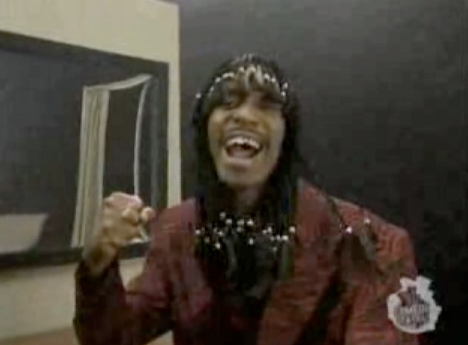
Image source: still of Dave Chapelle impersonating Rick James from “Mashup Video with Jackson, Britney & Rick

The following is a set of links I prepared for one of my classes on film and video language. I repost them here for later use, and to share with the online community. The list is not by any means exhaustive, and is not linear in any way. The top links are mashups and the bottom links are early hip hop and rock videos. They were chosen in part because of the different approaches to video making, this was necessary for the class, because the students need to understand how music video language evolved throughout the eighties and nineties on to today.

Some of the videos also show early traces of sampling, for example, Trans Europe Express was sampled by Afrika Bambaataa for Planet Rock. Also, the remix of Tour de France juxtaposed with the early version shows how electronic music has evolved while acknowledging the important paradigms set by early electrofunk compositions. The now well known mashups of Christina Aguilera and the Strokes, Madonna and the Sex Pistols, as well as Michael Jackson, Britney Spears the White Stripes and Rick James are some of the most successful remixes in this genre. Part of me admittedly rejects them for their popularity, but the creativity that has gone into the audio remix as well as the video editing have to be noted, because they have at this point set a standard in Remix Culture.

Christina Aguilera and the Strokes, Mashup:
http://www.youtube.com/watch?v=Wl85yq_k0V0

Madonna/Sex Pistols Mashup:
http://www.youtube.com/watch?v=ucLIYZ-tyiQ
Madonna Eurithmics Mashup:
http://www.youtube.com/watch?v=dK-
ppQnAl8A&feature=related
Madonna/Depeche Mode:
http://www.youtube.com/watch?v=DW2
YUyeK5FI&feature=related

Michael Jackson/ Britney Spears and Rick James”
http://www.youtube.com/watch?v=q6
A8uivUNX0&feature=relate
d

Oasis, “Wonderwall”
http://www.youtube.com/watch?v=FAPtTS0TYtU

Greenday, “Boulevard of Broken Dreams”
http://youtube.com/watch?v=bxfpMGLMZ7Y

Early Version:http://www.youtube.com/watch?v=akGR
WdkAxhI&feature=related

Greenday/Oasis with Travis Mashup with Eminem:
http://youtube.com/watch?v=0DzDcAW6GmQ
Yet another twist on the mashup:
http://youtube.com/watch?v=vNLop_nuCzo

Talking Head’s “Burning Down the House”
http://youtube.com/watch?v=st1lH8zcIuQ
&feature=related
Talking Head’s “Wild Wild Life”
http://youtube.com/watch?v=4NXkM8PsPXs

The Cars, “Magic”
http://youtube.com/watch?v=6bEu9wLDjKY
The Cars, “Shake it Up”
http://youtube.com/watch?v=foj81S44_
bE&feature=related

Sex Pistols, “God Save the Queen”
http://youtube.com/watch?v=8z2M_hpoPwk

Ramones, “Rock and Roll High School”
http://youtube.com/watch?v=hLahs7yCprQ

Malcom Mc Claren, “Buffalo Gals”
http://youtube.com/watch?v=7b1zKyVeKgk

Sugar Hill Gang’s Rapper’s Delight:
http://youtube.com/watch?v=diiL9bq
valo&feature=related
In Scrubs:
http://youtube.com/watch?v=
CtAlZB2iqCU&feature=related

Soul Sonic Force’s “Planet Rock”
http://youtube.com/watch?v=9h6pcqC6wrI
Grandmaster Flash’s “The Message”
http://youtube.com/watch?v=k3kRuJhIVIo

Kraftwerk, “Tour De France” Original Version:
http://youtube.com/watch?v=VPowpIR
VOuY&feature=related
Kraftwerk, “Tour De France,” 2003
http://youtube.com/watch?v=sQz-C
ZvkY8k&feature=related
Kraftwerk, “The Robots”
http://youtube.com/watch?v=VXa9tXcMhXQ
Kraftwerk, “Trans Europe Express”
http://youtube.com/watch?v=LWlgbAc3bbM

Notes on Deeves’s “Beats of Boredom,” by Eduardo Navas

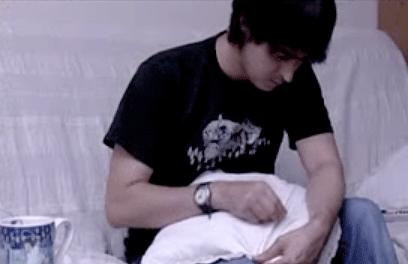
Image still of “Beats of Boredom” by Adams Deeves

The music video “Beats of Boredom” by Adams Deeves has been circulating among online video sites for some time now. Some sites where it can viewed include I-am-bored, Vimeo, and Youtube.

The video was created with clips of a man who finds himself at home with nothing to do. He does what most people who are bored would do: watch TV, eat a not so healthy snack, and then do some cleaning. The originality of “Beats of Boredom” is in the way the sequences are edited, which are built on top of each other rhythmically as new moments of the boring afternoon are introduced. The end result is a music video of an instrumental song clearly influenced by hip hop and variations of house that ordinarily would go unnoticed, were it not for the fact that the sounds were produced with household items.

The video starts with a series of water drops, then the man plays with a small radio, cut to the sound of a tea kettle, then the man scrapes a toast, sits and eats in front of the TV, wondering what to do; then he slaps his right hand on his right leg: once, twice–then hits his chest with his fist, and snaps his fingers; then he opens and closes the zipper of a sofa pillow to mimic the sound of a record being scratched, then he slaps the pillow, creating a similar sound to a base drum; and repeats the whole process. At this point we have the basic rhythmic structure of the music composition in place, and it is a matter of adding other elements on top.

Other activities include placing a CD player in a stereo system, turning on a printer, scratching a jacket’s sleeve with his index finger, going to the refrigerator to look for something to eat, then opening what appears to be a beer bottle; then flipping the pages of a closed note book with his thumb–and turning on and off a vacuum to make the sound of a DJ quickly cutting the sound level on a mixer.

At the end he is asked by a woman who comes into the apartment “What are you doing?” He replies “what?” she repeats, “what are you doing?” he replies, “nothing.”

This video shows how material activities attain value, which in this case consists of careful repetition of sound recordings from an uneventful day. A slap does not mean much if performed once, but when repeated it becomes a vehicle of representation. When this is recognized as a creative possibility, a second, third and fourth slap could follow, and this is the basis of rhythm. Repetition of activities, whether in music or other areas of culture, is necessary to create value–or more simply meaning. Repetition becomes even more stable and efficient when recording technology is used to preserve image and sound for replay.

What we encounter in “Beats of Boredom,” then, are all the necessary elements for any activity to become and be repeated as a mix, and eventually a remix. Most importantly, the video is already a remix because it is composed of samples from a boring day, and in order to understand it as a composition, it is necessary to not only listen to the sound, but also view the video clips as the sound samples are added on top of each other. “Beat of Boredom” gives equal weight to, both, image and sound, something not always accomplished successfully by either music or video artists. Nevertheless, “Beats of Boredom” is primarily a video, which shows how with recording technology one has the power to take representation and manipulate it, mix it and remix it. And once “Beats of Boredom” is repeated enough and becomes recognizable it will enter the realm of the spectacle, and will be prone to becoming remixed or simply consumed passively, not because of its innovation, but because of its recognition as a popular composition.

Thanks to Greg J. Smith for turning me to this work.

Text and Interview for the Exhibition “An 8-bit Moment in Gameplay,” by Eduardo Navas

Image and text source: gallery@calit2

The following text and interview were written for the exhibition “An 8-bit Moment in Gameplay: [giantJoystick],” featuring a ten-foot scale working model of the Atari Joystick by artist and media theorist, Mary Flanagan. The exhibition takes place from February 4 to March 17, 2008. You can read more about it at http://gallery.calit2.net.

Both, text and interview, focus in part on the concept of gameplay and its relation to the mainstream as well as the fine arts. The texts are worth archiving in Remix Theory because they shed light on video game culture which, as it’s no secret, relies extensively in concepts of appropriation intimately linked to the current practice of remixing (Remix). For instance, video game players, or gamers, are no longer only expected to play games as out of a package, or as released online; gamers are expected to actually contribute to the game infrastructure by customizing it, either for personal play, or for the enjoyment of the larger community, following the tradition of open source. Examples of this activity are numerous (see Wikipedia list).

Video game culture is in large part fueled by the same principles that have made networked culture possible: the possibility to share and remix code as desired, to then re-release it for the community to use and improve upon, again. This tendency follows my proposition about the blogger which encapsulates a consumer/producer model that is proactive in media culture. Some skepticism is healthy here, and it must be acknowledged that romanticizing such model is a real danger for new media and remix culture.

The following texts, then, offer a window to some of the issues that inform gameplay today. The texts can be considered valuable because they reflect upon and extend the opinion of one of today’s gameplay insiders, Mary Flanagan.

TEXT: An 8-bit Moment in Gameplay: [giantJoystick]

gallery@calit2
Atkinson Hall
University of California, San Diego
February 4 to March 17, 2008
Featuring [giantJoystick] by Mary Flanigan

gallery@calit2 proudly presents “An 8-bit Moment in Gameplay: [giantJoystick],” featuring a working, large-scale game-interface-sculpture designed for collaborative play by artist and media theorist Mary Flanagan. [giantJoystick] (2006) takes us back to the early days of video games when they entered the home. It features classic Atari games from the 1980s, including Adventure, Asteroids, Breakout, Centipede, Circus Atari, Gravitar, Missile Command, Pong, Volleyball, and Yar’s Revenge. The recontextualization of such classics opens a space to reflect on the brief and dense history of video games and the aesthetics of play.

Video game consoles, which offered low-resolution graphics known as 8-bit, were made popular in large part by Atari in 1977. However, video games did not enter the average household in full force until the early 1980s. To many, the years 1979 to 1986 are remembered as the “golden age” of video games – a period when popular culture would also be exposed to digital technology with the introduction of the personal computer. It is, then, not surprising that video games entered the home in this time period. Flanagan’s [giantJoystick] takes us back to this pivotal moment by turning the Atari joystick into a work of art, which carefully combines her interests in art-making as well as gameplay.

(more…)

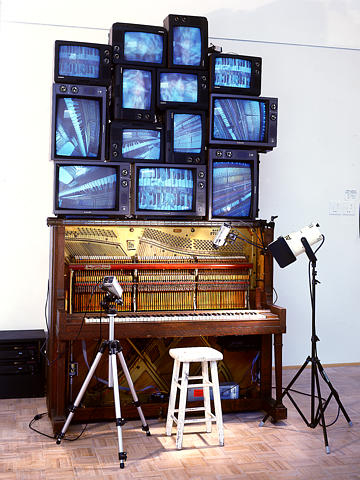
Chance in a Lifetime: John G. Hanhardt on Nam June Paik

Image source: Albright-Knox Art Gallery
Originally published on ArtForum,  April, 2006  by John G. Hanhardt

Text source: Bnet

DO YOU KNOW….?
How soon TV-chair will be available in most museums?
How soon artists will have their own TV channels?
How soon wall to wall TV for video art will be installed in most homes?
–Nam June Paik, A New Design for TV Chair, 1973

THE CULTURAL SIGNIFICANCE of Nam June Paik–who died at his home in Miami Beach on January 29–is clear in the expressions commonly used to describe his unique role in transforming the nascent medium of video into a contemporary art form, from the “father of video art” to the “George Washington of video.” It is incredible to think that an entire decade before Paik predicted the ubiquity of video technology in A New Design for TV Chair, he was featuring his “prepared,” or altered, televisions in solo exhibitions. And as we become the media culture he envisioned in his artwork and writings, we can see how the range of Paik’s creative accomplishments and both the prescience and breadth of his thinking–in a practice unlike anything that preceded him–are all the more astonishing. From his early performances to his work in music, television, video, and film, Paik was constantly in action, exploring and expanding the horizons of art.

Read the entire article at  Bnet

Completion of Diary of a Star, by Eduardo Navas


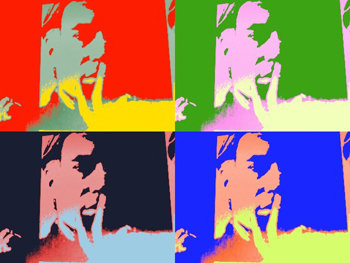
Image of The Andy Warhol Diaries, taken by Eduardo Navas, December 2007

Image source: Diary of a Star

I’ve completed Diary of a Star, a blog project that appropriates the Warhol Diaries. Even though I did not initially contextualize this project as a remix, it certainly is one. Here’s an excerpt of my definition of Remix as a cultural practice:

The remix will always rely on the authority of the original song. When this activity is extended to culture at large, the remix is in the end a re-mix—that is a rearrangement of something already recognizable; it functions at a second level: a meta-level. This implies that the originality of the remix is non-existent, therefore it must acknowledge its source of validation self-reflexively. In brief, the remix when extended as a cultural practice is a second mix of something pre-existent; the material that is mixed at least for a second time must be recognized otherwise it could be misunderstood as something new, and it would become plagiarism. Without a history, the remix cannot be Remix.

Similar to sampling in music remixes, I selected diary entries from Warhol’s Diaries. The way they are recontextualized as a blog allows for the online user to recognize the aura of Warhol, as well as the autonomy of the work as an allegorical piece of art. To accentuate this autonomy, the comments I made are separated from Warhol’s entries, thus the user can come to terms with allegory as a naturalized strategy of the everyday.

Read more about my definitions in this site’s section Remix Defined.

Below is an excerpt of the initial ideas behind the blog:

I use selections of the Andy Warhol Diaries in the form of a blog to comment on diary entries, the private and public, the idea of a celebrity and her life as a public persona, and the activity of web-surfing as part of a new social space. The way the project works is I select an entry from Warhol’s diary and type it verbatim on the blog to the right called “diary.” I create links of people and places that Warhol mentions. I then comment on the people and/or the entry itself on the blog to the left called “meta diary.” What I write always depends on how I relate to Warhol’s entry as well as what I learn while surfing the links his entry provided. The entries correspond by date. I will often take more than half a day to post my own entry, so chances are that when the reader visits this website the “meta-diary” will be a day behind.

Read the entire text at Diary of a Star.

Current Projects


    Books


    Remix Theory | is an online resource by Eduardo Navas. To learn more about it read the about page.

    Logo design by Ludmil Trenkov

    http://www.mentalhealthupdate.com/