Publication: Eduardo Navas, “Re-versioning The Elements of Selectivity: Transformation and Originality after Remix,” Radical Cut-Up – Nothing is Original, ed. Luka Feireiss (Amsterdam: Sternberg Press, 2019), 227 – 244.
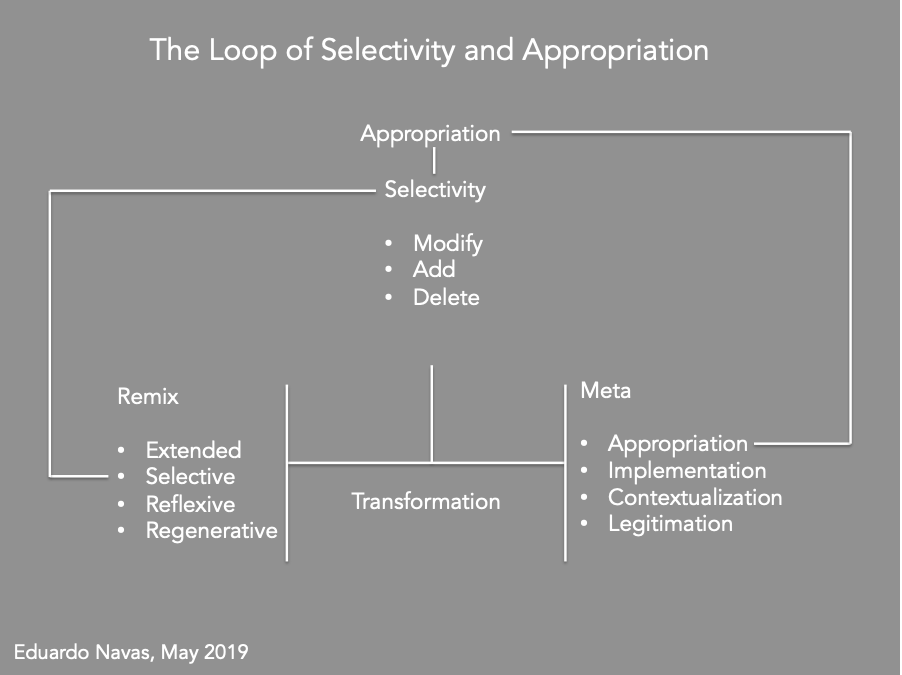
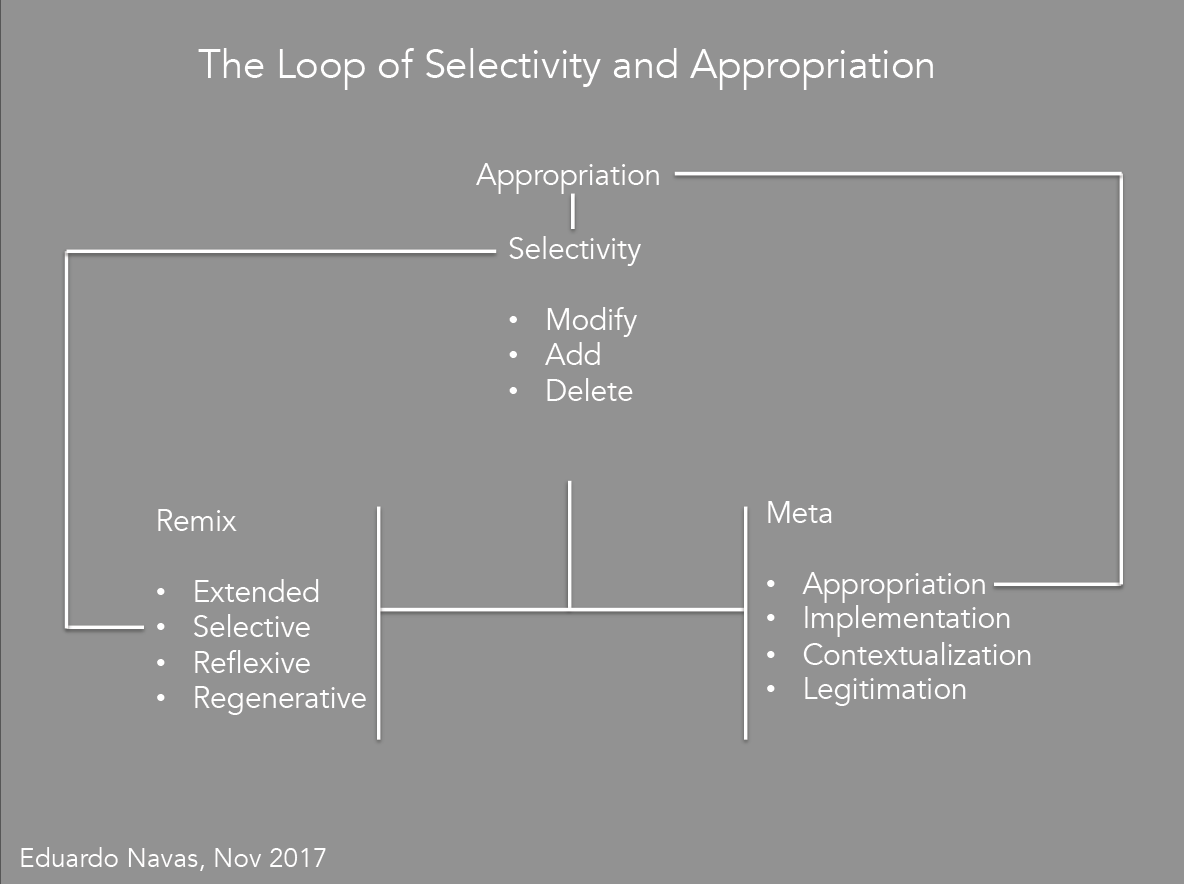
Figure 1: Diagram showing the tautological process of meaning creation.
Note: This essay was published in November 2019 and is released online on December 30, 2020. I will be publishing an update on the theory of selectivity to be released in 2021, which considers the implications of creativity and the selective process in relation to machine learning and artificial intelligence titled “Machine Learning and Remix: Self-training Selectivity in Digital Art Practice.” For a previous release of my basic Theory of Selectivity see “The Elements of Selectivity: After-thoughts on Originality and Remix.” A special thanks to Luka Feireiss who suggested a mashup of my own theories for this version.
The following is a re-version of my theory of selectivity in remix, edited specifically as a contribution for the publication Radical Cut-Up – Nothing is Original. An earlier version of the section titled “The Elements of Meta” was published as part of the last chapter of my book Art, Media Design, and Postproduction: Open Guidelines on Appropriation and Remix (Routledge, 2018). The diagram and the updated text that follow include a new theory on transformation, which was developed after a presentation at The Popular Culture Association Conference of 2019.[1]
[1] The diagram and general theory of selectivity are updated after my presentation for a panel at The Popular Culture Association Conference, which took place in Washington D.C. on April 19, 2019. I want to thank xtine burrough for organizing the event, as well as Seth Welker, who took the time to initially contact presenters, who also included Scott Church. The presentation led to a series of discussions during and after Q&A that led me to reconsider the configuration of the selective process in creativity and communication. I especially thank xtine for bring up during our discussion the importance of the transformative process in remix. Her question led me to comment on transformation being part of the loop of selectivity and appropriation. Previous versions of this text were presented throughout 2017, specifically on October 10 at the Arts & Design Research Incubator (ADRI), Penn State, on October 11 at The University of Caldas in Manizales Colombia, on November 1 at The University of Bern, Bern Switzerland, and as a lecture at Karen Keifer-Boyd’s graduate seminar class at Penn State on November 8. I want to thank everyone who made my presentations possible.
My essay “The Originality of Copies: Cover Versions and Versioning in Remix Practice” was published in The Journal of Asia-Pacific Pop Culture. My thanks to Sean Lowry, and Aleksandr Andreas Wansbrough for all their editorial help for the eventual publication of this article. I thank the anonymous peer reviewers who provided indispensable feedback to improve my argument. Download the PDF.
Abstract:
In this article I analyze the cover version as a specific form of copying in music recording and performance, and then evaluate it as a cultural variable that is part of the creative process in remix practice. This analysis demonstrates that cover versions, versioning, editing, sampling, and remixing are dependent on copying and, for this reason, my eventual focus is on the relation of copies to originals and copies to copies. Another important element examined throughout the essay is the role of selectivity in the creative process as a foundational principle of communication and how it shapes varying popular and individualized assumptions about definitions of originals and copies.
Keywords | appropriation, art, cover versions, cultural studies, media studies,
remix studies, remix theory
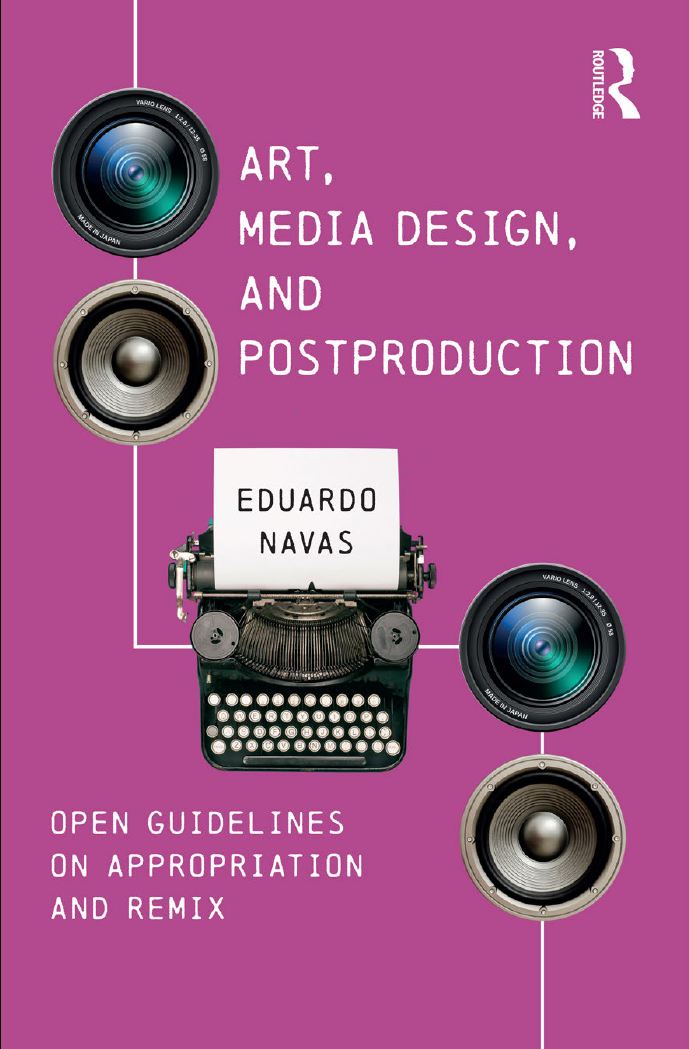
My book Art, Media Design, and Postproduction: Open Guidelines on Appropriation and Remix (Routledge 2018) is now available on hardback, paperback, and ebook. I want to thank the entire team at Routledge for making the publication process an energetic and positive experience. This book is the result of my long term engagement with remix in terms of theory and practice as both scholar and practitioner. Below is the backcover description along with reviews by Jay David Bolter, DJ Spooky, and David J. Gunkel. I give more specific thanks in the book to many people that helped me along the way. I hope the book will be of interest to everyone who finds remixing an important and vital form of creative expression for global communication. Photos documenting the moment I received my personal copies are available on my Twitter feed.
From the back cover:
Art, Media Design, and Postproduction: Open Guidelines on Appropriation and Remix offers a set of guidelines for art and design studio-based projects. The creative application of appropriation and remix are now common across creative disciplines due to the ongoing recycling and repurposing of content and form. Consequently basic elements which were previously exclusive to postproduction for editing image, sound and text, are now part of daily communication. This in turn pushes artists and designers to reconsider their creative methodologies.
Author Eduardo Navas divides his book into three parts: Media Production, Metaproduction, and Postproduction. The chapters that comprise the three parts each include an introduction, goals for guidelines of a studio-based project, which are complemented with an explanation of relevant history, as well as examples and case studies. Each set of guidelines is open-ended, enabling the reader to repurpose the instructional material according to their own methodologies and choice of medium. Navas also provides theoretical context to encourage critical reflection on the effects of remix in the production of art and design.
Art, Media Design, and Postproduction: Open Guidelines on Appropriation and Remix is the first book of guidelines to take into account the historical, theoretical, and practical context of remix as an interdisciplinary act. It is an essential read for those interested in remix studies and appropriation in art, design and media.
Reviews
“Art, Media Design, and Postproduction is the perfect synthesis of practice and theory. It provides sensible guidelines and engaging exercises in the aesthetics of remix and appropriation. It also offers a sophisticated framework for appreciating the history and theory of remix. An indispensable text for every theorist, artist, or designer interested in this key aspect of contemporary media culture.” -Jay David Bolter, Georgia Institute of Technology
“This collection of writings on the immensity of remixing, sampling, collage and the other recombinant arts is sly, fresh, and relentlessly engaging. It reaffirms the resiliency of the artistic imagination in an era of digital overload. Read it as a guide for the perennially optimistic in a very cynical and dark time.” -Paul D. Miller aka DJ Spooky
“In this ground-breaking book, Eduardo Navas puts Remix Theory to work, providing readers with a practical guide to thinking remix by doing remix. He expertly stages innovative engagements with content creation practices that are designed not just to be read but to be used and reused in new and revealing ways.” -David J. Gunkel, Northern Illinois University
The following are edited notes, which can be considered a theoretical mashup from a number of presentations which took place during the Fall of 2017, specifically on October 10 at the Arts & Design Research Incubator (ADRI), Penn State, on October 11 at The University of Caldas in Manizales Colombia, on November 1 at The University of Bern, Bern Switzerland, and as a lecture at Karen Keifer-Boyd’s graduate seminar class at Penn State on November 8. I was fortunate to have received ample feedback on what I presented, which led to the current set of notes I now share. I want to thank everyone who made my presentations possible, during what turned out to be a very busy, but intellectually fruitful period in 2017. In the lectures, I was able to explore the relation of the elements of selectivity (modify, add, delete) in relation to the cultural state of meta, which is the stage in which we create cultural value, and the different forms of remix. These notes, as is the case with much of my writing, are in the process of making their way in remixed fashion to different publications. In effect, the section titled, “The Elements of Meta” is already part of the closing chapter in my book Art, Media Design, and Postproduction: Open Guidelines on Appropriation and Remix (Routledge, 2018).
Challenges of Remix
When we think of remixing, most likely it is remixing byway of material sampling that comes to mind (taking a piece of an actual music recording). But remix principles are also at play in terms of cultural citation (making reference to an idea, or a style, story, etc). The difference between these two forms of recycling content and concepts can be noticed when examining the forms of the medley and the megamix. The medley is usually performed by a band, while a megamix is composed in the studio usually by a DJ producer, who understands how to manipulate breaks on the turntables.
When considering this difference and evaluating how sampling functions in the megamix (which is basically an extended mashup of many songs), it becomes evident that a remix in the strict sense of its foundational definition has to be materially grounded on a citation that can be quantified, in other words, measured because a remix is based on samples. While a sample is quantifiable, a cultural reference (citation) is not, and may not even be noticed by an audience, thus making the material performed appear original. Due to the ability to trace samples back to their sources, given that they are recordings, DJ producers quickly ran into trouble with copyright law: a lawyer could play a sample from a Hip Hop song, in direct juxtaposition with the source of the sample and prove on material grounds that the sample was an act of plagiarism.
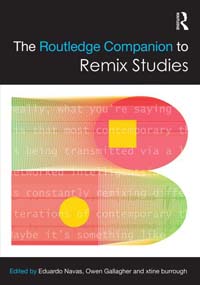
Cover concept by Eduardo Navas, Owen Gallagher and xtine burrough
Cover image: DJHughman
xtine burrough, Owen Gallagher, I are very happy to share the news that Keywords in Remix Studies is now available. It was released on November 28, 2017 in both hard copy, paperback as well as ebook. We thank our colleagues who contributed rigorous chapters to a second anthology on remix studies. We hope the remix community finds the book of interest as a contribution to the ongoing reevaluation of remix as a creative and critical form of cultural production. The book is available among major sellers. The easiest way to buy it is on Amazon or directly from Routledge. Below is the abstract plus the table of contents.
Keywords in Remix Studies consists of twenty-four chapters authored by researchers who share interests in remix studies and remix culture throughout the arts and humanities. The essays reflect on the critical, historical and theoretical lineage of remix to the technological production that makes contemporary forms of communication and creativity possible. Remix enjoys international attention as it continues to become a paradigm of reference across many disciplines, due in part to its interdisciplinary nature as an unexpectedly fragmented approach and method useful in various fields to expand specific research interests. The focus on a specific keyword for each essay enables contributors to expose culture and society’s inconclusive relation with the creative process, and questions assumptions about authorship, plagiarism and originality. Keywords in Remix Studies is a resource for scholars, including researchers, practitioners, lecturers and students, interested in some or all aspects of remix studies. It can be a reference manual and introductory resource, as well as a teaching tool across the humanities and social sciences.
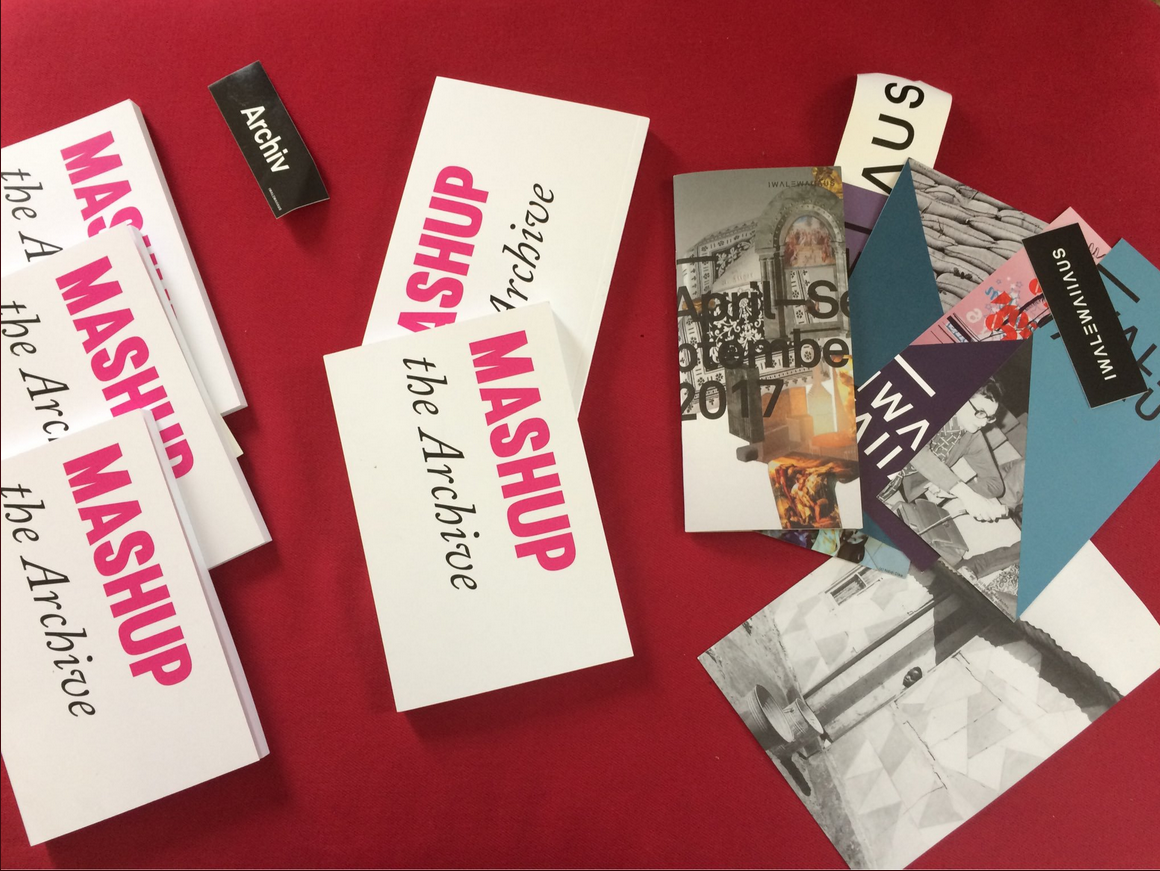
Image: photo of copies of art catalogue for the exhibitionMashup the Archive. My thanks to Nadine Seigert and Sam Hopkins for inviting me to participate in the events for the opening during the month of June 2015.
This text is different from others I have written. It is in part a transcription of a presentation I gave for a roundtable discussion at Bayreuth for the exhibit Mashup, on June 1, 2015.[1] I expanded the basic transcription to revisit my definitions of remix. What is unique of this text is the elaboration of the remix diagram [Figure 1], which in the past I have included in different publications as a visual reference, but have not referred to directly as each term is discussed. Some of the material that follows below was not part of my actual presentation but is added to emphasize remix as a variable at play in Mashup the Archive. The last part of this essay, in particular, is based on the discussion that took place during our panel presentation. It is a reflection on questions about the future of the archive, and who can use it. The text itself, in a way, is a selective remix because its foundation is the transcription of my roundtable presentation to which I added and deleted selected material. This basic form of remix is explained further in what follows. Because of its hybrid format, the text may appear to go on brief tangents, or include comments that are normal in a conversation, but which may not be expected in a formal paper. This text effectively functions between spaces. It borrows from moments in time and makes the most of them to put into practice the theories upon which it reflects.
Introduction
I would like to start by thanking everyone for making this roundtable possible, Sam Hopkins, Nadine Siegert, and Ulf Vierke from the Iwalewahaus, and my fellow panel participants Beatrice Ferrara, Nina Huber, and Mark Nash who joined me during the roundtable discussion. My focus on this occasion is on the interrelation of the mashup, the archive and what I will call dividual agency[2] in accordance to principles of remixing. I will first define remix and the mashup in music and relate it to contemporary culture in general; then I will evaluate the mashup in relation to the archive and authorship by generally reflecting on the exhibit at the Iwalewahaus.
[1] I thank Lucie Ameloot for the transcription. [2] I take the concept of the dividual from Gilles Deleuze, who discusses the concept of a set (a closed system), which changes as it is divided into parts. See Gilles Deleuze, Cinema 1: The Movement Image (Minneapolis: Minnesota Press, 1986), 14-15.
“Rhetoric and Remix: Reflections on Adorno’s Minima Moralia” was published as part of The Journal of Contemporary Rhetoric, Volume 7, Issue 2/3. I want to thank David Beard and Lisa Horton for including my work in a special issue focusing on remix. The essays comprised in the volume are written by important scholars who often focus on remix. I am honored to be part of this collection. Below are the first few paragraphs of my essay. You may download the actual document from the journal’s website. I also make it available on Remix Theory for download.
Rhetoric broken down to its most basic element can be called “the art of speaking well.”[1] In terms of contemporary times, it could be rewritten as “the art of remixing well,” given that we are able to extend our views using pre-existing material almost in real time using different media formats. Remix [and rhetoric] is the use of all media for communication by way of appropriation, repurposing, copying and mimicking.
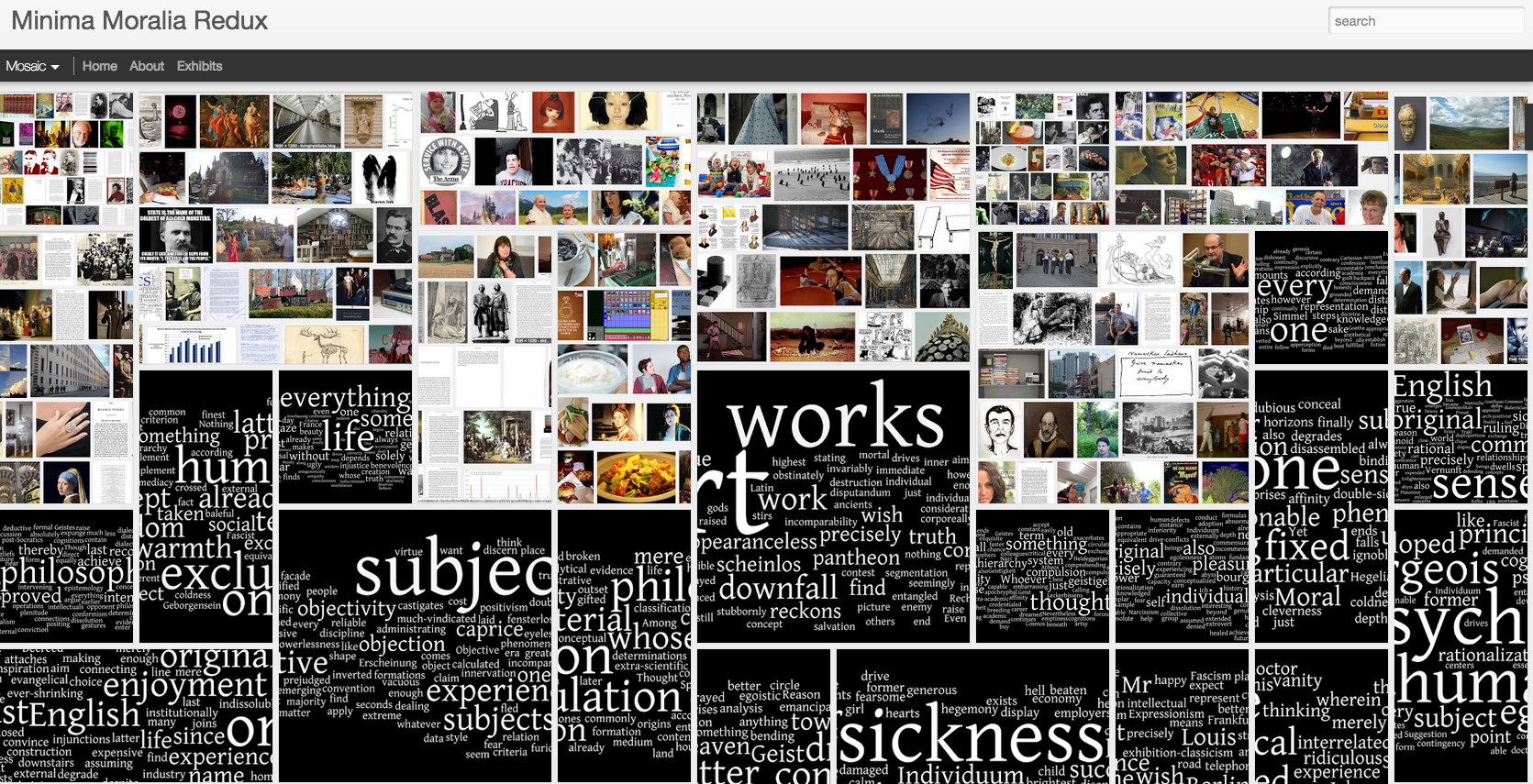
Scott Church explains that the process of selection in remix is rhetorical because the remixer chooses a sample over another.[2] This is an act of selectivity that is vital to contemporary forms of production, whether they be highly acclaimed works of art, or a basic e-mail message that includes pasted content that a person may want to share with another person. My remix of Minima Moralia, which I titled Minima Moralia Redux, from this standpoint is a rhetorical work that, by way of appropriation, updates Adorno’s book as an online project.[3]
Minima Moralia Redux functions as both a work of art and a data analytics research project, which enables me and I hope can help others in understanding how individuals develop works that appear to be autonomous and credited to a single person, but which in reality are only possible because many people are willing to share ideas and resources. It is my hope that we can eventually move past ideas of single authorial works to more open approaches that do justice to the way culture is actually produced in terms of collective knowledge exchange. For this reason, the following focuses on how I appropriate and remix Adorno’s work. I do not discuss his critical position in detail, although I do mention it to contextualize the remix process.
I posted Minima Moralia’s Redux’s first entry on October 16, 2011. The goal, at the time, was to write an entry every week until the 153 aphorisms comprising Adorno’s book were remixed. The initial goal was to finish the project within three years, but as things developed, it became evident that it would take much longer to finish. As I did research on Adorno, I inevitably developed related interests and ideas that took me in other directions, and led to different projects and publications. For this reason, at the time of this writing (2017) I am about half way through Adorno’s 153 aphorisms, and it is not clear when I will eventually finish remixing his book. But for now I can reflect on how the project started, where it stands, and how what I have produced can be reconsidered in terms of remix and rhetoric.
[1] This is a direct quote by the Roman rhetorician Quintillian which was previously quoted in an essay that discusses the relation of rhetoric and remix at length, see Scott H. Church, “A Rhetoric of Remix,” The Routledge Companion to Remix Studies, eds. Eduardo Navas, Owen Gallagher, xtine Burrough (New York: Routledge, 2014), 43.
Cover concept by Eduardo Navas, Owen Gallagher and xtine burrough
Cover image: DJHughman
I have not posted for many months, the reason being that I have been working on several writing projects. One of them will be released very soon. The cover for Keywords in Remix Studies, to be published by Routledge later this year, has been released. I am so happy to have been able to collaborate once again with xtine burrough and Owen Gallagher. I hope everyone finds the book of relevance in terms of remix as a creative field. Below is a brief description.
Keywords in Remix Studies consists of twenty-four chapters authored by researchers who share interests in remix studies and remix culture throughout the arts and humanities. The essays reflect on the critical, historical and theoretical lineage of remix to the technological production that makes contemporary forms of communication and creativity possible. Remix enjoys international attention as it continues to become a paradigm of reference across many disciplines, due in part to its interdisciplinary nature as an unexpectedly fragmented approach and method useful in various fields to expand specific research interests. The focus on a specific keyword for each essay enables contributors to expose culture and society’s inconclusive relation with the creative process, and questions assumptions about authorship, plagiarism and originality. Keywords in Remix Studies is a resource for scholars, including researchers, practitioners, lecturers and students, interested in some or all aspects of remix studies. It can be a reference manual and introductory resource, as well as a teaching tool across the humanities and social sciences.
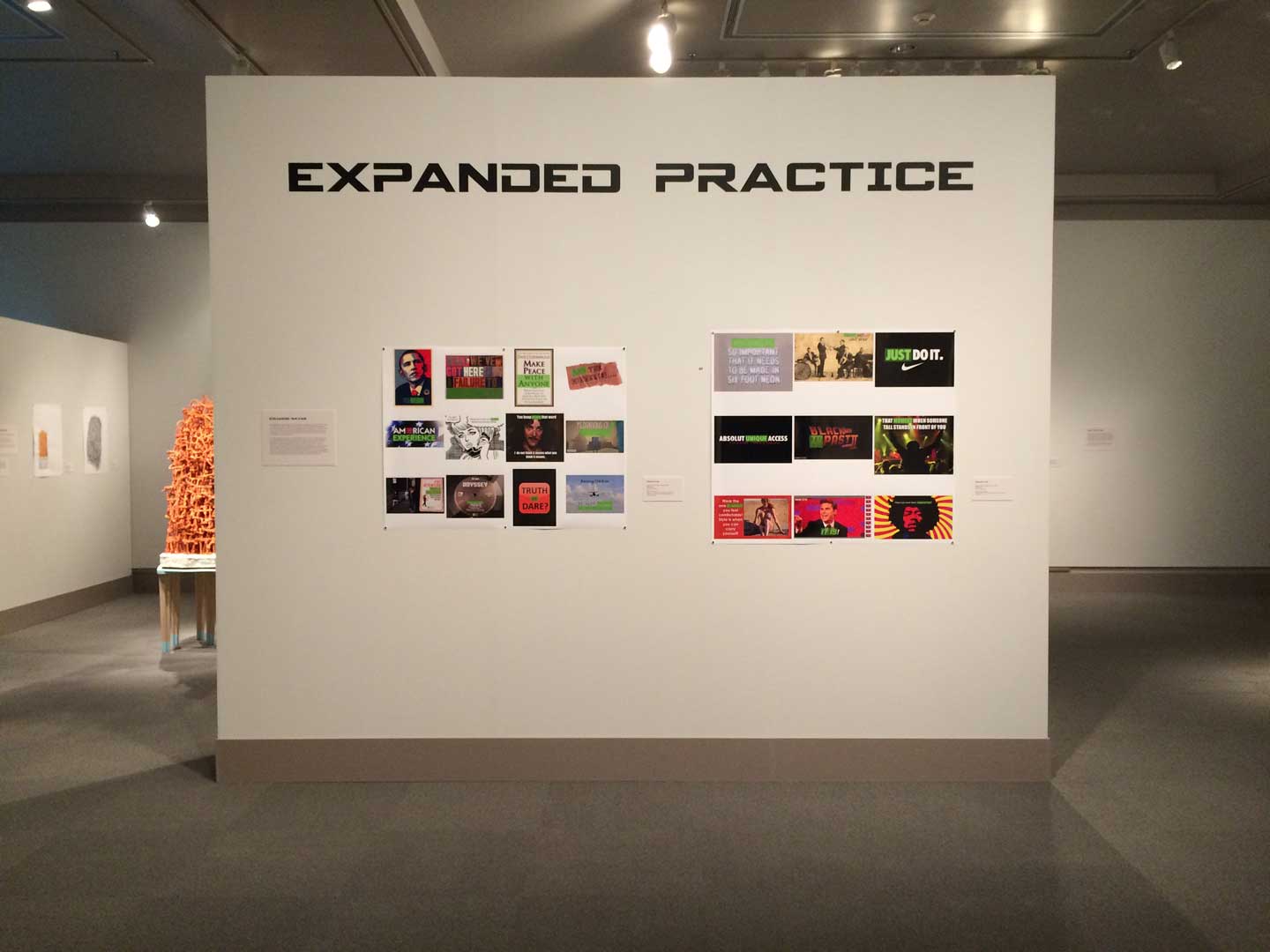
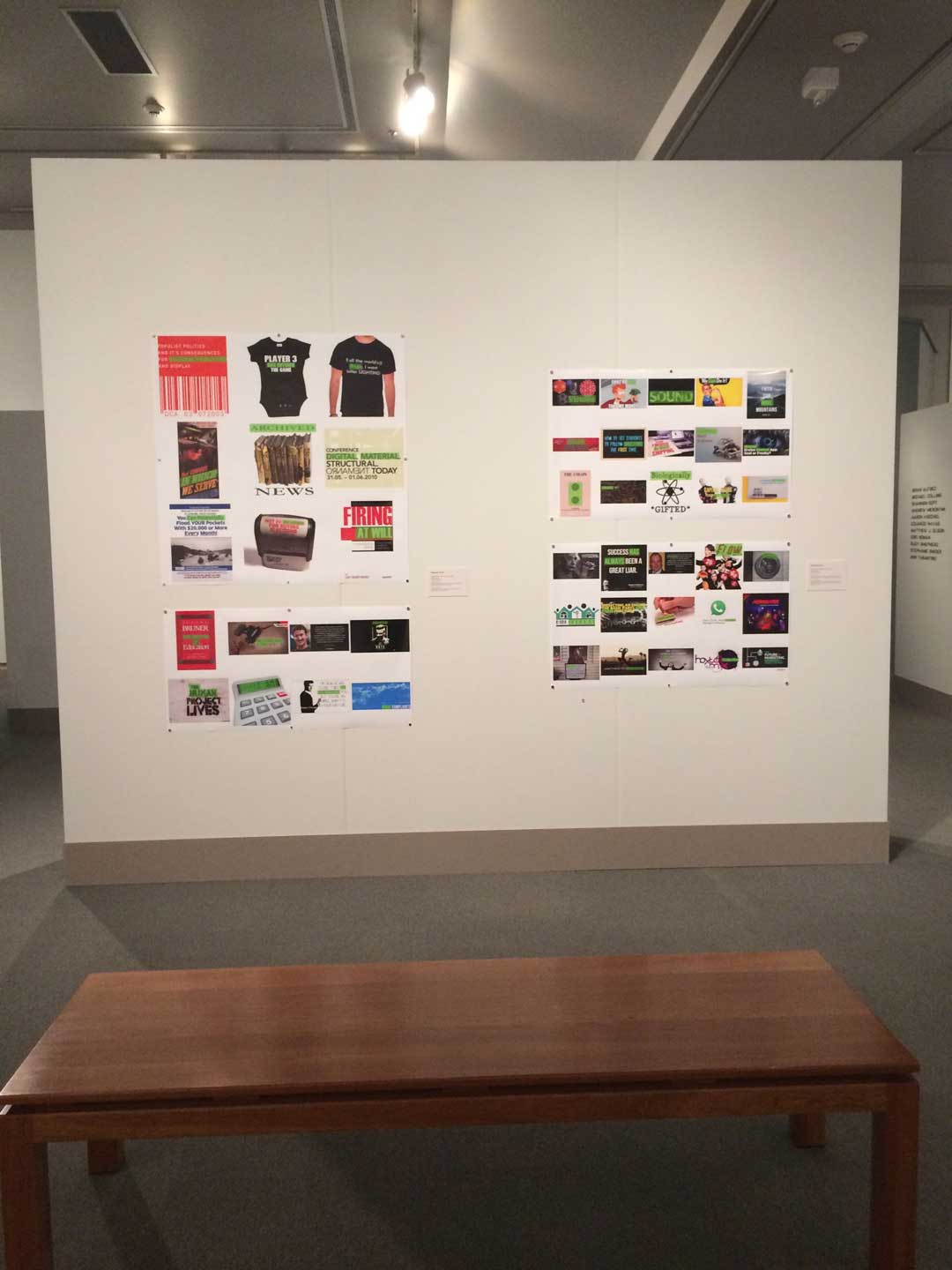
Figure 1: View of prints 1 and 2 from the “Regenerative Culture Series” at the Palmer Museum, Penn State
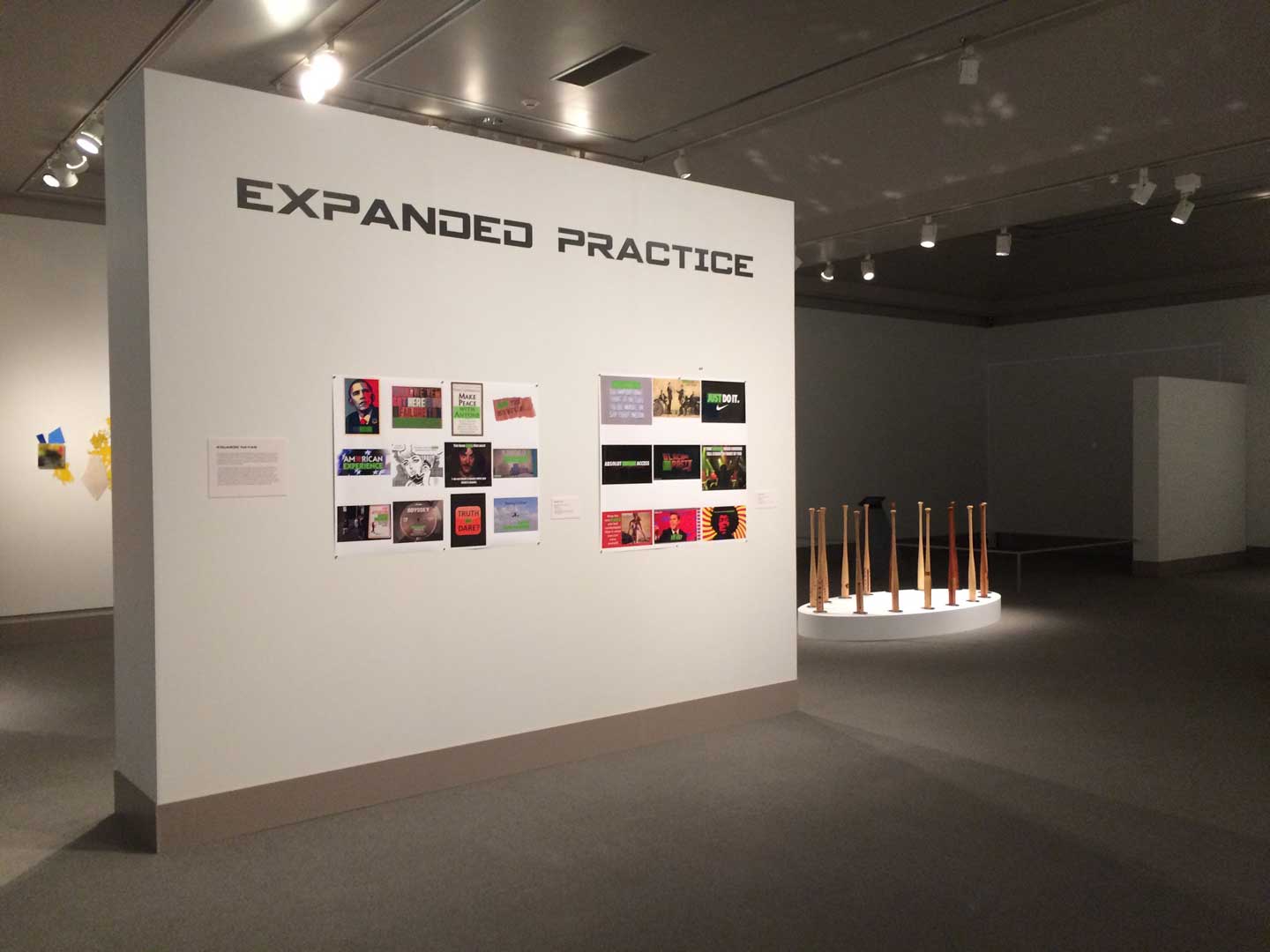
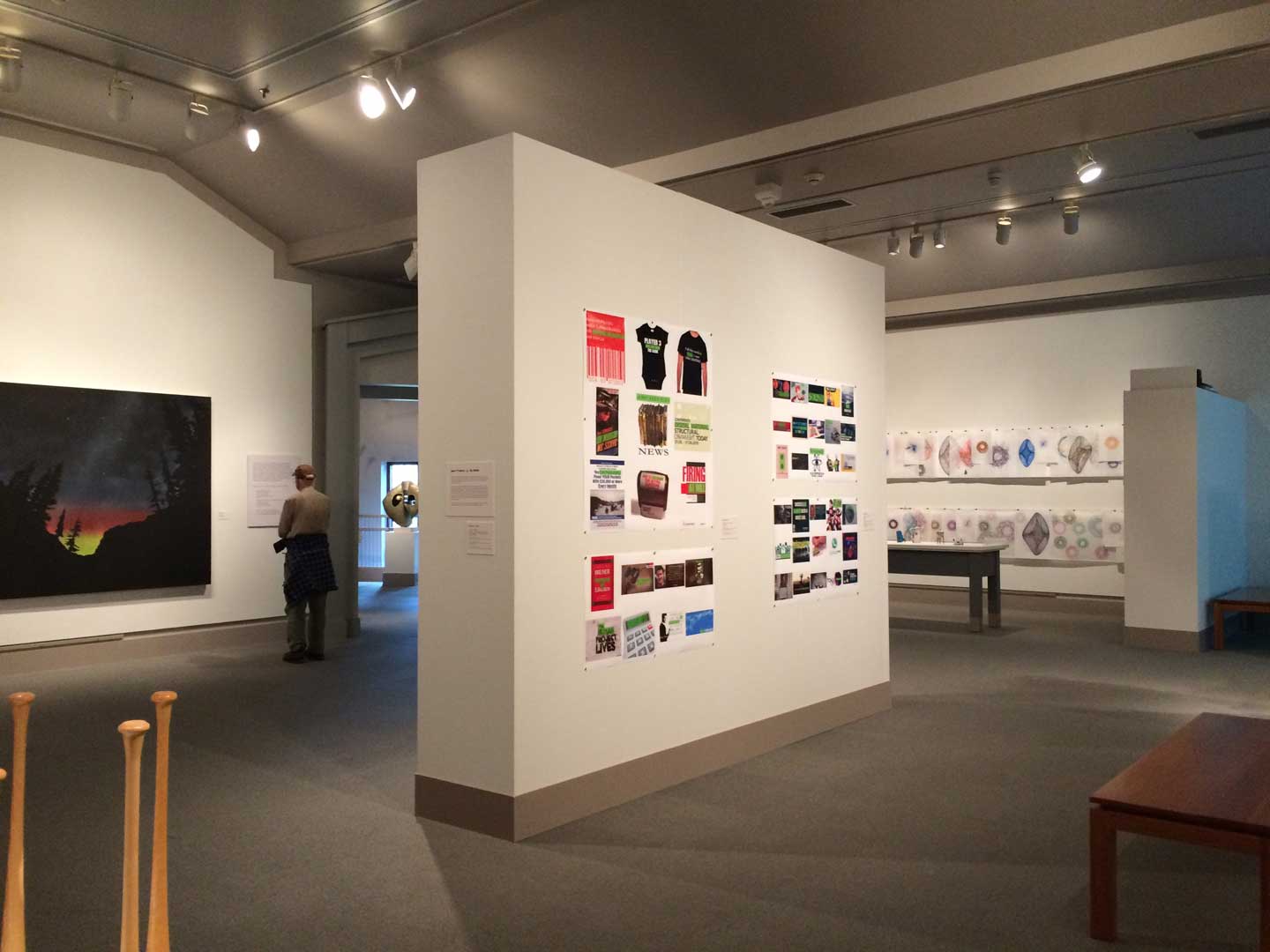
During the Fall of 2016, I participated in the group exhibition “Expanded Practice” at the Palmer Museum, Penn State. The exhibit took place between October 18 and December 11. I showed a series of prints titled “Regenerative Culture Series.” The actual set consists of eight prints. I decided to show six of eight because this made sense for the space. All of the prints can be viewed on their respective webpage available on my site.
Figure 2: Side view of prints 1 and 2 of “Regenerative Culture Series” at the Palmer Museum, Penn State
Here is the description of the print series (from the project’s website):
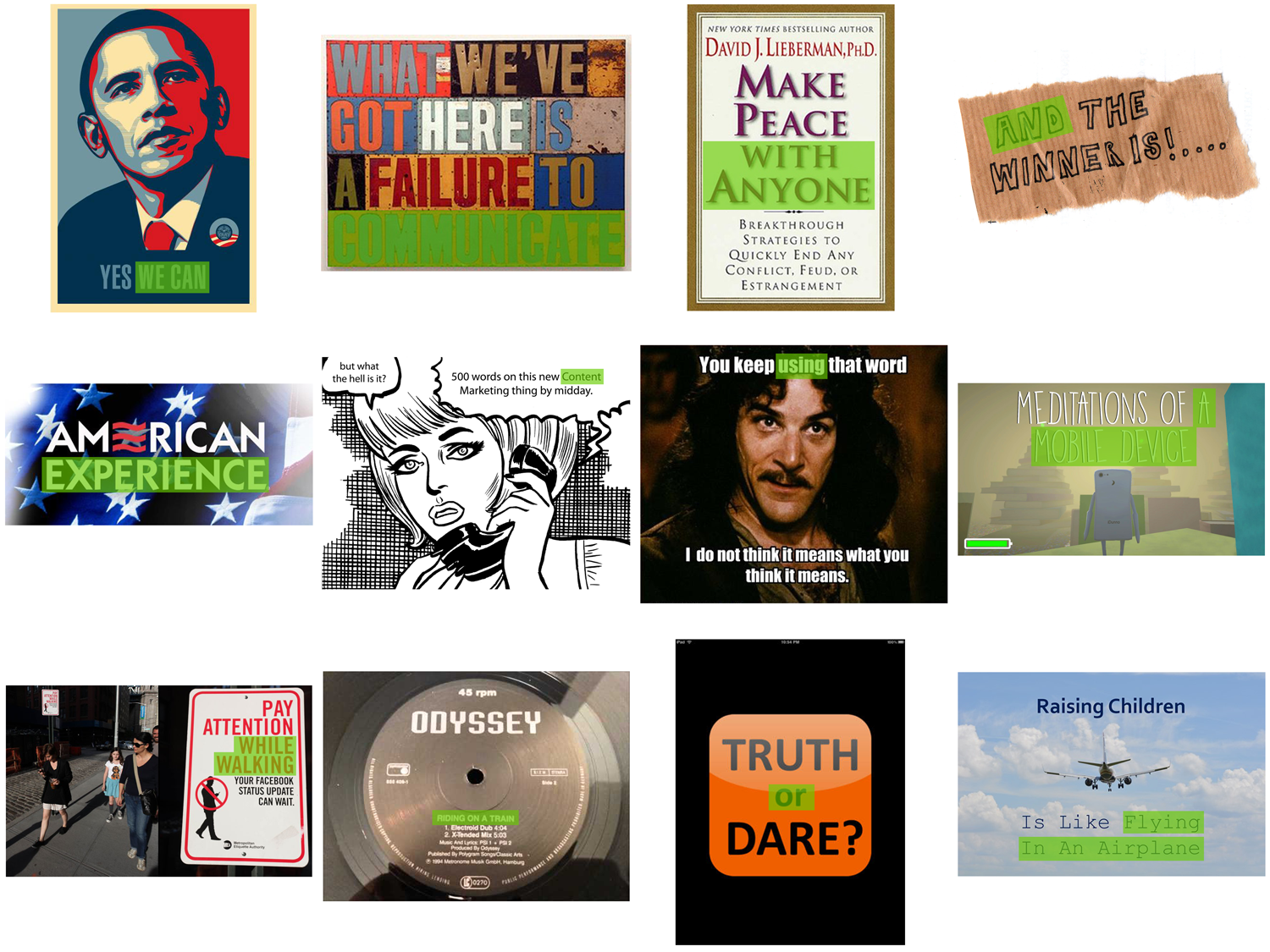
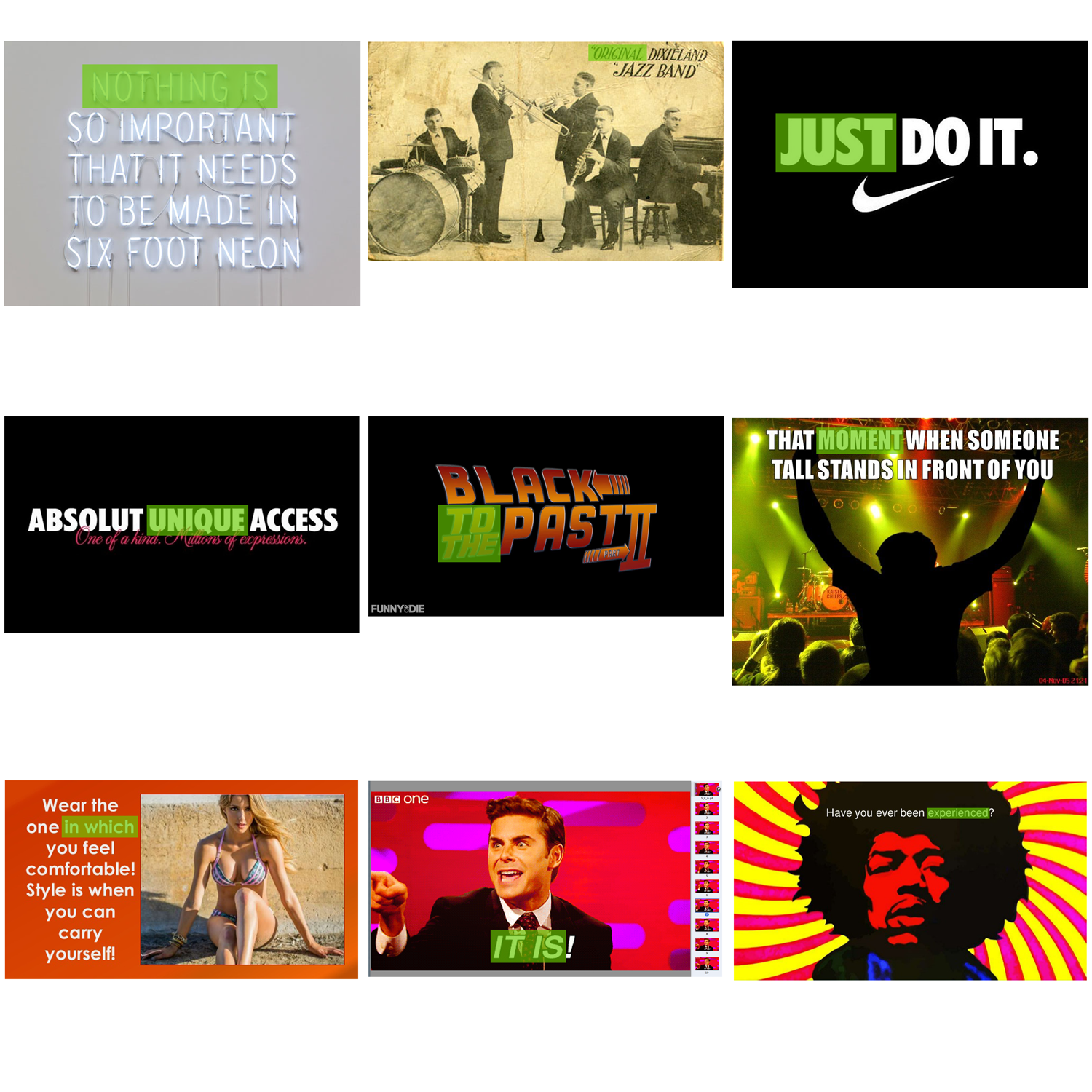
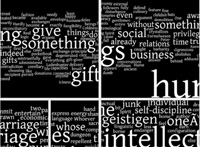
The prints consist of images taken from the web using Google. The images were chosen because they include text that corresponds with a word that is part of a sentence, which in turn is part of a theoretical essay. Some images are altruistic compositions, while others are advertisements and logos among other things.
A specific word or group of words are highlighted in the text of each image in order to create a sentence, which can be read when viewing each composite from left to right. Each of the sentences forming the eight composites are taken from my 2015 essay “Regenerative Culture,” which is a critical reflection on network culture.
The composites are designed to present a tension that opens both image and text for a critical reading of the slippage of meaning in the flow of networked production.
Figure 3: Image 3 through 6 of “Regenerative Culture Series” at the Palmer Museum, Penn State
I was very happy to be part of the exhibit, which, in my view, showed the diverse practice taking place across the different programs in the School of Visual Arts. An article on the collegian published some opinions by the faculty.
Figure 4: Side view of Image 3 through 6 of “Regenerative Culture Series” at the Palmer Museum, Penn State
Figure 5: “Mobile Communication”
Sentence: We can communicate with anyone and experience content using a mobile device while walking, riding a train, or flying in an airplane.
During the Fall of 2016, I taught Art 315 at Penn State, which is a new media studio practice class that introduces students to basic principles of time-based media. The class focuses on bringing together image, sound and text to create experimental and open ended narratives. The class begins exploring sound, particularly noise and ambient sound recorded by students. The students then learn basic editing of music in combination with ambient noise to then move on to basic video editing techniques. They explore the three basic shots in storytelling: the close-up, the mid-shot, and the wide-shot. They also learn basic principles of special effects and end up with a reel of selections that represent the best work they produced throughout the term. The last piece in each of the reels that follow below are remixes of material that each student considered relevant to their respective vision. I am very happy to share the five reels that students agreed to share publicly. My entire class produced very strong work throughout the term, and this is just a sample of all the material they worked very hard to produce.