About | Remix Defined | The Book | Texts | Projects | Travels/Exhibits | Remixes/Lists| Twitter
Loading...

“Street Level” an Art Exhibition Featuring Works by Mark Bradford, William Cordova, & Robin Rhode
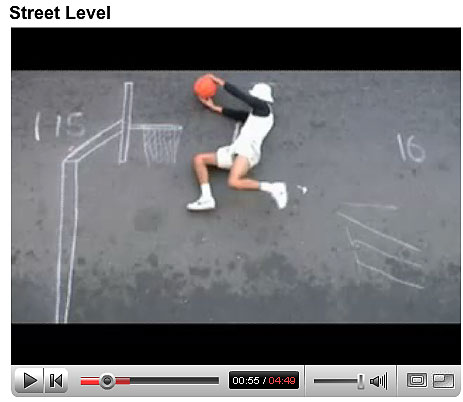
Image source: Youtube

I recently received the following link to a Youtube video about the exhibition “Street Level” taking place at the Nasher Museum of Art:
http://www.youtube.com/watch?v=08nwTyfjCrw

Exhibition:
http://www.thecityisbeautiful.org

As great and as challenging the works in this exhibition may be, they do not fall in emerging Remix practice, but rather belong in appropriation art practice following the conceptual art movement from the nineteen seventies. One thing which should be pointed out is that not everything that makes references to pre-existing material is Remix. Appropriating something does not mean one automatically is remixing. Remix relies on sampling–that is an actual part–an actual section of the “thing” must be part of the “remix,” and the projects in “Street Level” are precise allegorical references to the street, or some other source that is connected to the street. Even after making this clarification I urge you to look at the Youtube video, please do take the time to view it.

Below is the brief statement sent by David Colagiovanni (thank you for the forward!):

It’s the work of 3 artists- Mark Bradford, William Cordova, & Robin Rhode
for who the streets of their respective cities act as fluid, living sources of inspiration. Found objects, urban vernacular and performative gestures help build a foundation for their art, including painting, works on paper, sculpture, photography, video, installation and other mixed media. Their work explores the ways that cultural territory is defined and space is transformed in urban environments.
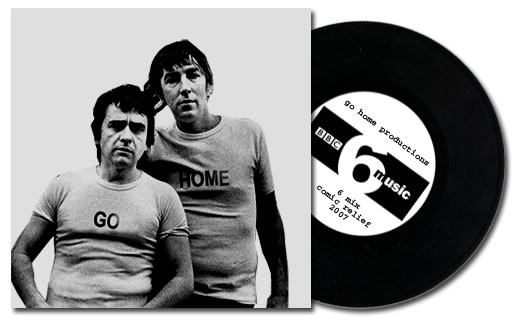
Mash-Up: Artistic Musical Creations or Blasphemy? Interview of Mark Vidler of Go Home Productions, by Ronnie

Image source: gohomeproductions.co.uk

Text source: earcandy_mag.tripod.com

December 17, 2004

Intro:
Some call it artistic musical creations, while others cry that it is blasphemy! It is all the rage in the U.K. and it has even gone mainstream, with MTV U.K. celebrating it on “MTV-Mash”. This new craze is called “mash-ups” and it involves taking the vocal from one song and joining it to the instrumental track of another. For instance, take a “mash-up” like “Paperback Believer”, which uses the musical track of the Monkees “I’m a Believer” with the vocals from The Beatles “Paperback Writer”.

Probably the best-known of the recent mash-up’s is the notorious “Grey Album” by Dangermouse, which mixed Jay-Z’s “Black Album” with The Beatles “White Album”. In February, when the record label EMI overreacted and blocked distribution of “The Grey Album” it pretty much created an instant hit.

And earlier this year, David Bowie had a contest in which he asked fans to create a new song using computer music software to blend or “mash up” two existing tracks – with the winner winning a car!

Read the rest of this entry »

2007 Cassette Jockey World Championships (Competition call worth noting)

Image source: http://www.civilunrest.biz/

Text source: http://makerfaire.com/cj/

Originally learned about it at Rhizome.org

Note: This announcement is so good as as an idea recalling the good ol’days, that it’s worth keeping around for nostalgia’s sake. (But I admit I keep it here for the sake of my ongoing archive.) I can’t think of a DJ from the 80’s who didn’t start out mixing tunes with a tape-player. I did, and it improved my skills on the ones and twos once I could afford to buy them. I do know of another CJ Championship organized by Beige: 2004 BEIGE Cassette Jockey World Championship. Below is the announcement:

2007 Cassette Jockey World Championships

*** CALL FOR COMPETITORS ***

CALLING ALL: Cassette Jockies… Retro-Tech Lovers… Magnetic Media Monsters… Circuit Benders… Multi-Media DJs… Walkman Hot-Rodders… we want you at the:

2007 CASSETTE JOCKEY WORLD CHAMPIONSHIPS

at the Make Magazine Maker Faire!

http://makerfaire.com/cj/

In 2003 at a festival in Chicago, a group of retro-tech geniuses organized The Cassette Jockey World Championships. Like the popular DJ (Disk Jockey) competitions with record-toting DJs showing off their turntable skills, the CJ Championships showcases skills and styles in the venerable world of cassettes. Since CJs were encouraged to hot-rod their own equipment, eviscerated boomboxes, disembodied tape heads, and overclocked Walkmans were the weapons of choice… anything that used the standard cassette as its ammo.

Read the rest of this entry »

The Three Basic Forms of Remix: a Point of Entry, by Eduardo Navas

Image source: Turbulence.org
Layout by Ludmil Trenkov
Duchamp source: Art History Birmington
Levine source: Artnet

(This text has been recently added to the section titled Remix Defined to expand my general definition of Remix.)

The following summary is a copy and paste collage (a type of literary remix) of my lectures and preliminary writings since 2005. My definition of Remix was first introduced in one of my most recent texts: Turbulence: Remixes + Bonus Beats, commissioned by Turbulence.org. Many of the ideas I entertain in the text for Turbulence were first discussed in various presentations during the Summer of 2006. (See the list of places here plus an earlier version of my definition of Remix). Below, the section titled “remixes” takes parts from the section by the same name in the Turbulence text, and the section titled “remix defined” consists of excerpts of my definitions which have been revised for an upcoming text soon to be released in English and Spanish by Telefonica in Buenos Aires, Argentina. The full text will be released online once it is officially published.

Read the rest of this entry »

DUB CITY: Systemwide & BSI Records Lead the Charge of Portland’s Abstract Reggae Boom, by Charles Mudede

Image and text source: The Stranger

Despite its large Mexican and Asian communities, and a black neighborhood that’s more distinctive than the black community in Seattle, Portland seems isolated and singular. Isolated because its architecture, laws, and civic infrastructure are unique, as if the municipal and design trends radiating from the big centers of the world failed to reach this remote outpost, and in this splendid isolation Portland established its own ideals. Singular because its cultural products seem of one mind, one lifestyle, one world (white, middle-class), and not like, say, hiphop, whose parts were fused in boroughs that contained various ethnic groups (African American, Jamaican, Puerto Rican, Jewish).

Portland, however, is not completely isolated as an artistic community, being intricately connected with cities like Seattle, Vancouver, BC, and San Francisco, and it isn’t confined solely to the production of postmodern novels or rock music. In fact, Portland is one of the North American capitals (in terms of production and distribution) of dub music, an abstract form of reggae that originated on the streets of Kingston, Jamaica. The reason for Portland’s dub capital status is the presence of Systemwide, the house band for a thriving dub label called Bucolic Sound Investigations (BSI).

A SHORT HISTORY OF DUB

If you already know what dub is, then I recommend you skip this part and resume the feature in the next section, titled “Portland’s System.”

There is a famous story of a Rastaman and a hippie dancing at a reggae concert. The hippie dances wildly, flapping his arms and moving frantically. The hippie’s expressive dancing irritates the chilled-out Rastaman, who, when accidentally struck by the hippie’s hand, finally tells him to stand still and dance. This is precisely what one must do when listening to reggae: stand still and dance. Reggae is less dance music and more soul music. It’s the soul, not the body, that dances when one listens to Bunny Wailer or the Roots Radics or the Itals. Reggae is so preoccupied with the soul (its condition, its qualities, its shivers and shades) that a whole subcategory of the music is devoted to reproducing soul worlds or geist dimensions. That subcategory is dub.

Read the entire article at The Stranger

Defining the Networked Book: a Few Thoughts and a List Post Date, by Ben Vershbow (reblog)

Image and text source: ifbook

May 02, 2006

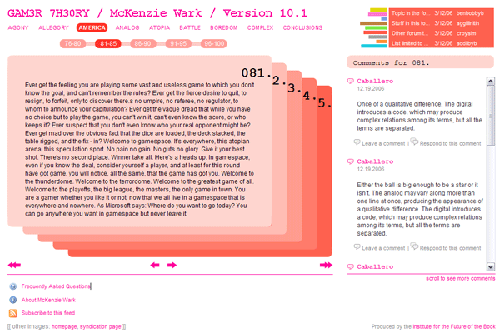
The networked book, as an idea and as a term, has gained currency of late. A few weeks ago, Farrar Straus and Giroux launched Pulse , an adventurous marketing experiment in which they are syndicating the complete text of a new nonfiction title in blog, RSS and email. Their web developers called it, quite independently it seems, a networked book. Next week (drum roll), the institute will launch McKenzie Wark’s “GAM3R 7H30RY,” an online version of a book in progress designed to generate a critical networked discussion about video games. And, of course, the July release of Sophie is fast approaching, so soon we’ll all be making networked books.
screencap.gif

The institue will launch McKenzie Wark’s GAM3R 7H30RY Version 1.1 on Monday, May 15

The discussion following Pulse highlighted some interesting issues and made us think hard about precisely what it is we mean by “networked book.” Last spring, Kim White (who was the first to posit the idea of networked books) wrote a paper for the Computers and Writing Online conference that developed the idea a little further, based on our experience with the Gates Memory Project, where we tried to create a collaborative networked document of Christo and Jeanne-Claude’s Gates using popular social software tools like Flickr and del.icio.us. Kim later adapted parts of this paper as a first stab at a Wikipedia article. This was a good start.

Read the rest of this entry »

Architecture and interaction design, via adaptation and hackability, Posted by Dan Hill at City of Sound (reblog)

Image and text source: City of Sound

May 23, 2006

Dan Saffer recently asked me to contribute some thoughts on adaptation, hackability and architecture to his forthcoming book Designing for Interaction (New Riders, 2006), alongside 10 other ‘interviewees’ such as Marc Rettig, Larry Tesler, Hugh Dubberly, Brenda Laurel etc. Dan’s been posting their various responses up at the official book site (see also UXMatters) yet he kindly agreed to let me post my full answers below (the book will feature an excerpt).

The questions he posed were: Can products be made hackable, or are all products hackable? What types of things can be designed into products to make them more hackable? What are the qualities of adaptive designs? You’ve spoken on putting “creative power in the hands of non-designers.” How do interaction designers go about doing that? What can interaction designers learn about adaptability from architecture?

Given this, Dan had inadvertently provided me with the impetus to get down a decent summary to a few years’ worth of thinking around this subject. So what follows directly addresses one of the stated purposes behind this blog: to see what we can draw from the culture and practice of architecture and design into this new arena of interaction design – and some of the issues in doing so. (An unstated purpose of the blog – of providing me with an indexed notebook – is also fulfilled!) Here goes:

Can products be made hackable, or are all products hackable?

Read the rest of this entry »

WHAT COMES AFTER REMIX? by Lev Manovich


Mixmaster Mike- photo by Chris Taylor

Image source: Virtual DJ

Text source: Manovich.net 

winter 2007

It is a truism today that we live in a “remix culture.” Today, many of cultural and lifestyle arenas – music, fashion, design, art, web applications, user created media, food – are governed by remixes, fusions, collages, or mash-ups. If post-modernism defined 1980s, remix definitely dominates 2000s, and it will probably continue to rule the next decade as well. (For an expanding resource on remix culture, visit remixtheory.net by Eduardo Navas.) Here are just a few examples of how remix continues to expand. In his 2004/2005-winter collection John Galliano (a fashion designer for the house of Dior) mixed vagabond look, Yemenite traditions, East-European motifs, and other sources that he collects during his extensive travels around the world. DJ Spooky created a feature-length remix of D.W. Griffith’s 1912 “Birth of a Nation” which he appropriately named “Rebirth of a Nation.” In April 2006 Annenberg Center at University of Southern California ran a two-day conference on “Networked Politics” which had sessions and presentations about a variety of remix cultures on the Web: political remix videos, anime music videos, machinima, alternative news, infrastructure hacks.[1] In addition to these cultures that remix media content, we also have a growing number of software applications that remix data – so called software “mash-ups.” Wikipedia defines a mash-up as “a website or application that combines content from more than one source into an integrated experience.”[2] At the moment of this writing (February 4, 2007), the web site www.programmableweb.com listed the total of 1511 mash-ups, and it estimated that the average of 3 new mash-ups Web applications are being published every day.[3]

Read the rest of this entry »

Tracking the DIY phenomenon Part 2: Mass customization, mashups, and recombinant Web apps, by Dion Hinchcliffe

Images and text source: ZDnet

February 25th, 2007

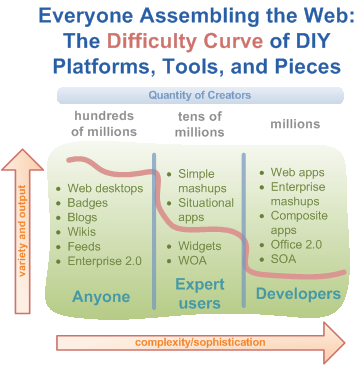
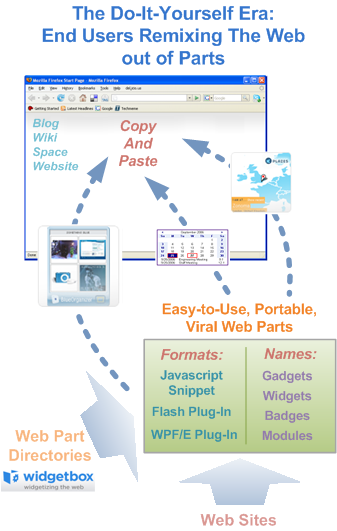
In my  last post, I took a look at the recent proliferation of Web widgets, which are modular content and services that are making it easier for anyone to help themselves to the vast pool of high value functionality and information that resides on the Web today.  Companies are actively “widgetizing” their online offerings so that it can actively be repurposed into other sites and online products.  And as we discussed in the last post, it’s believed that letting users innovate with your online offerings by letting embedding them in their own Web sites, blogs, and applications can greatly broaden distribution and reach, leverage rapid viral propagation over the Internet, and fully exploit the raw creativity that theoretically lies in great quantities on the edge of our networks.

DIY on the Web is looking to be a major trend; Newsweek recently speculated that 2007 will be the Year of the Widget.

Looked at this way, letting thousands and even millions of users build Web sites and apps out of your Web parts and then monetizing it with advertising, usage fees, or subscriptions sounds great in the abstract.  But one of the big outstanding questions is if widgitizing is mostly useful for gaining fast user adoption and market share, and not for building the fundamentals of a viable, long-term business online.  While this last question is still very much an open one, part of the answer will come from the way that the consumption side of DIY develops.  The question is this: Are environments emerging that will enable rich and sophisticated DIY scenarios that are usable by most people?

Read the rest of this entry »

Tracking the DIY phenomenon Part 1: Widgets, badges, and gadgets, by Dion Hinchcliffe

Images and text source: ZDnet

February 19th, 2007

One of the hallmarks of a good Web 2.0 site is one that hands over non-essential control to users, letting them contribute content, participate socially, and even fundamentally shape the site itself.  The premise is that users will do a surprising amount of the hard work necessary to make the site successful, right down to creating the very information the site offers to its other users and even inviting their friends and family members to use it.  Web 2.0 newcomers MySpace and YouTube have shown how this can be done on a mass scale surprisingly quickly, and of course older generation successes like eBay and craigslist have been doing this for years.

There’s little question that the Web is increasingly turning into a sort of online Home Depot with its shelves lined with thousands of useful, off-the-shelf parts of every description and utility.As part of this, users are getting increasingly accustomed to the ease of which they can customize their own corners of the Internet, whether it’s a blog, profile page, Web site or even Web application.  While skinning and customizable layouts have been with us on the Web for a long time, increasingly users want to share — or particularly important to this discussion — even repurpose the content and services they find on the Web in locations and forms of their choosing.

Read the rest of this entry »

Current Projects


    Books


    Remix Theory | is an online resource by Eduardo Navas. To learn more about it read the about page.

    Logo design by Ludmil Trenkov

    http://www.mentalhealthupdate.com/