I will be presenting my research on Remix and Cultural Analytics at the Departamento de Artes Plásticas da ECA, University of Sao Paulo, Brazil during a one week seminar, March 19 – 21, 2012. Information below.
Principles of Remix Seminar
This seminar examines the act of remixing in contemporary culture. It takes a historical approach with the aim to define remix not only as an act but a process. Remix is often discussed in terms of copyright and intellectual property. In contrast, this seminar engages remix as a cultural binder. The premise for the sessions is that remix affects culture in ways that go beyond the basic understanding of recombining material to create something different. The class will go over key principles of remix, and will also contextualize it in the tradition of critical theory.
The five-day seminar will make use of research published in the texts suggested for reading (see list below). The texts should be read before the actual meetings.
Day 1: Principles of Remix
Day 2: The Aesthetics of Remix
Day 3: The Dialectics of Remix
Day 4: The Social Implications of Remix (Social Media and Cultural Analytics)
Day 5: Remix Globalization and Cultural Analytics
All material to be discussed during the seminar is written by Eduardo Navas:
Part 4 of the Series “Everything is a Remix” (above) has been released on line by Kirby Ferguson. In this last segment, Ferguson retells in large part Lessig’s argument on copyright and free culture (later renamed read/write culture). Kirby points to a “System Failure” in the near future. I don’t have much to add in terms of criticism about the series, given that Ferguson very much hops back and forth between cultural citations and material samplings, not acknowledging the complexity of intertextuality as I already discussed in a previous criticism I wrote about his series.
Another video was recently released by Creative Mornings, in which Ferguson goes over his views on remix as a “metaphor” (below). I wonder why he does not make metaphor a key issue in his videos. One would not have to worry about the watering down of “remix” as a term with a specific meaning in networked culture. But perhaps in the end Ferguson may sense that everything is not a remix. As I previously explained, in the end he is discussing intertextuality.
Well produced videos, worth watching. I think people will change their minds about creativity when viewing them, and this is a real contribution by Ferguson.
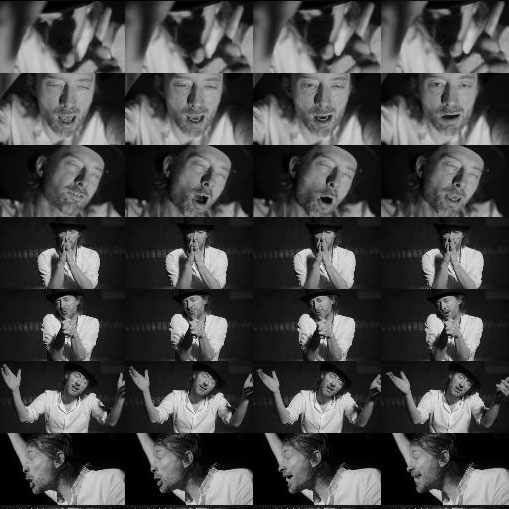
I recently received a message from Elisa Kreisinger about a supercut she created along with Melissa Silverstein (above). It is a video commentary on the obvious inequality within The Academy of Motion Pictures Arts and Sciences. This video is produced just in time for the Oscar’s. I was not able to post it before Monday (the big night), but it serves just as well to post it now, since the hype keeps going. Kreisinger’s commentary follows below:
My colleague Melissa Silverstein and I made a supercut over at Women And Hollywood that compiles all the female-directed films not nominated in an effort to highlight women’s work and shed light on part of the problem: the voting population of the Academy.
* 94% white.
* 77% male.
* 62 is the average age.
We’ve moved beyond the issue of ‘not enough women making work.’
As a result, it’s important to honor prominent female directors here in an effort to encourage more women to write and direct their own work, open the conversation about women-made narratives and shed light on who decides what narratives get honored, why and how that affects our popular culture.
So on Sunday night, women will be at the forefront of the Oscars. But not for their work; for their dress. As you watch the plethora of white men accept their awards on behalf of other white men, keep these women-made movies in mind.
Image: Preliminary cover design and logo for upcoming book by Ludmil Trenkov.
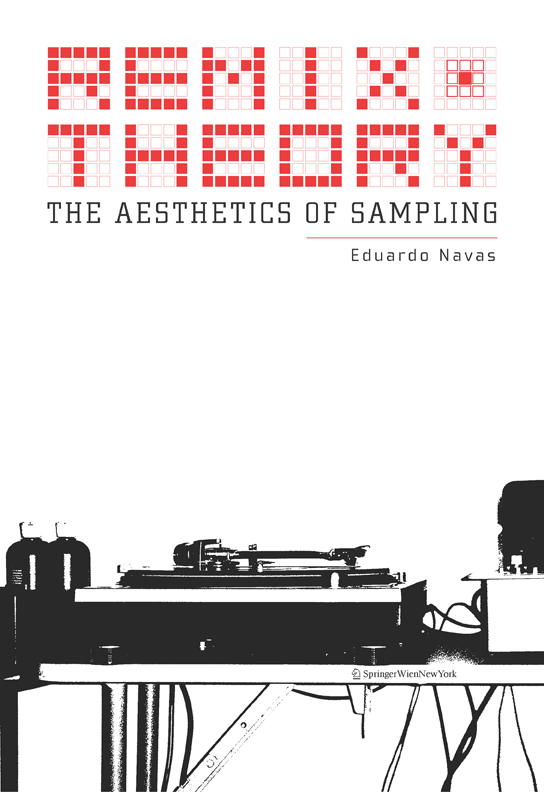
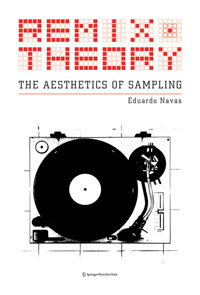
I am very happy to announce that my book Remix Theory: The Aesthetics of Sampling is scheduled to be published later on this year, by Springer Wien New York Press. If all goes according to schedule, it should be available no later than this Fall. The book offers an in-depth analysis on Remix as a form of discourse. To get a sense of what to expect, you can read my previously published text, “Regressive and Reflexive Mashups in Sampling Culture,” also available through Springer: http://www.springerlink.com/content/r7r28443320k6012/. You can read my online version as well, though I encourage you to support the publishing company by downloading the official version.
I will offer more information about the book in the near future, such as the table of content, and excerpts from the text. For now I wanted to share the promotional abstract:
Remix Theory: The Aesthetics of Sampling is an analysis of Remix in art, music, and new media. Navas argues that Remix, as a form of discourse, affects culture in ways that go beyond the basic recombination of material. His investigation locates the roots of Remix in early forms of mechanical reproduction, in seven stages, beginning in the nineteenth century with the development of the photo camera and the phonograph, leading to contemporary remix culture. This book places particular emphasis on the rise of Remix in music during the 1970s and ‘80s in relation to art and media at the beginning of the twenty-first Century. Navas argues that Remix is a type of binder, a cultural glue—a virus—that informs and supports contemporary culture.
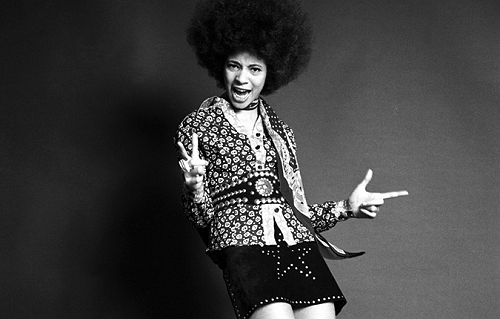
Listentotheloop.com is a blog run by Christine Chatz. I had the pleasure of meeting Christine over the holiday break, this past December, in San Diego, California. She treats her blog as a type of curatorial venue where she “hand-picks” music artists much like a DJ would during a radio show. My favorite posts are the ones called “Throwback Thursdays,” in which she usually features a historical figure that may have been overseen in music history. Below is her snippet on the role Betty Davis (image above) played in the lives of Miles Davis, Jimi Hendrix, and Sly Stone:
Raunchy, gritty, and hugely influential, Betty Davis remains unsurpassed as the queen of funk. At the time of her debut in 1973, she was attacked by critics for her “obscene” demeanor. Davis refused to tone it down, reveling in the emotions that fueled the vigor behind her “woman on the prowl” lyrics. During her marriage to Miles Davis, she introduced both Jimi Hendrix and Sly Stone to the jazz great, inadvertently laying the groundwork for the production of the legendary record Bitches Brew.
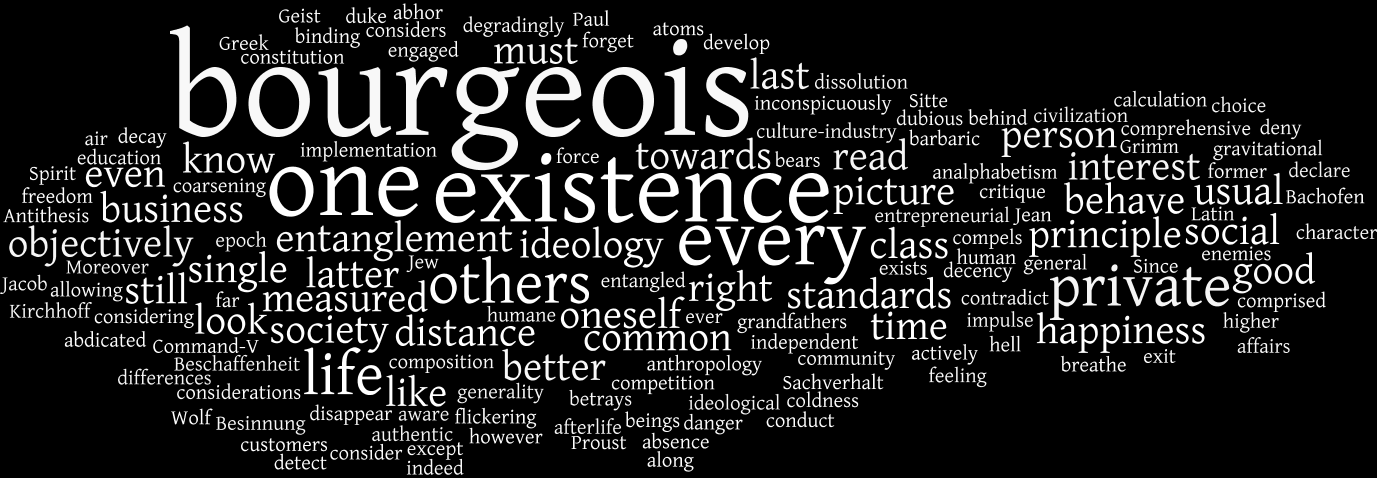
Minima Moralia Redux is a selective remix by Eduardo Navas of Theodor Adorno’s Minima Moralia. Starting on October 16, 2011, an entry a week will be rewritten until the 153 aphorisms of Minima Moralia become part of the blog.
Theodor Adorno’s aphorisms are carefully analyzed and reinterpreted in order to explore the principles of the selective remix, often found in music and video. The selective remix consists of adding to or subtracting material from a pre-existing source.
Minima Moralia Redux is the result of a long term post-doctoral analysis in cultural analytics performed for The Department of Information Science and Media Studies http://www.uib.no/infomedia/en at the University of Bergen, Norway, in collaboration with Software Studies Lab http://lab.softwarestudies.com/ at the University of California, San Diego.
I will be presenting my research on Remix and cultural analytics at the University of Lumiére in Lyon, France on November 24. Program and other information availlable.
A brief note on my presentation:
I will discuss the evolution of remixing in a three case study, with particular emphasis on when and how the video remixes were produced. This is done in order to reflect on the initial uploads of material and subsequent remixes as important vehicles of communication and creative practice.
What cultural analytics can bring to anthropology, and other fields that adopt it, is the ability to attain a balanced approach based on quantitative and qualitative analysis.
Kirby Ferguson took time off his Everything is a Remix project to explain why we should write to our representatives in Congress and tell them not to pass the Protect IP bill.
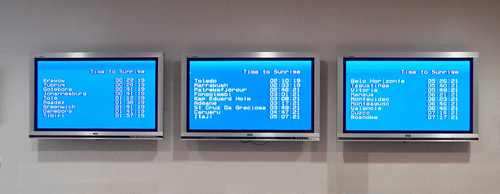
Paul Ramirez-Jonaz, “Another Day” (2003), video installation, image courtesy of the artist.
This essay, made available here in English and Spanish, was written for the exhibition Transitio _MX 03, which took place in Mexico City in October 2009.The text was published in December 2010 in Errata, a Colombian journal dedicated to art and culture.The text explores the concept of non-places (which is the foundation of my curation for Transitio), as a recurrent and pervasive cultural variable not only in Latin America but other parts of the world.
Above and below are images of the works curated in the exhibition, complemented with excerpts from the text.
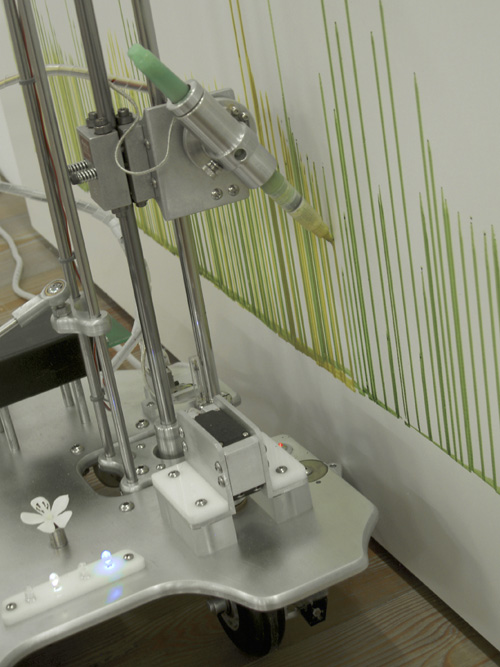
Sabrina Raaf, “Translator II: Grower, 2004-2006,” Robot and Installation, image courtesy of the artist.
excerpt:
The works included in “Autonomies of Disagreement” were selected to reflect on glocality versus locality in Latin-American production in relation to the concept of non-place. Glocality is commonly defined with the saying, “act local, think global.” With this concept as a cultural foundation, my curatorial approach was developed to support what I consider a key element of Transitio_MX 2009’s theme of “Autonomies of Disagreement”, as evaluated in the Festival Statement, which is to keep in mind the relevance of geopolitical differences that shape the use of appropriation and technology in artistic practices.
Carlos Rosas, “GPS Pallet Series: (Coordinate) Paintings/ I Think I Got IKEA’d Project, Bulls on Parade: Protest Remixes y Step and Repeat Cycles: Live/ Networked Installation y Remixed Sessions,” Installation.
Excerpt:
The term non-place is applied here after the theory of supermodernity introduced in 1992 by Marc Augé in his book Non-places, Introduction to an Anthropology of Supermodernity. Augé views non-places as areas of transition, such as airports, conditioned with a familiarity that is homogeneous. He also extends his concept to spaces that need not be visited, but named, or referenced through pervasive images. He argues that people eventually become familiar with such places by mere reference.
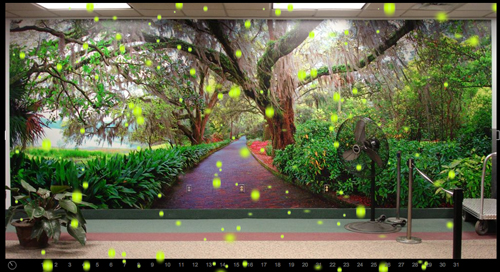
Owen Mundy y Joel Dietrick, “Anemophilous Formula for Computer Art,” Wall Projection, real time animation.
Excerpt:
Auge’s premise was revisited in 2002 by Hans Ibelings in Supermodernism, Architecture in the Age of Globalization. Ibelings views the homogeneity of tourism initially examined by Augé to be best expressed in the spectacular architecture of Las Vegas, which metaphorically speaking, names or cites a place. In other words, Las Vegas is architectural simulacra of other places in the world.
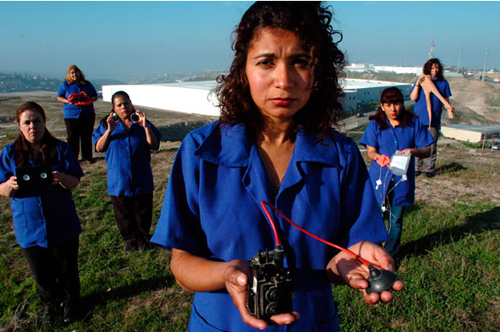
Vicky Funari y Sergio de la Torre, Maquilápolis, video, 2006, Documentary Film.
Excerpt:
The Internet also has non-places of its own. Yahoo, Google, YouTube, Facebook and all other major portals and social networking sites help users navigate online spaces with interfaces that, like the airport, can be considered places of transition, of constant flow and change. Users in turn feel more comfortable with the material that is accessed because individuals are often allowed and even encouraged to customize their interfaces with bookmarks and various forms of tagging for ongoing access. Latin American art production is informed by such developments as well as the physical mobility of people from different countries.
The art projects I selected for Transitio_MX, in varying degrees, are informed by the current stage of networked culture; they also expose contradictions of global trends of migration. Given this focus, not all the artists are “Latin American” but rather their work has an intimacy with issues that are relevant to Latin America as a concept that moves across borders as a collective of complexities that are difficult to define. This approach opens up a space to discuss how cultural identification today is even more multi-layered than before, which is why the selected projects share questions on how locality and glocality are terms that may be interchangeable according to a person’s particular position in both class and culture–closely defined by education and accessibility to technology. “Glocality,” as the ability to function locally with a global awareness, is a term that only a certain number of people, unfortunately, are able to contemplate at the moment. This obviously needs to change, and the works chosen for Transitio_MX aim to demystify this elitism. Glocals are people invested in the actual production of a global culture at an informational level—the most important level in which meaning is currently produced and controlled. The artists participating in Transitio_MX are part of this small, selected group, and as such have to be conscious of their practice as a critical tool that can ultimately endorse the global system.
Within this critical framework, Another Day (three monitors) 2003, by Paul Ramírez-Jonas (Honduras/ United States) depersonalizes and universalizes the ongoing travel that takes place around the world, by making the sun the traveler. The video Maquilápolis 2006, by Vicky Funari (United States) and Sergio De La Torre (Mexico/United States) aims to expose the contradictions at play in the global economy on how goods are produced with unfair labor laws. Translator II: Grower, 2004-06, by Sabrina Raaf (United States) exposes the tension, or discord of dislocation that can be superceded if the migrating subject is willing to come to terms with the displacement of the body by way of mechanical labor. I THINK I GOT IKEA’D: Finish Fetish and other projects, by Carlos Rosas (Chile/United States) expose how location can become abstracted in terms of painting or sound, while still providing a sense of concreteness by mere citation of concepts. And Anemophilous Formula for Computer Art, by Owen Mundy (United States) and Joelle Dietrick (United States), literally takes apart the concept of non-place, by recontextualizing a paper-wall image of a national park located at an airport lobby.
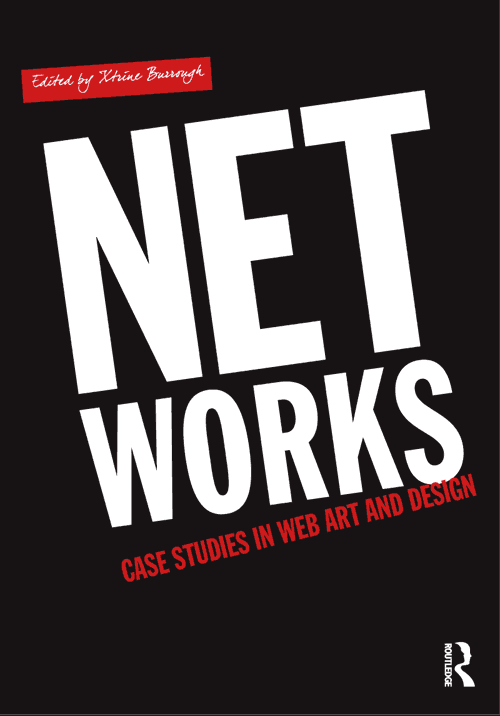
I contributed an essay on my project Traceblog to the book publication Net Works: Case Studies in Web Art and Design, edited by Xtine Burrough. I want to thank Xtine for the opportunity to share my ideas. Below are excerpts from my chapter contribution, which is titled after the actual online project as “Traceblog.” After the excerpts you will find the table of contents, which, in my view, includes an impressive list of contemporary new media artists. Excerpts from my chapter contribution:
[…] Traceblog was developed in reaction to one of my previous projects titled Diary of a Star (2004-07), a blog that appropriated entries from The Andy Warhol Diaries. As exciting as Diary of a Star was for me to produce, it consumed more time than I expected because entries had to be carefully written and took much longer to compose than average blog posts. Soon after I finished the Warhol project I began to think about the changes that had taken place with the shift to Web 2.0, and how blogging had changed since 2004. I realized that keeping track of people’s surfing activity had become an important element for private, public, and state organizations to data-mine patterns of communication and consumption online. The term “social media” began to be used more often when discussing the growth of early networks such as Orkut, and Friendster around 2004, the period when I began to develop Diary of a Star.
I evaluated the changes in online activity since 2004 and decided to develop Traceblog to reflect on the new stage that global culture was entering in 2008, during which millions of people around the world willingly shared information about themselves online, via social networks such as Facebook, Flickr, and Myspace, as well as YouTube, not to mention thousands of blogs, which by such time were conventional tools of communication for average Internet users. The result of the social media frenzy is an attitude of sharing that is ubiquitous in 2010, the time of this writing.
[…] Traceblog is a direct result of my ongoing practice as artist and media researcher. It makes the most of the default state of works of art in new media practice as informational forms, not defined by physical presentation. Traceblog and similar online works function in a state of flux defined by the growing archive and its relation to the ever-present: the now.