Note: The following is an interview about a book that’s coming out on the history of the vocoder. Quite interesting. My only observation is that the interviewer casually links early Hip Hop with pop culture and this is missed by the interviewee. Historians know that early Hip Hop was also an avant-garde movement, though with different preocupations of previous groups who may have deliberately linked themselves with the nineteenth century concept. Still worth the listen/reading.
If you’ve listened to pop music in the past 40 years, you’ve probably heard more than a few songs with a robotic sound. That’s thanks to the vocoder, a device invented by Bell Labs, the research division of AT&T. Though the vocoder has found its way into music, the machine was never intended for that function. Rather, it was developed to decrease the cost of long-distance calls and has taken on numerous other uses since.
Music journalist Dave Tompkins has written a book about the vocoder and its unlikely history. It’s called How to Wreck a Nice Beach: The Vocoder From World War II to Hip-Hop.
Tompkins says the machine played a significant role in World War II. After the U.S. government discovered that Winston Churchill’s conversations with Franklin D. Roosevelt were being intercepted and deciphered by the Germans, it decided to invest in speech-encoding technology. So the National Defense Research Committee commissioned Bell Labs in 1942 to develop a machine — and Bell Labs delivered.
The vocoder wasn’t without its flaws. Intelligibility of speech sometimes proved a problem, but Tompkins says pitch control was a bigger concern.
“They didn’t mind world leaders sounding like robots, just as long as they didn’t sound like chipmunks,” he says. “Eisenhower did not want to sound like a chipmunk.”
I ran into this brief interview with Just Blaze, who explains his theory on how music samples can be tracked on radio play to evaluate popularity of a song.
Recently received a link from Joshua Pablo Rosenstock about his video, Shrine to the Funky Drummer. The video presents Rosenstock as a subject who is greatly influenced by James Brown’s “Funky Drummer.” We quickly learn that his interest is a jumping point to understand how the song’s basic drum beat has become part of Hip Hop consciousness.
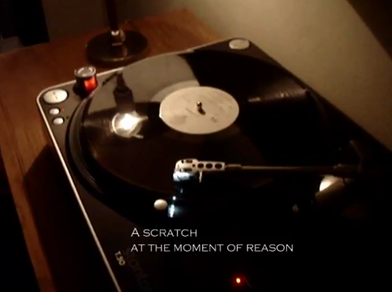
While the video, in my opinion could be edited (the intro is too long, and some footage does not match the sound), it does provide some historical context as to the art of sampling and its place in Hip Hop Culture. It starts with Rosenstock listening to a scratched 45, and then playing the beat on a drum set. The next set of scenes are about DJ’s manipulating The Funky Drummer’s break beat, complemented with random interviews with record diggers and turntablists. The video then goes back to Rosenstock who no longer plays a drum set, but a set of samples from a drum machine.
Shrine to the Funky Drummer reminds me a bit about Nate Harrison’s Amen Brother Break. Though very different in approach, both videos can be complementary references for understanding the history of Remix. I understand that Shrine to the Funky Drummer’s current version is a rough cut, so I look forward to the final production.
Last week, I headed to Montréal for the 11th incarnation of the Elektra International Digital Arts Festival in Montréal. The five day event attracted artists and industry professionals from as far away as Dakar, Seoul, Istanbul and Shanghai, as well as various countries across Europe and North America, to the cosmopolitan Québeqois city, which is quickly, as many of us already knew, establishing a name for itself as THE creative hotbed for electronic arts. There was much to take in each day, and while it can’t all be discussed here, this post represents a compendium of the most interesting, evocative and stimulating experiences from my time there.
The Conferences
For those presenting at the International Marketplace for Digital Arts, the future, in the (wink) words of Chip Douglas, is very much now. The “professional rendez-vous” as it was dubbed by Elektra’s organizers, was a two-day blitz of presentations, debates and dialogues, given by over 30 international artists, producers, agents, broadcasters, curators, institutional directors and event organizers. While the format of the conference itself could be described as both a massive speed dating session and networking boot camp, leaving not quite enough space for attendees to fully digest all that was being offered, the conceptual framework of the event – arranged as a space to foster collaborations and to develop new, cross-border distribution networks, was clearly taken advantage of by all observers and presenters alike.
[Re]Cuts was specifically developed in January of 2010 for an exhibition at IMT Gallery in London. The video is inspired by Burroughs’s experimentation with tape recordings. The exhibit takes place from May 28 through July 18 2010. I thank Mark Jackson for the invitation and the opportunity to exhibit my work.
excerpt from the actual project webpage:
[Re]Cuts is a remix of image, sound, and text inspired by William Burroughs’s aesthetics of tape recording. The video is also influenced by his cut-up method as defined for writing in “The Cut-Up Method of Brion Gysin.” The video does not follow the strict cup-up rules professed by Burroughs, but rather considers his aesthetics as a point of reference to develop a non-sensical narrative.
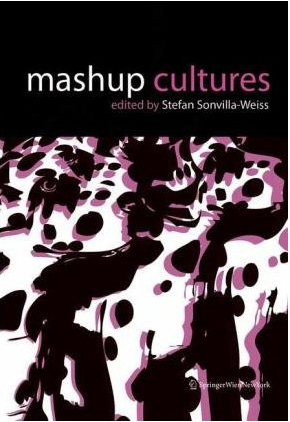
Note: I’m very happy to announce the release of a book publication titled Mashup Cultures in which I contribute a text titled “Regressive and Reflexive Mashups in Sampling Culture.” The text was previously released on Vague Terrain in June 2007, and has been revised and extended by over 15 pages for the book publication.I introduce a series of new terms along with a diagram, which I will be making available online in the near future.
Mashup Cultures, Sonvilla-Weiss. Stefan (Ed.), Springeren: This volume brings together cutting-edge thinkers and scholars together with young researchers and students, proposing a colourful spectrum of media-theoretical, -practical and -educational approaches to current creative practices and techniques of production and consumption on and off the web. Along with the exploration of some of the emerging social media concepts, the book unveils some of the key drivers leading to participatory engagement of the User.
Mashup Cultures presents a broader view of the effects and consequences of current remix practices and the recombination of existing digital cultural content. The complexity of this book, which appears on the occasion of the fifth anniversary of the international MA study program ePedagogy Design – Visual Knowledge Building, also by necessity seeks to familiarize the reader with a profound glossary and vocabulary of Web 2.0 cultural techniques.
TABLE OF CONTENTS
• Stefan Sonvilla-Weiss: Introduction: Mashups, Remix Practices and the Recombination of Existing Digital Content
• Axel Bruns: Distributed Creativity: Filesharing and Produsage
• Brenda Castro: The Virtual Art Garden: A Case Study of User-centered Design for Improving Interaction in Distant Learning Communities of Art Students
• Doris Gassert: “You met me at a very strange time in my life.” Fight Club and the Moving Image on the Verge of ‘Going Digital’
• David Gauntlett: Creativity, Participation and Connectedness: An Interview with David Gauntlett
• Mizuko Ito: Mobilizing the Imagination in Everyday Play: The Case of Japanese Media Mixes
• Henry Jenkins: Multiculturalism, Appropriation, and the New Media Literacies: Remixing Moby Dick
• Owen Kelly: Sexton Blake & the Virtual Culture of Rosario: A Biji
• Torsten Meyer: On the Database Principle: Knowledge and Delusion
• Eduardo Navas: Regressive and Reflexive Mashups in Sampling Culture
• Christina Schwalbe: Change of Media, Change of Scholarship, Change of University: Transition from the Graphosphere to a Digital Mediosphere
• Noora Sopula & Joni Leimu: A Classroom 2.0 Experiment
• Stefan Sonvilla-Weiss: Communication Techniques, Practices and Strategies of Generation “Web n+1?
• Wey-Han Tan: Playing (with) Educational Games – Integrated Game Design and Second Order Gaming
• Tere Vadén interviewed by Juha Varto: Tepidity of the Majority and Participatory Creativity
Quite interesting to consider the difference between a logo and an icon. I ran into the above icon design which is differentiated from the logo design by the icon designer, who explains:
IMPORTANT: The Youtube Logotype is owned and copyrighted by Google. Please only use when referring to Youtube or their services. The icon and its graphics (except the Youtube logotype) are all licensed under Creative Commons (creativecommons.org) under Attribution, Share Alike and Noncommercial. In other words: It’s totally free, don’t use it for commercial work and I would love if you gave me credit when using it (and please notify me if you do). Enjoy! Download the Youtube Icon v1.0 (zip)
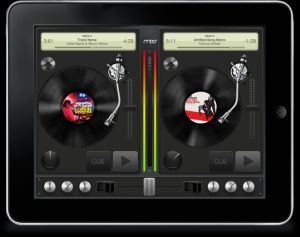
From the Mixr site: “DJ App for iPad. Feels & functions like authentic turntables. Mixr gives you a DJ experience unlike anything you’ve ever experienced. Beautiful interface, professional mixing.”
The following is a presentation separated into two parts; it was produced for the conference Re*-Recycling_Sampling_Jamming, which took place in Berlin during February 2009.
Part One (above) introduces the three chronological stages of Remix, while part two (below) defines how the three chronological stages are linked to the concept of Authorship, as defined by Roland Barthes and Michel Foucault. Also see my previous entry “The Author Function in Remix” which is a written excerpt of the theory proposed in part two.
Below is the abstract that summarizes the content of the two videos. Total running time is around fifteen minutes.
———–
Text originally published on Re*- on February 2009:
SAMSTAG_28.02.2009_SEKTION IV_15-20 UHR
12_15:00 Remix[ing]. The Three Chronological Stages of Sampling
Eduardo Navas, Künstler und Medienwissenschaftler, University of California in San Diego (USA)
Sampling is the key element that makes the act of remixing possible. In order for Remix to take effect, an originating source must be sampled in part or as a whole. Sampling is often associated with music; however, this text will show that sampling has roots in mechanical reproduction, initially explored in visual culture with photography. A theory of sampling will be presented which consists of three stages: The first took place in the nineteenth century with the development of photography and film, along with sound recording. In this first stage, the world sampled itself. The second stage took place at the beginning of the twentieth century, once mechanical recording became conventionalized, and early forms of cutting and pasting were explored. This is the time of collage and photo-montage. And the third stage is found in new media in which the two previous stages are combined at a meta-level, giving users the option to cut or copy (the current most popular form of sampling) based on aesthetics, rather than limitations of media. This is not to say that new media does not have limitations, but exactly what these limitations may be is what will be entertained at greater length.The analysis of the three stages of sampling that inform Remix as discourse is framed by critical theory. A particular focus is placed on how the role of the author in contemporary media practice is being redefined in content production due to the tendency to share and collaborate. The theories on authorship by Roland Barthes and Michel Foucault are entertained in direct relation to the complexities that sampling has brought forth since it became ubiquitous in popular activities of global media, such as social networking and blogging.