About | Remix Defined | The Book | Texts | Projects | Travels/Exhibits | Remixes/Lists| Twitter

Archive of the category 'History'

Step Away From the Sampler, by Peter Kirn
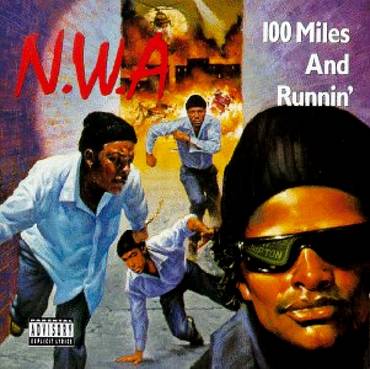
Image and text source: Key Board Mag

January 2005

Court rules all digital sampling illegal and the record industry objects — but you still have options

Get this: According to a fall 2004 ruling by the 6th Circuit U.S. Court of Appeals, any use of a digital sample of a recording without a license is a violation of copyright, regardless of size or significance. In its decision in Bridgeport Music et al. vs. Dimension Films, the court said simply, “Get a license or do not sample. We do not see this as stifling creativity in any way.”

“As far as sampling of recordings, they didn’t make it gray; they made it a line in the sand,” says Jay Cooper, a leading entertainment arts lawyer and a former president of the National Academy of Recording Arts and Sciences (NARAS). Previously, courts had applied the question of size and significance to copyright infringement claims, but the new ruling changes that for sampling. Cooper says, “I think they went a little far afield from what the law has been in the past. Basically, the law has generally been there has to be more than a minimal use . . . this case basically said that you could take one note and that could be copyright infringement. They really did say that.”

(more…)

Black Secret Technology (The Whitey On The Moon Dub), BY Julian Jonker


Dr. Octagon Chapter 8

Image source: my.illhill.com/

Text source: CTheory

December 4, 2002

“I can’t pay no doctor bills but Whitey’s on the moon.” Earlier this year, while Mark Shuttleworth orbited the earth at a dazzling 66 sunrises a day in a piece of space junk called Soyuz, an email did the rounds of left-leaning South Africans, and ended up in my inbox one day. The message reproduced some complaints from a poem by Gil-Scott Heron:

The man just upped my rent last night cuz Whitey’s on the moon
No hot water, no toilets, no lights but Whitey’s on the moon.
I wonder why he’s cheap tetracycline uppin me. Cuz Whitey’s on the moon?
I was already givin’ him fifty a week but now Whitey’s on the moon.

Thirty years after Gil Scott Heron chanted his dissatisfaction with the US cold war space programme, race relations have changed, perhaps not entirely but significantly, in the US and at the tip of this continent. Other things have changed too.

Read the entire article at CTheory.

Deleuze/Guattari: Remix Culture, Paul D. Miller Interviews Carlo Simula

Image source: Dusty Groove

Text source: Nettime.org and Djspooky.com

November 20, 2005
The following is an interview with Carlo Simula for his book
MILLESUONI. OMAGGIO A DELEUZE E GUATTARI (Cronopio Edizioni)

Contributions will include Guy-Marc Hinant (Sub Rosa), Philippe Franck (transcultures, le maubege), Bernhard Lang, Tim Murphy, Achim Szepanski – and many others. I think it’s an update on some issues that have been percolating.

Smell the brew.
Paul,
Tunis, Tunisia 11/20/05

1) You’ve often referred in your interviews to how much contemporary philosophy has influenced your work. Foucault said “Un jour, peut-être, le siècle sera deleuzien”, how much and in which way Deleuze and Guattari influenced you? And what you feel is interesting in their work?

The idea of the “remix” is pretty trendy these days – as usual people tend to “script” over the multi-cultural links: the economics of “re-purposing,” “outsourcing” and above all, of living in an “experience economy” – these are things that fuel African American culture, and it’s active dissemination in all of the diaspora of Afro-Modernity. My take on Deleuze and Guattari is to apply a “logic of the particular” to the concept of contemporary art. Basically it’s to say that software has undermined all of the categories of previous production models, and in turn, molded the “computational models” of how “cultural capital,” as Pierre Bourdieu coined it, mirrors various kinds of production models in a world where “sampling” (mathematical and musical), has become the global language of urban youth culture. Eduoard Glissant, the Afro-Caribbean philosopher/linguist liked to call this “creolization” – I like to call it “the remix.” Philosophy is basically a reflective activity. It always requires a surface to bounce off of. We don’t exist in a cultural vacuum.

(more…)

Remixer Rising, by Dennis Romero

Image and text source: Los Angeles City Beat

Note: This article is useful to understand the process of the remixer. Although the intro may be putting down mash ups as simplistic, there are other good tips for further research.

January 22, 2004

DJ Bill Hamel is moving up, and not just because of his Grammy-nominated take on Seal’s ‘Get It Together’

The do-it-yourself revolution in music gets no closer to the top echelons of the industry than with the modern dance-music remixer. The remixer is often born of a DJ’s desire to fit a pop song into a linear, up-tempo dance-floor structure. A remix can be composed from a pop-song chorus, drum-machine beats, and simple keys. It can be accomplished using only a laptop. The most rudimentary remixes are known as “mash-ups,” basically DJs mixing together two popular tracks and recording the blend for posterity. Then there’s the bootleg, the homemade pop remix done on spec. Finally, there’s the official, label-sanctioned remix, often a DJ’s own artistic take on a pop song that doesn’t lift the chorus and hook wholesale, but rather offers a fresh interpretation.

Read the entire article at Los Angeles City Beat

1 + 1 + 1 = 1: The new math of mashups, by Sasha Frere-Jones

Image source: Gullbuy

Text source: The New Yorker

January 10, 2005

In July of 2003, Jeremy Brown, a.k.a. DJ Reset, took apart a song. Using digital software, Brown isolated instrumental elements of “Debra,” a song by Beck from his 1999 album “Midnite Vultures.” Brown, who is thirty-three and has studied with Max Roach, adjusted the tempo of “Debra” and added live drums and human beat-box noises that he recorded at his small but tidy house in Long Island City. Then he sifted through countless a-cappella vocals archived on several hard drives. Some a-cappellas are on commercially released singles, specifically intended for d.j. use, while others appear on the Internet, having been leaked by people working in the studio where the song was recorded, or sometimes even by the artist.

After auditioning almost a thousand vocals, Brown found that an a-cappella of “Frontin’,” a collaboration between the rapper Jay-Z and the producer Pharrell Williams, was approximately in the same key as “Debra.” The two songs are not close in style—“Debra” is a tongue-in-cheek take on seventies soul music, while “Frontin’ ” is hard and shimmering computer music—but the vocalists are doing something similar. Brown exploited this commonality, and used his software to put the two singers exactly in tune.

Read the entire article at The New Yorker

2007 Cassette Jockey World Championships (Competition call worth noting)

Image source: http://www.civilunrest.biz/

Text source: http://makerfaire.com/cj/

Originally learned about it at Rhizome.org

Note: This announcement is so good as as an idea recalling the good ol’days, that it’s worth keeping around for nostalgia’s sake. (But I admit I keep it here for the sake of my ongoing archive.) I can’t think of a DJ from the 80’s who didn’t start out mixing tunes with a tape-player. I did, and it improved my skills on the ones and twos once I could afford to buy them. I do know of another CJ Championship organized by Beige: 2004 BEIGE Cassette Jockey World Championship. Below is the announcement:

2007 Cassette Jockey World Championships

*** CALL FOR COMPETITORS ***

CALLING ALL: Cassette Jockies… Retro-Tech Lovers… Magnetic Media Monsters… Circuit Benders… Multi-Media DJs… Walkman Hot-Rodders… we want you at the:

2007 CASSETTE JOCKEY WORLD CHAMPIONSHIPS

at the Make Magazine Maker Faire!

http://makerfaire.com/cj/

In 2003 at a festival in Chicago, a group of retro-tech geniuses organized The Cassette Jockey World Championships. Like the popular DJ (Disk Jockey) competitions with record-toting DJs showing off their turntable skills, the CJ Championships showcases skills and styles in the venerable world of cassettes. Since CJs were encouraged to hot-rod their own equipment, eviscerated boomboxes, disembodied tape heads, and overclocked Walkmans were the weapons of choice… anything that used the standard cassette as its ammo.

(more…)

The Three Basic Forms of Remix: a Point of Entry, by Eduardo Navas

Image source: Turbulence.org
Layout by Ludmil Trenkov
Duchamp source: Art History Birmington
Levine source: Artnet

(This text has been recently added to the section titled Remix Defined to expand my general definition of Remix.)

The following summary is a copy and paste collage (a type of literary remix) of my lectures and preliminary writings since 2005. My definition of Remix was first introduced in one of my most recent texts: Turbulence: Remixes + Bonus Beats, commissioned by Turbulence.org. Many of the ideas I entertain in the text for Turbulence were first discussed in various presentations during the Summer of 2006. (See the list of places here plus an earlier version of my definition of Remix). Below, the section titled “remixes” takes parts from the section by the same name in the Turbulence text, and the section titled “remix defined” consists of excerpts of my definitions which have been revised for an upcoming text soon to be released in English and Spanish by Telefonica in Buenos Aires, Argentina. The full text will be released online once it is officially published.

(more…)

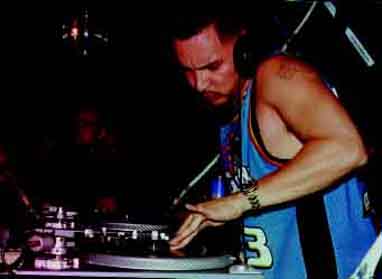
WHAT COMES AFTER REMIX? by Lev Manovich


Mixmaster Mike- photo by Chris Taylor

Image source: Virtual DJ

Text source: Manovich.net 

winter 2007

It is a truism today that we live in a “remix culture.” Today, many of cultural and lifestyle arenas – music, fashion, design, art, web applications, user created media, food – are governed by remixes, fusions, collages, or mash-ups. If post-modernism defined 1980s, remix definitely dominates 2000s, and it will probably continue to rule the next decade as well. (For an expanding resource on remix culture, visit remixtheory.net by Eduardo Navas.) Here are just a few examples of how remix continues to expand. In his 2004/2005-winter collection John Galliano (a fashion designer for the house of Dior) mixed vagabond look, Yemenite traditions, East-European motifs, and other sources that he collects during his extensive travels around the world. DJ Spooky created a feature-length remix of D.W. Griffith’s 1912 “Birth of a Nation” which he appropriately named “Rebirth of a Nation.” In April 2006 Annenberg Center at University of Southern California ran a two-day conference on “Networked Politics” which had sessions and presentations about a variety of remix cultures on the Web: political remix videos, anime music videos, machinima, alternative news, infrastructure hacks.[1] In addition to these cultures that remix media content, we also have a growing number of software applications that remix data – so called software “mash-ups.” Wikipedia defines a mash-up as “a website or application that combines content from more than one source into an integrated experience.”[2] At the moment of this writing (February 4, 2007), the web site www.programmableweb.com listed the total of 1511 mash-ups, and it estimated that the average of 3 new mash-ups Web applications are being published every day.[3]

(more…)

DUTCH MIX HISTORY

Image and text source: http://mixhistory.mixfreaks.nl/
In the 80s (’till the 90s) in Holland the mixing-season started.
A lot of guys started making mixes which where broadcasted on national radio.
I liked them and taped a lot of the mixes and decided to keep track on some remixers.
In the early 90s they stopped broadcasting those mixes on the radio. (and they started again in 2001!)
Those mixers kept going on offcourse.
Some started their own company, others kept remixing or started their own acts/studios.
On these pages I try to keep track on what projects/remixes they made.Around 2000 some new remixers popped up. They met together with other fans in an online community called Mixfreaks.
Some of these mixers also made mixes which were broadcasted on national dutch radio.

Radio Veronica had the ‘thuismixwedstrijden (79-83)’ ,the ‘Home-Edit Mixes(83..)’ & Ben Liebrand’s In the Mix, Grandmix and Minimix (1983-1992/2000-????) and Tros & Veronica Top 40 Mixes
TROS had its share with the Bond van Doorstarters, Tros Club Mix, Disco Mix Club and The Pitch Control ReRemix
AVRO had the RicksMix and the Avro’s Driemaal Doordraai Live-mixes
The Kro had ‘And The Beat Goes On’ (1983-1985)

TMF (The Music Factory) had from 1995 till 2000 the TMF Video Yearmix
Radio 538: 538 Yearmixes AND rebroadcast of Grandmixes AND the MilleniumMix And broadcasting of Liebrand’s Minimixes..
Slam FM : Klubbsound yearmixes since 1996 and “In 2 The MilleniumMix” all by Initial Studio

Hip Hop Planet, by James McBride

Image and text source: National Geographic

April 2007

Photographs by David Alan Harvey

Whether you trace it to New York’s South Bronx or the villages of West Africa, hip-hop has become the voice of a generation demanding to be heard.

This is my nightmare: My daughter comes home with a guy and says, “Dad, we’re getting married.” And he’s a rapper, with a mouthful of gold teeth, a do-rag on his head, muscles popping out his arms, and a thug attitude. And then the nightmare gets deeper, because before you know it, I’m hearing the pitter-patter of little feet, their offspring, cascading through my living room, cascading through my life, drowning me with the sound of my own hypocrisy, because when I was young, I was a knucklehead, too, hearing my own music, my own sounds. And so I curse the day I saw his face, which is a reflection of my own, and I rue the day I heard his name, because I realize to my horror that rap—music seemingly without melody, sensibility, instruments, verse, or harmony, music with no beginning, end, or middle, music that doesn’t even seem to be music—rules the world. It is no longer my world. It is his world. And I live in it. I live on a hip-hop planet.

Read the entire feature at National Geographic

Current Projects


    Books


    Remix Theory | is an online resource by Eduardo Navas. To learn more about it read the about page.

    Logo design by Ludmil Trenkov

    http://www.mentalhealthupdate.com/