You wax faux-nostalgic about the heyday of early robo-Kraut-rock, your early signed pressing of Radio-Activity is rivaled only by your original Neu! Super / Neuschnee 7-inch, and you got a belly laugh at that one scene about the record the nihilists once cut in The Big Lebowski. Kraftwerk fans, today is your lucky day. The original one-of-a-kind prototype vocoder Kraftwerk pictured on the rear cover art of and used to record “Ananas Symphonie” and “Kristallo” on their 1973 release Ralf & Florian. As of the time of this writing it’s already up to five grand, so if you want yourself an extremely expensive piece of history for electronics and electronic music, you’d better get a move on, schnell.
Note: the above text was a comment on the following post from Music Thing:
26.6.06 by Tom Whitwell
Lots of people say things like ‘RARE legendary’ in eBay auctions for DX7s and Casio VL-Tones, but eBay item #300001522431 doesn’t go for hype, just saying “prototype VOCODER of german 70´s Electronic Pioneers”. What’s on offer is Ralf & Florian’s vocoder, built to order by a local electronics company, and later used on the intro to ‘Autobahn’. No bids so far at $3,800, with ten days to go. (Thanks, Kaden)
UPDATE: It went for $12,500!
Note: We are definitely entering a new stage of mass opinion. The fact that Youtube is playing a role in the next U.S. elections demonstrates the ease incorporation of web 2.0 in mainstream culture: the individual can apparently express opinions and be heard like never before, but how effective is this, really? The analysts interviewed in the feature below express the outcome to be more or less business as usual as most candidates got to promote their own agendas, while immersing in new media culture.  Â
Democratic presidential hopefuls fielded questions directly from the voters Monday in a debate sponsored by CNN and the video sharing Web site YouTube. A reporter and political analyst discuss the candidates’ answers and new debate format.
GWEN IFILL: It was yet another candidates’ forum, but last night, the questions came from Internet-savvy Democrats.
REMY MUNASIFI, McLean, Virginia: My taxes put some kids through college, I can’t afford to send myself. Now, tell me, if you were elected president, what would you do to help?
GWEN IFILL: YouTube, the wildly successful Internet video-sharing service, joined with CNN to host the debate at the Citadel in Charleston, South Carolina. CNN screened 3,000 submissions. The ones that aired ranged from serious and emotional…
Hip hop as a ding an sich is marked by some confusion. Consider the name; is it “hip hop,” “hip-hop” or “hiphop”? You will see all three used in titles in this bibliography. Hip hop is, at the same time, a cultural phenomenon that developed in the late 70’s in the projects in Brooklyn and the Bronx, and a musical style from that phenomenon. Nevertheless, hip hop has become a pervasive element of popular culture, as witnessed by this bibliography. There are hip hop exercise videos, children’s books as well as books, magazines, magazine articles and theses about it.
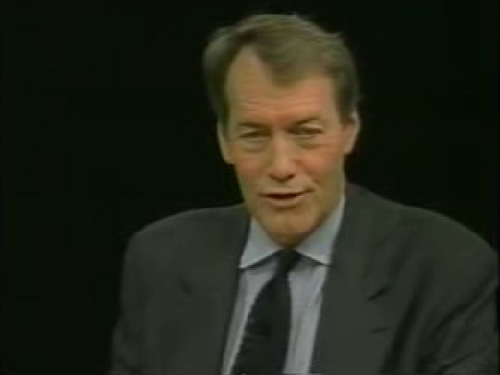
Note: Though the term “Remix” may be over-extended in this particular video interview with Harold Bloom by Charlie Rose, one is more than likely to learn a few things about important literary texts and their current interpretations.
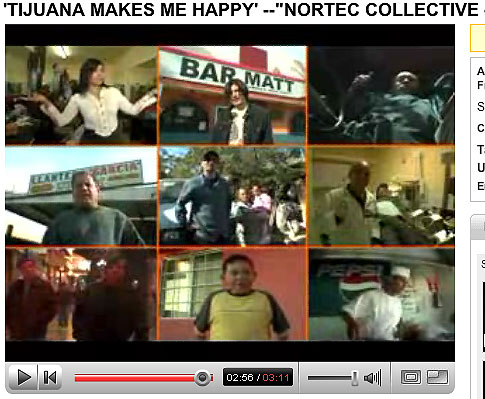
Based on extensive fieldwork in Tijuana, San Diego, Los Angeles, and Mexico City, this article explores the intersections of identity, modernity, desire, and marginality in the production, distribution, and transnational consumption of Nor-tec music. Tijuana musicians developed Nor-tec by combining sounds sampled from traditional music of the north of Mexico (conjunto norteno and banda) with compositional techniques borrowed from techno music. The resulting style reflects the current re-elaboration of tradition in relation to imaginary articulations of modernity that takes place in Tijuana’s youth border culture.
Note: The following is an announcement of Vague Terrain’s latest issue, in which I’m very happy to be a contributor. Make sure to also peruse their previous releases on Minimalism, Locative Media and Generative Art among others.
Announcement:
The latest edition of the Toronto based digital arts quarterly vagueterrain.net is now live. The issue, vague terrain 07: sample culture is a provocative exploration of contemporary sampling of sound, image and information. This body of work examines the remix as a critical practice while addressing broader issues of ownership and intellectual property.
Vague terrain 07: sample culture contains work from: brad collard, christian marc schmidt, defasten, des cailloux et du carbone, [dNASAb], eduardo navas, eskaei, freida abtan, jakob thiesen, jennifer a. machiorlatti, jeremy rotsztain, noah pred, ortiz, rebekah farrugia, and an interview with ezekiel honig conducted by evan saskin.
This text considers the position of the “collaborator†as defined by Walter Benjamin in the first half of the twentieth century in relation to the blogger at the beginning of the twenty-first. The text considers the concept of anarcho-communism and the role of the gift economy in online culture as defined by Richard Barbrook to better understand the critical position of bloggers.
Revisado, Enero 2007. Publicado originalmente en Netartreview, Marzo 2005.
Este texto fue publicado en Abril del 2007 en la publicación Installando/Installing, editada por el Colectivo Chileno Troyano.
Abstracto:
Este texto considera la posición crÃtica del “colaborador†de acuerdo a Walter Benjamin durante la primera parte del siglo veinte en relación al bloger al princÃpio del siglo veinte-uno. El texto considera el concepto del anarco-comunismo y el papel que juega el intercambio de regalos en comunidades virtuales de acuerdo a Richard Barbrook, para mejor entender la posición de los blogers en la cultura de la red. (more…)
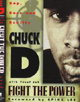
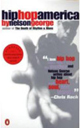
Note: I recently found the following list of books about hip hop culture (some already well-known and respected must reads). Many of them are directly related to the roots of remix culture, others are great sources for understanding the politics of culture in the United States.
Recommendations follow:
Non-fiction: Hip Hop
Can’t Stop Won’t Stop : A History of the Hip Hop Generation
Jeff Chang
306.484249 CH
Considered one of the best books on hip-hop, “Can’t Stop Won’t Stop†traces the evolution of hip-hop from its roots in the music of 1960s Jamaica throught its development in New York and its eventual spread throughout the mainstream world. Jeff Chang collected hundreds of interviews with important hip-hop pioneers to create this classic book. “Can’t Stop Won’t Stop†is a must read for anyone interested in hip-hop, graffiti, and breakdancing history.
subjects: Rap (Music)—History and criticism, Hip-hop, Music—Social aspects. (more…)
When Paul Miller, aka DJ Spooky, says he thinks musicians should be able to remix samples of others’ clips into new works, he puts his money where his mouth is.
Miller is part of a group of musicians including Public Enemy’s Chuck D; Parliament Funkadelic’s George Clinton; and the band De La Soul who are allowing the public to mash up audio snippets from interviews they’ve given into submissions for a new remixing competition.
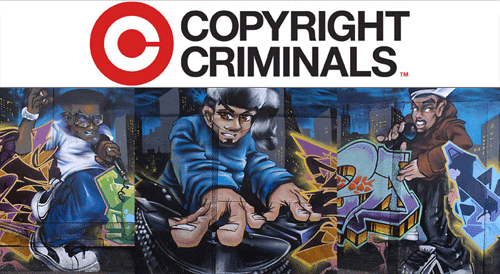
The Copyright Criminals Remix Contest, which is sponsored by the nonprofit copyright licensing organization Creative Commons, is all about promoting remixing culture and encouraging artists like Miller to make their work legally and affordably available for other musicians to manipulate.
Creative Commons has built a licensing system that allows content creators to decide which usage rights to their work to grant others. In every case, the licenses require attribution to the creator. Some allow users to manipulate licensed work for any non-commercial purpose, while others don’t. The ultimate point is to faciliate copyrights that are flexible on which rights users get.