Here are some videos from the selection “Bifurcaciones Sonoras” (Aural Bifurcations), curated by Arcángel Constantini and Rodrigo Sigal for Transitio_MX 03.
Interactive Installation by Gerardo García de la Garza (Mexico), No Materia, 2009. Sound is produced according to the distance between the visitor and the object.
Peter Vogel (Germany), Circular Structure, 1979
It was quite an experience to finally view interactive works that are historically important. Vogel developed the objects displayed in the two videos in the late seventies. Questions on our relation to the object of art were a subject of intense debate during this period. The work is now a relevant work that demonstrates the clear link between art practice during the mid-second half of the twentieth century, and the early part of the twenty-first.
Peter Vogel (Germany), Self-Stimulating Closed Loop, 1979.
In January of 2009 I wrote two brief entries, “On Content and Form: 2009 Forecast” and “Further Reflections on Content and Form in 2009,” which evaluated the difficulty that developers are encountering with the constant change of delivery devices. Since then, there appears to be more interest in having constant access to information than on the devices themselves. I also noted the possibility that consumers may develop fetishes for hybrid devices like the iPhone.
Yet, as we move on to the second half of 2009, the actual subject of analysis is becoming more apparent: the screen. It is the aesthetics of the screen, a vessel of simulation, of make believe, of simulacra proper that is turning out to be the recurring device in all media. From the early days of film on to television, and currently the computer and its supplementary devices, including GPS systems, text readers such as the kindle, portable DVD players, and of course the iPhone, the screen has played a defining role in the ongoing expansion of global communication.
The screen’s never-ending evolution, then, is what needs to be considered carefully in order to understand how media is changing with the growth of network culture. The challenge in this acknowledgment is that our familiar window for entertainment and communication, while always a comfortable rectangular format of malleable dimensions, has no actual stable material form; it keeps shifting at an ever increasing speed; and because of media’s dependency on the screen, developers need to change their approach to product development. This also means that content providers need to rethink their relation to media delivery, whether this be print, or online. (more…)
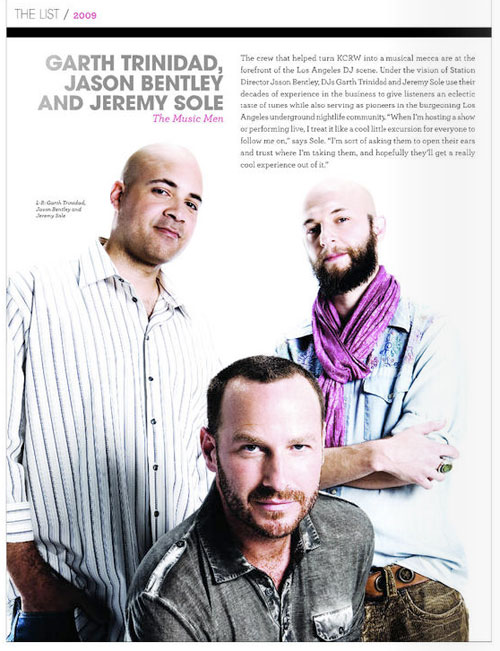
I’m currently in Los Angeles. Just picked up a copy of 944, a magazine about fashion, entertainment and lifestyle. The August issue features “the nightlife.” Like most lifestyle magazines these days, it consists of short snippets about trendsetters or “pioneers.” One cannot help but notice a quote stating that DJ’s can make as much as 35,000 for a three hour set. The magazine truly hypes up the life on the ones and twos.
Regardless of such statements, as I grew up in Los Angeles, I was quite happy to see that 944 acknowledged real talent. Above are some of the DJ’s that have shaped my views on music beyond the mainstream. Trinidad’s Chocolate City may well be a historical gem of a radio show, which any music historian specialized in radio would have to note; he has a vast knowledge of R & B and Soul and has taken great care to bring back B-sides that even serious record diggers have missed. The same for Jason Bentley, who was around even before Garth with his radio show, Metropolis. Bentley was one of the first DJ’s to mix electronic music live on the radio.
Wikipedia, Flickr, and Twitter aren’t just revolutions in online social media. They’re the vanguard of a cultural movement. Illustration: Christoph Niemann
Bill Gates once derided open source advocates with the worst epithet a capitalist can muster. These folks, he said, were a “new modern-day sort of communists,” a malevolent force bent on destroying the monopolistic incentive that helps support the American dream. Gates was wrong: Open source zealots are more likely to be libertarians than commie pinkos. Yet there is some truth to his allegation. The frantic global rush to connect everyone to everyone, all the time, is quietly giving rise to a revised version of socialism.
Communal aspects of digital culture run deep and wide. Wikipedia is just one remarkable example of an emerging collectivism—and not just Wikipedia but wikiness at large. Ward Cunningham, who invented the first collaborative Web page in 1994, tracks nearly 150 wiki engines today, each powering myriad sites. Wetpaint, launched just three years ago, hosts more than 1 million communal efforts. Widespread adoption of the share-friendly Creative Commons alternative copyright license and the rise of ubiquitous file-sharing are two more steps in this shift. Mushrooming collaborative sites like Digg, StumbleUpon, the Hype Machine, and Twine have added weight to this great upheaval. Nearly every day another startup proudly heralds a new way to harness community action. These developments suggest a steady move toward a sort of socialism uniquely tuned for a networked world.
As I write this entry, the Internet is flowing with comments and information about Michael Jackson. Here is my drop in the sea of data that will be archived in places people who adopt RSS as part of their daily life will never know exist.
As critical as I am about pop culture, I have to admit that Michael Jackson was ever-present in my growing years; the teenager in me mourns, while the critic cannot help but reflect on the implications of this unexpected and unfortunate death. As sad as Jackson’s passing away is to millions of people, one cannot help but notice how media has changed in the way it handles celebrities and public figures. Just a few years ago there would have been some distance from the dark side of a person’s life. This may still hold true for presidents of the United States as one hardly heard anything negative about Richard Nixon during his funeral. Watergate had become so abstract that it could be cited as a historical moment with no major shame for the country or Nixon’s presidency. This is the power of ahistoricity: people’s lack of historical knowledge made possible by 24 hour news cycles.
But with Michael Jackson a different kind of mourning takes place. His accomplishments and setbacks are cited simultaneously. Everywhere, from CNN to all major newspapers, like the NYTimes and El Pais in Spain, Michael Jackson is remembered for all his deeds–good and bad. As he is remembered as the King of Pop, he is also remembered as a person who was accused of child molestation (this was not proven in court). He is subjected to the aesthetic of reality TV.
In a way this might be healthy for the way people perceive celebrities, as people may become more accepting of public figures’ shortcomings. The sad thing is that scandals sell, and this is the last thing Michael Jackson is remembered for. The King of Pop was planning a comeback, but this one was not to be. He will be remembered as a conflicted figure, who will inevitably be romanticized for his early production and his conflicted last years.
And now, it is time to settle for reissues of MJ’s music in whatever form networked culture will allow. As I write these lines, files of Jackson’s songs are being swapped across the Internet–bootleg remixes made in bedrooms across the world to be shared in just minutes, while music executives figure out a way to cash in on MJ’s music legacy. Such cash-in will be mixed and hard to control. Michael Jackson dies in a time when things for the music industry are not so clear cut and no celebrity is perfect, and that imperfection in the end may mean more cash
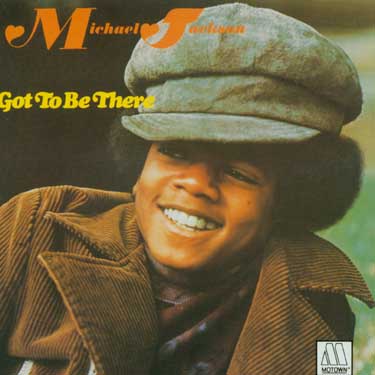
He was a person who everyone knew through spectacular images. He may have known himself through the same images as well. As constant exposure rises with social networks, Michael Jackson, the most famous person vanishes. Let this be a rupture in the era of networked media. Michael Jackson is about to become an institution, like Marilyn, like Presley, like Warhol. He will live forever as a spectacular figure. But let’s not forget that somewhere in there was a child who was trying to understand himself. I may be accused of a bit of romanticism with this last statement. Let it be. This is why I chose an early image of Michael Jackson to complement this short reflection on a celebrity I felt I knew, as I had no choice but to acknowledge him everywhere I turned as I grew up. I accepted him as I was bombarded by his presence, just as I am now by the repetition of his spectacular absence. I admit to have moonwalked. RIP MJ.
The following text was written for Interactiva 09 Biennale, which takes place the month of May and June of 2009. Other texts written for the biennale can be found at the Interactiva site.
NOTE: I have written a text in which I discuss Twitter in social activism, something which is not included in this text. Please see “After Iran’s Twitter Revolution: Egypt.”
In March of 2005 I wrote “The Blogger as Producer.”[1] The essay proposed blogging as a potentially critical platform for the online writer. It was written specifically with a focus on the well-known text, “The Author as Producer,” by Walter Benjamin, who viewed the critical writer active during the 1920’s and 30’s with a promising constructive position in culture. [2]
In 2005 blogging was increasing in popularity, and in my view, some of the elements entertained by Benjamin appeared to resonate in online culture. During the first half of the twentieth century, Benjamin considered the newspaper an important cultural development that affected literature and writing because newspaper readers attained certain agency as consumers of an increasingly popular medium. During this time period, the evaluation of letters to editors was important for newspapers to develop a consistent audience. In 2005, it was the blogosphere that had the media’s attention. In this time period, people who wrote their opinions on blogs could be evaluated with unprecedented efficiency. [3] (more…)
Just saw this shirt at a local Waffle shop in State College. We asked the guy wearing it where he got it, and he said, with a blank stare, “from DC…”
“Ahh!” we said… “Of course!”
On the web, leave it to Boing Boing to have the tip:
“Photographer and Boing Boing pal Glen E Friedman, who shot many of the iconic photographs of the hiphop band Run DMC, shares this t-shirt with us — he’s seeing them everywhere in NYC, I understand they’re all over the place. But this was the first time I’d seen the design, so I LOLed and blogged. Larger view. Link to a few related shots.”
Just got notice from Zemos 98 of their new book, Codigo Fuente: La Remezcla, which brings together a range of articles on Remix in culture and media. The book is in Spanish. I look forward to reading it and highlight some of the essays. Kudos to Zemos 98.
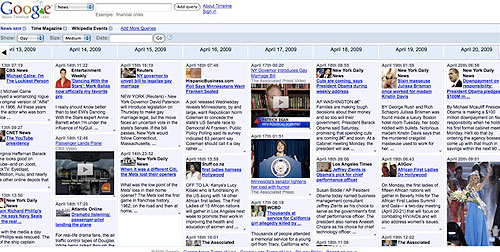
Timelines are becoming an increasingly popular user interface. Today, Google Labs launched a new product called Google News Timeline, which lays out the top stories from Google News in columns for each day. You can scroll down to see more stories or, of course, can search for specific topics or keywords. (It also launched similar image search)
The timeline view gives you a snapshot of the major stories for each day, and you can drag the dates across to go back in time. It seems to favor Time Magazineand Wikipedia Events, although you can get rid of those results with a click order cheap Adderall. If you want to zero in on a particular topic, you can search for that term to see how a story has evolved over time. The timeline remembers your searches and saves them if you are logged in.
The free culture movement is growing, from its inception in the free software movement to the relatively recent establishment of Creative Commons. Across the world, localised teams are adapting CC licenses to their particular legal systems. Record labels, indie film studios and well over 10 million web pages are using CC licenses. Are we on an inexorable ascendency? Well, not quite. In this article I will show that we still have a lot of issues to iron out.
But first, I want to illustrate my personal experience with Creative Commons. Remix Reading is an artistic project that I lead, based in Reading, UK. Our aim is to get artists (working with music, video, images and text) to come together and share their work, be inspired by each other’s work, and ultimately to create “remixes”. All material on the web site is released under a Creative Commons license, as is all work performed or exhibited at events we organise locally. Our main focus is bringing Creative Commons to local, non-geeky people.