About | Remix Defined | The Book | Texts | Projects | Travels/Exhibits | Remixes/Lists| Twitter

Archive of the category 'History'

Film Analysis: The shortcomings of representing the unpresentable in Inception
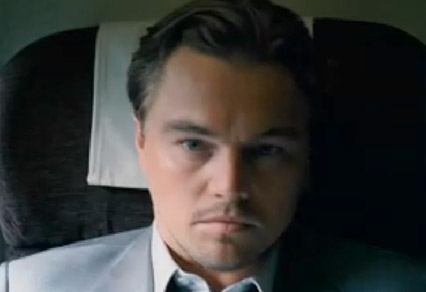
Image source: The First Post

Note: Below is an excerpt of a film analysis of Inception I wrote for Vodule, a new collaboration that focuses on the concept of volume and modularity in emerging media.

Spoiler alert: this is a film analysis, meaning an in-depth review that gives away key  moments of the film.

Written by Eduardo Navas

Inception is defined as “The establishment or starting point of an institution or activity.”  In the film Inception, the term means “the introduction of an idea in someone’s mind.”  Dominic Cobb (Leonardo DiCaprio) is a master at manipulating people’s dreams.  He is able to introduce an idea deep into a person’s unconscious.  The idea will take over the individual’s reality and perhaps even push him or her to the edge of sanity. The individual may question actual reality and consider the dreamworld real, not the material world.

Inception was written and directed by Christopher Nolan, who consistently plays with the concept of time in multiple parallels of reality.  He did this with Memento, Batman Begins, and The Dark Knight.  But Inception, as original as it may appear, in effect, is far from being itself an introduction of a new concept that may take over film form and ask that film as a medium be redefined.  Nolan by no means may be claiming to do this with Inception, but serious filmmaking is at its best when it becomes that which it proposes.  This is known in the arts as the sublime: to present the unpresentable–to present the possibility of comprehending the incomprehensible.  This is the ultimate space of exploration in aesthetics.  Inception, as respectable as it may appear, falls short in this important aspect.  Why this may be so is worth considering.

Read the complete text at Vodule
The Bond of Repetition and Representation Video, Medialab Prado

Note: Medialab Prado has released online the video documentation of my presentation of “Remix, The Bond of Repetition and Representation” for Interactivos during the summer of 2008.  The presentation emphasizes the concept of  Visual Play, which was the thematic for the workshops sessions in that year.  A different version of the text was later published at the end of the same year by Telefónica, and is available online, through Remix theory as post 361. The introduction is in Spanish, but the text presentation itself is in English.  The video is also downloadable with a Spanish voiceover translation.  Much of the material presented has also become parts of various texts also available on Remix Theory. Abstract of the text follows below as published on Medialab’s website:

This text, “Remix: The bond of Repetition and Representation,” entertains the historical importance of Remix in culture at large. It places particular importance on how the image is constantly appropriated in the visual arts as well as other areas of mass culture with unprecedented efficiency. This is done to understand the dialectics at play within Remix, itself and to further understand the principles behind concepts such as “Visual Play” in the emerging network culture. As it becomes clear in the following essay, in order for remix culture to come about, certain dynamics had to be in place, and these were first explored in music, around the contention of representation and repetition. This essay defines the concept of Remix in relation to these two terms, and then moves on to examine its role in media and art. There are three Remix definitions introduced in this essay: The Extended, The Selective and the Reflexive Remixes. These definitions are outlined historically and examined in various areas of culture including the visual arts, pop culture as well as game culture. The essay ends with a critical reflection on what one can do with an awareness of Remix as a dialectical manifestation.

Sharing Creative Works: An Illustrated (and Narrated) Primer

This animation of illustrated stills does a pretty good job at explaining the basics of Creative Commons in about five minutes. The intro may be a bit long, but other buy acyclovir than that it is well produced.  It is a good resource to introduce Creative Commons to people who may not have heard about it.

Lawrence Lessig: Re-examining the remix

Lawrence Lessig recently gave a talk about what the left can learn from the right when it comes to sharing and remixing content.  Much of the material will be familiar to people who have read Lessig’s books; still, his own position is explained: he considers himself on the left but repeatedly looks to the right, as it is people on this camp that appear to be interested in supporting remix culture.

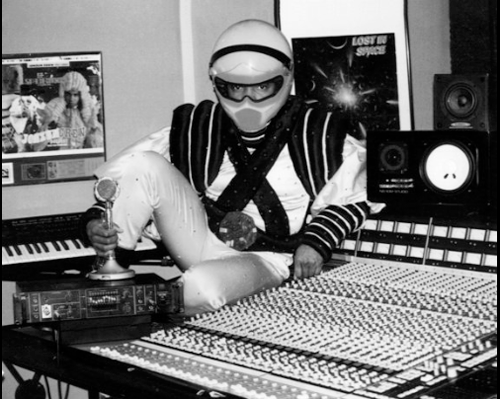
The Vocoder: From Speech-Scrambling To Robot Rock

Note: The following is an interview about a book that’s coming out on the history of the vocoder.  Quite interesting.  My only observation is that the interviewer casually links early Hip Hop with pop culture and this is missed by the interviewee. Historians know that early Hip Hop was also an avant-garde movement, though with different preocupations of previous groups who may have deliberately linked themselves with the nineteenth century concept. Still worth the listen/reading.

Orignally aired/published: May 13, 2010

If you’ve listened to pop music in the past 40 years, you’ve probably heard more than a few songs with a robotic sound. That’s thanks to the vocoder, a device invented by Bell Labs, the research division of AT&T. Though the vocoder has found its way into music, the machine was never intended for that function. Rather, it was developed to decrease the cost of long-distance calls and has taken on numerous other uses since.

Music journalist Dave Tompkins has written a book about the vocoder and its unlikely history. It’s called How to Wreck a Nice Beach: The Vocoder From World War II to Hip-Hop.

Tompkins says the machine played a significant role in World War II. After the U.S. government discovered that Winston Churchill’s conversations with Franklin D. Roosevelt were being intercepted and deciphered by the Germans, it decided to invest in speech-encoding technology. So the National Defense Research Committee commissioned Bell Labs in 1942 to develop a machine — and Bell Labs delivered.

The vocoder wasn’t without its flaws. Intelligibility of speech sometimes proved a problem, but Tompkins says pitch control was a bigger concern.

“They didn’t mind world leaders sounding like robots, just as long as they didn’t sound like chipmunks,” he says. “Eisenhower did not want to sound like a chipmunk.”

Read or listen to the complete interview at NPR

What Happened to the Remix?

I ran into this brief interview with Just Blaze, who explains his theory on how music samples can  be tracked on radio play to evaluate popularity of a song.

Shrine to the Funky Drummer

Shrine to the Funky Drummer from Joshua Pablo Rosenstock on Vimeo.

Recently received a link from Joshua Pablo Rosenstock about his video, Shrine to the Funky Drummer.  The video presents Rosenstock as a subject who is greatly influenced by James Brown’s “Funky Drummer.”  We quickly learn that his interest is a jumping point to understand how the song’s basic drum beat has become part of Hip Hop consciousness.

While the video, in my opinion could be edited (the intro is too long, and some footage does not match the sound), it does provide some historical context as to the art of sampling and its place in Hip Hop Culture.  It starts with Rosenstock listening to a scratched 45, and then playing the beat on a drum set.  The next set of scenes are about DJ’s manipulating The Funky Drummer’s break beat, complemented with random interviews with record diggers and turntablists. The video then goes back to Rosenstock who no longer plays a drum set, but a set of samples from a drum machine.

Shrine to the Funky Drummer reminds me a bit about Nate Harrison’s  Amen Brother Break.  Though very different in approach, both videos can be complementary references for understanding the history of Remix.  I understand that Shrine to the Funky Drummer’s current version is a rough cut, so I look forward to the final production.

Walking On Eggshells: Borrowing Culture in the Remix Age

A documentary consisting of brief interviews with not just musicians, but visual artists, writers, VJs and lawyers.  The intro is creative.

on YouTube: http://www.youtube.com/watch?v=Jt0ASo_6Sdg&
feature=channel

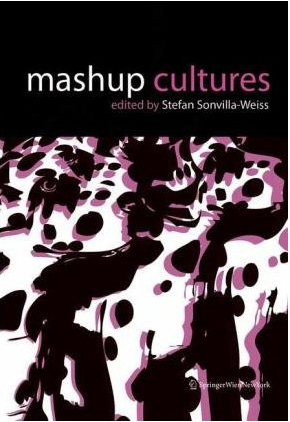
Mashup Cultures, edited by Stefan Sonvilla-Weiss

Note: I’m very happy to announce the release of a book publication titled Mashup Cultures in which I contribute a text titled “Regressive and Reflexive Mashups in Sampling Culture.”  The text was previously released on Vague Terrain in June 2007, and has been revised and extended by over 15 pages for the book publication. I introduce a series of new terms along with a diagram, which I will be making available online in the near future.

Mashup Cultures, Sonvilla-Weiss. Stefan (Ed.), Springeren: This volume brings together cutting-edge thinkers and scholars together with young researchers and students, proposing a colourful spectrum of media-theoretical, -practical and -educational approaches to current creative practices and techniques of production and consumption on and off the web. Along with the exploration of some of the emerging social media concepts, the book unveils some of the key drivers leading to participatory engagement of the User.

Mashup Cultures presents a broader view of the effects and consequences of current remix practices and the recombination of existing digital cultural content. The complexity of this book, which appears on the occasion of the fifth anniversary of the international MA study program ePedagogy Design – Visual Knowledge Building, also by necessity seeks to familiarize the reader with a profound glossary and vocabulary of Web 2.0 cultural techniques.

Book Link: http://www.springer.com/springerwiennewyork/
art/book/978-3-7091-0095-0

TABLE OF CONTENTS
•    Stefan Sonvilla-Weiss: Introduction: Mashups, Remix Practices and the Recombination of Existing Digital Content
•    Axel Bruns: Distributed Creativity: Filesharing and Produsage
•    Brenda Castro: The Virtual Art Garden: A Case Study of User-centered Design for Improving Interaction in Distant Learning Communities of Art Students
•    Doris Gassert: “You met me at a very strange time in my life.” Fight Club and the Moving Image on the Verge of ‘Going Digital’
•    David Gauntlett: Creativity, Participation and Connectedness: An Interview with David Gauntlett
•    Mizuko Ito: Mobilizing the Imagination in Everyday Play: The Case of Japanese Media Mixes
•    Henry Jenkins: Multiculturalism, Appropriation, and the New Media Literacies: Remixing Moby Dick
•    Owen Kelly: Sexton Blake & the Virtual Culture of Rosario: A Biji
•    Torsten Meyer: On the Database Principle: Knowledge and Delusion
•    Eduardo Navas: Regressive and Reflexive Mashups in Sampling Culture
•    Christina Schwalbe: Change of Media, Change of Scholarship, Change of University: Transition from the Graphosphere to a Digital Mediosphere
•    Noora Sopula & Joni Leimu: A Classroom 2.0 Experiment
•    Stefan Sonvilla-Weiss: Communication Techniques, Practices and Strategies of Generation “Web n+1?
•    Wey-Han Tan: Playing (with) Educational Games – Integrated Game Design and Second Order Gaming
•    Tere Vadén interviewed by Juha Varto: Tepidity of the Majority and Participatory Creativity

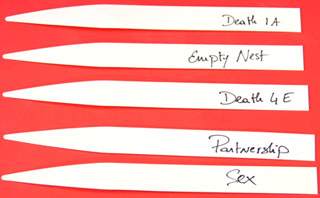
REBLOG: scientists, designers, and artists will gather in New York to discuss how our lives could be transformed by recognizing scent as design, by Eva Wisten

Image and text source: Seed

On March 26, Parsons the New School for Design and MoMA, in collaboration with IFF, Seed, and Coty, will present Headspace: On Scent as Design. A one-day symposium on the conception, impact, and potential applications of scent, the event will gather leading thinkers, designers, scientists, artists, established perfumers as well as “accidental perfumers”—architects, designers, and chefs—to acknowledge scent as a new territory for design. Seed sat down with organizers Paola Antonelli, Véronique Ferval, Jamer Hunt, Jane Nisselson, and Laetitia Wolff to discuss why we tend to overlook the importance of scent, our increasingly antiseptic, smell-free lives, and how our lives could change when we begin to tap into the rich olfactory dimension of design.

What inspired Headspace?

The idea that led us to organize Headspace is that scent is not only a medium for design, but also a design form in its own right.  Perfumers and scientists working on scent perform every time a design act. Sometimes it is good, sometimes mediocre. It can be very commercial, or more limited and idiosyncratic. Just like other forms of design, it is targeted to the goal at hand, whether the creation of a new clothing detergent with universal appeal or of a unique scent that will touch only a few dozen wrists. Just like other forms of design, it requires expertise and dedication, not to mention talent. We are therefore not advocating that any self-described designer should also feel free to tackle scent, but rather that designers should be aware of the spatial and perceptive potential of scent, and that perfumers should realize that they are engaged in design and take advantage of that knowledge.

Why is the smell experience of an object or an environment so often ignored or treated as less significant than the visual and, when it applies, aural, tactile or taste experience?

Scent happens both before and behind all other senses. Scents hit us directly through the limbic system; they are more pre-cognitive and emotional. For that reason, it’s harder for our mind to compute. Language doesn’t really seem up to the task of expressing all that scent means to us, or triggers within us. We ignore olfactive input because we have not been educated in a language with which to express any perceived gradations. Thus, we are still at the level of the “grunt,” limited to broad terms like good, bad, ugh, and sweet.

History has helped smell’s downfall, too. With the Enlightenment Era came a certain rationalization of our senses, where knowledge, culture, class, and intelligence were associated directly with our visual senses, whereas smell was associated with bodily fluids, dirt, and poverty. We seem to still be shaped by that dichotomy and we therefore miss out on one of our great cognitive gifts

An approach similar to the wine industry’s could motivate the public to acquire an education and a vocabulary to share their olfactive experiences. We have cultivated a sophisticated approach to flavor that makes us think we can really choose among twelve types of salt and twenty-five types of olive oils. There is no similar reciprocal relationship in the domain of smell that invites and rewards people to cultivate and pursue odor distinctions and experiences.

Social history has encouraged a discomfort with our beautifully functional nostrils. It is time to reclaim them!

Read the entire feature at Seed

Current Projects


    Books


    Remix Theory | is an online resource by Eduardo Navas. To learn more about it read the about page.

    Logo design by Ludmil Trenkov

    http://www.mentalhealthupdate.com/